Showing posts with label self protection. Show all posts

Saturday, May 17, 2014

Carlsbad Wildfire, Personal Defense and Natural Disasters

Carlsbad Wildfire, Preparedness and Personal Defense
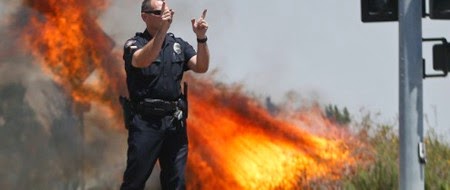

Carlsbad Wildfires - Personal-Defense and Disaster Preparedness
Natural disasters like the Carlsbad wildfires, and the rest of the fires in Southern California this week bring out the best in most normal people. The outpouring of support, donations at the emergency shelters, and offers of assistance is what make this country great! Conversely, it also provides opportunity for the criminal element to take advantage of people and the situation. As disgusting as the opportunists are, they do not surprise me. I am however continually surprised by the lack of preparedness for these predictable events on the part of many of my fellow citizens.

As soon as I smelled smoke, I went out side to see some fairly dark fires, that appeared to be pretty close. I went inside, picked up the keys and my wallet and drove to the gas station to top off the truck (which was at ¾ of tank, but why not have a full tank?). I grabbed a sandwich from the store for lunch, some fruit and a few other items and went home. When I got back there were a few people standing in the street looking at the plumes of smoke and discussing leaving.

Here is a conversation I had with a guy who lives in my neighborhood on the day the fires started:

Him – “The wildfires are getting pretty out of control, I didn’t expect this in Carlsbad.”

Me – “Yeah, I’m surprised at how quickly this one seems to be growing.”

Him – “Do you think there will be an problems, like looting or theft, or – you know – armed robberies or anything.”

Me – “Yeah, probably.”

Him – “Seriously, you think people will do that?”

Me – “Yes, if this goes on long enough, the dregs of society will take advantage of this situation and exploit the opportunity to prey on those who are not prepared.”

Him – “Yeah, probably… Well, I’m coming to your house if it gets bad.”
Me – “Why?”

Him – “You’re – like – ready for this stuff, you do – like – guns & stuff right?”

Me – “I am prepared to take care of my family.”

Him – “Well – you’d help us out too – right?”

Me – “Sure, how about you and the rest of the block, or maybe the neighborhood? How about the whole city? Look XXXX, I’m not Donald Trump and I had to draw the line when I was stocking up somewhere, and unfortunately, my family is the only ones that made the cut.”

Him –“Really, you wouldn’t let us in?”

Me – “XXXX – don’t show up at my house with your wife and kids in tow and your hand out at two o’clock in the morning – you won’t like the response. Go to the store, buy some canned food, fill up the tub, (etc….).

Him – “Well then, can I borrow a gun?”

Me – “Why?”

Him – “I don’t have one.”

Me – “Do you know how to use a gun?”

Him – “Well…. you could show me…”

Me – “No XXXX, you can’t borrow a gun…”

My suspicion is that XXXX thinks we aren’t friends anymore. I am not advocating that everyone have a 5 year stock pile of food, water, ammunition and spare parts for their firearms. I am advocating that people learn from this, and past experiences. Go get and learn to use the things and the skills you wish you had on Tuesday night. Don’t wait for the next disaster to make you feel helpless. None of you or your neighbors are helpless, and everyone is capable of contributing to their own safety and security!

My conversation with XXXX reminded me of another conversation I had with an individual on the plane to New York to speak at the CT symposium. I was reading the final edition of Preventative Defense written by Steve Tarani. He was a nice enough guy, little nervous about flying, perhaps a bit overly talkative, but a legitimately nice guy. When he asked what I do, I explained it briefly and he actually was pretty surprised and told me he felt no obligation to be prepared to defend himself what-so-ever. The most notable quote from that conversation “That’s what I have an attorney for”. I gave him the copy of Steve’s book as he clearly needs it more then I do.

The power outages last year produced a similar “what do I do” response in many people. Here we are almost a year later, and many still have no ability to plan or prepare for the inevitable. It would appear that we are on our way back to the norm in Carlsbad – at least for the time being. The fires have burned most of the available brush, and my suspicion is that we will have a relatively safe fire season in comparison to the areas that remain untouched by the fires. Now is the time to prepare yourself for the next disaster that may cause you to have to fend for yourself for a few days (or longer).

A week or so of canned goods, a trauma and first aid kit, a battery powered radio, a flashlight, extra batteries, a shotgun with plenty of buck shot, a few gallons of water in a go bag of some sort and a family link up plan will alleviate nearly every fear expressed by the people I spoke to this week. The problem is not one of means; all of my neighbors can afford the $500.00 – $600.00 to get the above items. The problem is one of mindset. The attitude that it will never happen to me is not something you can purchase a solution to. The concept that borrowing or buying a shotgun without the ability to use it effectively makes you somehow safer is equally ridiculous.

Every one of you can take five minutes to make to make a list that will help prepare you for a wildfire, a black out, an earthquake or any other natural disaster. Those of you that had some preparations made should take a few minutes to make some notes on what to improve on. It will take less then an hour to make a list, gather the things you need, and start the process of being a confident part of the solution during the next disaster. The alternative is to be a drain on state or others resources that could be deployed or used to support the emergency, or people who lost their homes, or others in dire circumstances…

Being an unnecessary drain on resources is actually considered quite rude in some circles.

Most of you reading this are probably already prepared, but feel free to share this with those who are not. We choose to be dependent on government services for our survival, our government does not impose that dependence on us – unlike some places in the world. Here in America, we can choose not to be dependent on government support and services when and if necessary. To me that is the responsible choice that leads to safer and more productive communities.

Here is a link to wildfire preparedness, with a short checklist and there are ton of resources out there. The checklist is a nice tool. What we really should be working towards is a culture of community safety and personal responsibility. Don’t let something as routine as the Carlsbad Wildfire or the next natural disaster throw you into a state of panic. Stay safe, have fun & plan to do something to increase you independence this month!

First Published at Aegis Academy

About Author


- Patrick Henry


President


Patrick Henry
Patrick Henry received his operational training and experience from the U. S. Government, 22 years of which were spent in the Marine Corps where he served in the Reconnaissance, Infantry and Intelligence fields. During his active service, he spent more then seven years deployed overseas in combat, operational and training assignments. After the military, Pat worked as a contractor and as the Director of Operations at a private paramilitary company, specializing in training special operations forces and providing protective services to select private clients. His education consists of an MBA from the University of Southern California (USC), and a BS from San Diego State University with an emphasis in Biochemistry, Cell and Molecular Biology and a minor in Psychology. He holds an extensive list of security and training related certifications from a variety of government and nationally recognized entities. He currently sits on the advisory committee at USC’s Master of Veterans Business Program, and is an active member of Infraguard and the American Society of Industrial Security (ASIS). He has been a guest speaker at ASIS, the San Diego Industrial Security Awareness Council and other private organizations on physical security, travel security, and competitive intelligence collection counter-measures.

Monday, May 5, 2014

Risk Analysis and Mitigation from a Travel Security Perspective

Travel Security - Risk Analysis & Mitigation
The most common and unfortunate state of mind people adopt is that protection is the responsibility of someone else. You can personally exert an extraordinary amount of influence over your own safety and security by controlling your actions. Adopting the mindset that your personal safety and security is up to you is the first step in improving your chances. The next step is learning how to evaluate risk, and implement actions and controls to maintain and advantage in any environment. The first step is analyzing risk.

Finding the “right” risk metrics


In the evaluation of risk, the first and most critical step is to choosing a quality data set. The greatest gift the Internet has given us is a vast supply of information on demand. Unfortunately, much of it consists of un-researched opinion, or worse pure fabrication. When evaluating personal security risk, you have to select, vetted, relevant and appropriate sources of information or you will undoubtedly end up protecting your self against the wrong threats. The Department of State, CIA World Fact Book, UN Office on Drugs on Crime, World Health Organization and the Economic Intelligence unit are great places to start. Alternatively, there a number of professional reports that you can purchase on any city or area to which you may want to travel. Basing risk decisions on what you are fed by the media, Hollywood or that scholarly journal Wikipedia is unlikely to result in productive and useful plans to mitigate that risk!

This should not simply be a physical risk evaluation and it should include risks that could impact the success of your reason for travelling. You are choosing to expose your self to risk for a purpose, and if you don’t accomplish that purpose, you should choose not to take the risk in the first place. If you are travelling to Sierra Leone to import natural resources, anything that will prevent you from obtaining or importing resources is a risk. If you do not account for those risks, you may have a physically safe trip that results in you very adeptly undertaking a risky evolution for no productive reason. Culture, infrastructure, opportunity and preparation all play into it.

Risk Analysis


Once you have selected appropriate sources of information, you are ready to start dealing with the process of determining what to do with it. Analysis is simply a process of systematic evaluation of information. Ultimately, the real goal is to develop a consistent approach to evaluating the information you collect. The first step is to make a determination of what is likely to happen. This is a fairly exhaustive list of what may happen. It consists of the things that are likely to impact traveller to that country and have almost nothing to do with your personal ability, plans or circumstances.

Then next step is to look at the catastrophic impacts that could occur (Death, Permanent Injury, Loss of the deal, etc…). Remember, base these on your data set, not on your personal circumstances at this point. I then combine theses two lists into a set of potential occurrences. Here is the most important step in the process. Cross anything off the list that is completely beyond your control, leaving only the things that you can influence. If someone else with more money, more physical ability, or language skills you do not posses could influence those factors that is irrelevant to your risk evaluation. If you don’t have the skills, money or time to influence the potential occurrences, don’t spend time trying. We want a comprehensive list of things that are likely to occur in the area to which we are travelling.

We can now start to assign a probability and severity rankings to the list. A cold is pretty likely, but pretty low on the severity list. Being murdered is probably a low probability side, but at the top of the severity list. I rank severity in the same manner as we rank the scale of injury. 0 is no impact or no injury. 1 is minor injury with little to long-term impact. 2 are serious but recoverable injury, or serious but recoverable impact. 3 are permanent injures, or permanent unrecoverable impacts. 4 are death or catastrophic impacts. This is a somewhat arbitrary scale in that you simply have to lump it in to one of four categories.

Next we look at the probability of occurrence. Once again we place them into one of five buckets labeled A – E. E is improbable, or a freak occurrence. D is unlikely, or something that may happen once in a blue moon. C is moderate, meaning it might happen. B is likely, or something that will more likely happen then not. A is something that you would be pleasantly surprised if it did not occur.

In evaluating our list, we can now cross off everything we have labeled as a 0 or E. If the impact is 0, we are not going to waste time trying to mitigate the risk. If the probability is so low that it falls into the freak occurrence category, we will not spend time trying to reduce it even further. These is the list of things that are likely to happen, and against which we are going to apply time effort and resources to minimizing the impact or the probability that they will occur.

Minimize Probability Risk


The first thing I want to focus on is minimizing the probability. Not having an event occur is always preferable to minimizing the damage it may cause. We can minimize probability by our actions. There is an extensive list of these skills and good habits written out in Preventative Defense. Examples are locking your car doors, inspecting the tires on your rental vehicles, avoiding bad neighborhoods and making a conscious effort to blend in. Anything you can do to minimize the probability is an action.

Minimizing Severity Risk


The next step is focused on minimizing the impact of negative events if our attempts to avoid them fail. Examples are things like wearing a seat belt, carrying some simple trauma management equipment, and learning to ask for help in the local language. Anything you can do to reduce the severity or impact of the event called a control.

Mitigating Risk


As I look at my list of things that are likely to happen, I write our actions and controls that will influence the probability or severity of the event. Every action and control (or risk mitigation tactic) has a cost and an effort level associated with it. The key to actions and controls is that they have to be affordable. If you develop a phenomenal plan to mitigate risk to nearly zero, but it costs a trillion dollars to implement, you may as well rely on a wish from a magic genie. They have to be practical. If you plan is so detailed that it requires 16 hours of your day to execute, you have no time left to accomplish your goal so you may as well not go. Lastly, you have to come up with actions and controls that you will actually do!

After I have listed my actions and controls, I evaluate my list of potential occurrences again and assign a new probability and severity based on the implementation of my actions and controls. Ideally, we are able to reduce both, but the reality is that we are far more adept at developing controls then we are at reducing probability so do not fall into the trap of reducing a probability rating based on a good control. In other words, wearing a bulletproof vest is great control if you are dealing with a risk of being shot. Putting on the vest does not reduce the probability of being shot by one bit.
I now look at my risk matrix again. I am looking for things that fall in likely or catastrophic category. Ideally there is nothing on the list that falls into the 1A category after our actions and controls have been implemented. If there is, then you need to apply more resources to mitigation (Usually money and time), or you need to reevaluate the purpose of your trip.

If we have developed effective actions and controls, things with a severity rating of A should have low probabilities and things with high probabilities should have low severity rating. If we have anything left on our list that does not fit that profile, we need to reconsider our actions and controls to determine is something more can be done.

Putting risk analysis and mitigation plans in action


Some risks are inherent in our work and our lives, and we have to accept them in order to be effective. The concept that we can or should mitigate risk to zero is costly, inefficient and ultimately impractical. Since there are some risks that I must accept, those with moderate or likely occurrence ratings and moderate or severe consequences will result in the development of an emergency action plan. The emergency action plan will be discussed in the next article, but it consist of identifying threat indicators and appropriate responses to break the cycle of violence or injury before it impacts us.

This can at first be an exhaustive process, however, a little practice goes a long ways. The more you do it, the more it becomes second nature. The key piece is to find actions and controls that are practical, executable and that you make the time and effort to actually do. Writing a plan that keeps you away from the local opium den is great, actually staying away from the opium den is what makes you safer.

Plan, Travel Safer and have more fun!

First Published at Aegis Academy

About Author


- Patrick Henry


President


Patrick Henry
Patrick Henry received his operational training and experience from the U. S. Government, 22 years of which were spent in the Marine Corps where he served in the Reconnaissance, Infantry and Intelligence fields. During his active service, he spent more then seven years deployed overseas in combat, operational and training assignments. After the military, Pat worked as a contractor and as the Director of Operations at a private paramilitary company, specializing in training special operations forces and providing protective services to select private clients. His education consists of an MBA from the University of Southern California (USC), and a BS from San Diego State University with an emphasis in Biochemistry, Cell and Molecular Biology and a minor in Psychology. He holds an extensive list of security and training related certifications from a variety of government and nationally recognized entities. He currently sits on the advisory committee at USC’s Master of Veterans Business Program, and is an active member of Infraguard and the American Society of Industrial Security (ASIS). He has been a guest speaker at ASIS, the San Diego Industrial Security Awareness Council and other private organizations on physical security, travel security, and competitive intelligence collection counter-measures.

Tuesday, April 22, 2014

The Anatomy of a Kidnapping

Kidnapping - Personal Security TrainingThe number of attacks have massively increased worldwide. Terrorists, cartels and both organized and common criminals are adding kidnapping to their repertoire.

Some of this increase in volume represents an increase in traditional kidnappings. Some of it is due to the fact that muggers and robbers are getting smarter and using leverage as a tool, vice exclusively relying on fear and/or brute force. This has resulted in the adoption of the new class of robbery/extortion/theft, which has been termed “express kidnapping”. This is a short term, comparatively low demand, ransom is executed generally in 12 – 36 hours. Ransoms are usually what a person has in a checking or savings account that can be withdrawn via ATM or from a local bank.

Regardless of the type of kidnapping, it follows a process, just like every other cycle in nature. It is a five-step process, and the good news is you can influence each of these steps to some extent. The process can be broken down in to five phases. The first is the tactical phase during which the goal of the attackers is preliminary physical control. The transport phase is simply moving the victim to a location of advantage to the attackers. The intake phase is typically associated with physical abuse, with the goal being emotional control of the victim. The detention phase creates the possibility to reduce the number of resources required to physically control a victim. Finally, the exploitation phase consists of photos or videos with the goal of increasing a ransom incentive.

The tactical phase of a kidnapping:


The first phase of a kidnapping is the tactical phase. This is when the weapons are out, and you are being placed into a position the attacker controls. This is by far the most dangerous portion of the attack – but it is also your most likely chance of escape. Balancing the risk of injury with the risk of escape is a significantly challenging thing to do and it is critical that you are not coming up with a half-baked plan on the fly. Your priority is to survive, and your secondary goal is to escape. Don’t lose track of the priority based on a sense of bravado, entitlement or arrogance.

The confusion involved in tactical operations is difficult to manage for experienced military professionals. They have the luxury of conducting extensive rehearsals and training for a wide variety of contingencies prior to conducting attacks. The criminals attacking you do not have that freedom of movement to rehearse to nearly that level of fluidity or comfort. They are likely nervous, as they are committing a major crime, and you have to assume they will do anything to avoid arrest or capture. The goal of a kidnapping is to capture you alive, but never assume they value your life at this phase of the operation as much as they value their freedom. Remember – the goal of the tactical phase is to survive first, escape second.

You may be able to leverage the confusion, and competing interests vying for your attackers attention. If you blend into a crowd, disappear around a corner or slip away in the confusion, you have ended your role in the attack. While that would be an ideal outcome, you cannot ignore the real risk you are taking when deliberately not complying with your attackers instructions. If you get shot or stabbed in the process, you have significantly increased your risk of permanent injury or death. Only you can accurately balance your chances of success with the risk of injury based on your physical abilities and any available opportunities.


The transportation phase of a kidnapping:


The next phase of a kidnapping is the transportation phase. While your chances of injury are lower, this is still a very risky time for your attackers. They have committed a crime, and do not yet have complete control over your person. You may find yourself in the trunk of a vehicle, in the back seat with a hood over your head, or driving the car with weapons used to secure your compliance. Your chances of inadvertent injury at the hands of your attackers is less, but not negligible.

Conversely, you now have some additional barriers between you and escape. You may be bound, unable to see or locked up in a container. While your chances of escape are less than during the tactical phase, you are far from helpless. If you can open the trunk or container and get out at low speeds, you may well end the situation. If you are driving, you still exert an enormous amount of control. Your attackers are also still managing a tactical scenario as well and trying to maintain control of you. This is likely to be the last good chance of escape you will have, but if you are shot or stabbed in the process, you have made your situation worse.

The intake phase of a kidnapping:


The transportation phase ends at the arrival to what will be your detention location. We call this the intake phase. Depending on the number of links and the distance you will have to travel, you may alternate between transportation and intake at a number of short term holding facilities. The intake phase is likely to consist of your attackers demonstrating to you that you are under their control – or more accurately ensuring that you demonstrate to them that you understand you are under their control. The duration of this phase is largely in your control.

The sooner you can convince your captors that you are a compliant victim, the sooner you will stop being abused and be placed in a detention facility of some sort. There is no reason to go into detention more injured than necessary. The tough guy attitude will get you broken or killed and this is not the time for bravado. You are in a location they have selected, and most likely, even if you were to escape at this point, you will not have access to support from the local population. Unless you know where you are and have a good chance of attracting support, now is not the time for escape.

The detention phase of a kidnapping:


Long-term detention will take a psychological toll on any human being, and you should go into detention with the attitude that you are not playing at peak levels. There are some publications advocating not discussing sensitive topics with your captors. This is the worst advice on the planet. Your goal during detention is to get your captors to see you as a human being. We only engage in conversations with other human beings so sub-consciously if your captors are engaging in a conversation with you, they are treating you like a fellow human being.

Talk with your captors about anything they are willing to discuss with you. You should try to make reasonable requests of your captors. Reasonable under most circumstances will consist of water, shelter, food and potentially use of a bathroom. Anything beyond that you should at least initially put on the unreasonable list. In doing so, make a sincere effort to understand your attackers plight. No one is born a terrorist or a violent criminal. They are made that way by the circumstances under which they were raised. They do not see their future they way you do, and if you make a sincere effort to empathize with them, they may well empathize with you to some degree.
Your goal is to learn as much about your captors as possible. Family, friends, pass times and thoughts on the universe. The more the better! First it will help to keep your mind active and engaged, and second it may help with prosecution later. Stockholm syndrome is a debatable condition under which prisoners empathize with their captors to the point of assisting them and supporting their cause. If you approach developing a relationship from the standpoint of trying to get Stockholm syndrome, you are on the right track. A psychiatrist can fix that problem when you get back alive and unharmed. Be a good student of your captor’s beliefs.

 The exploitation phase of a kidnapping:

You will most likely be exploited during you captivity. This may consist of getting money from a bank or ATM, making videos or being photographed with magazines, or newspapers to establish proof of life. You may be forced to do interviews or write letters that may seem incongruent to your personal beliefs. While you do not want to be seen as weak or pathetic by giving in, ultimately anyone can be broken. Use this as an opportunity to cause your attackers to explain things to you by feigning confusion and ignorance – and remember, you are not at the top of your game, and confusion and ignorance is probably a reality.

While it may not seem like it at the time, exploitation is a positive sign. These items are likely to be seen by others or they would not be produced. While they are probably being used to negotiate a higher price for your release, your eventual release is the goal and this is part of the process of getting there.

The release phase of kidnapping:


Frequently, victims are simply dropped off in a semi-populated area. It is likely an area where the kidnappers have some freedom of movement. Do not assume that strangers will not take advantage of your weakened condition. Hospitals, medics, police or military personnel are your best bet. If none are nearby, larger crowds are more likely to result in someone doing the right thing and reporting you to one of the above. While unlikely, you do not want to put yourself at additional risk by surviving your ordeal, and being kidnapped or killed by a competing gang in the same town!

Kidnapping is a growing threat in many places around the world. Take an active interest in your own safety and security and check the facts before you travel. Don’t ignore the risks or assume “This will never happen to me”. If you take even minor precautionary steps, you massively lower your risk, because unfortunately, most people walk around oblivious to the threat. If you and a group of friends are chased by a bear in the woods, you don’t have to be the fastest person in the group, you just can’t be the slowest. The same applies to kidnapping. Of all the people in the area that meet a kidnappers profile, you just can’t be the easiest one to attack!

Have fun and come home safe!

About Author


- Patrick Henry


President

Patrick HenryPatrick Henry received his operational training and experience from the U. S. Government, 22 years of which were spent in the Marine Corps where he served in the Reconnaissance, Infantry and Intelligence fields. During his active service, he spent more then seven years deployed overseas in combat, operational and training assignments. After the military, Pat worked as a contractor and as the Director of Operations at a private paramilitary company, specializing in training special operations forces and providing protective services to select private clients. His education consists of an MBA from the University of Southern California (USC), and a BS from San Diego State University with an emphasis in Biochemistry, Cell and Molecular Biology and a minor in Psychology. He holds an extensive list of security and training related certifications from a variety of government and nationally recognized entities. He currently sits on the advisory committee at USC’s Master of Veterans Business Program, and is an active member of Infraguard and the American Society of Industrial Security (ASIS). He has been a guest speaker at ASIS, the San Diego Industrial Security Awareness Council and other private organizations on physical security, travel security, and competitive intelligence collection counter-measures.

Monday, March 10, 2014

Sources of Information and Personal Security

Sources of Information
Since most of us choose not to live like a paranoid fanatic with cleared fields of fire from our front door to the keep-out signs surrounding our houses – life is about managing risks. Everything we do from the moment we are born until the day we pass involves making risk assessments and developing various means of avoiding or mitigating the risk we choose to accept. We all do it every day and in many aspects of our lives we are experts. Unfortunately, it’s in the big-ticket items where people tend to make mistakes in this arena – and that unfortunately results in a lot of unnecessary pain and suffering.

For starters – stop worrying about things that don’t happen and spend a few of those minutes preparing for the inevitable. If you simply plan for the things that are likely to happen to you – you’ll be light years ahead of the general population! In order to do that we really need to take a look at what negative events are most likely to occur and unfortunately the media, the internet and our personal experiences are generally poor indicators.


We are inundated with poor sources of information

The Internet is an incredible collection of a variety of sources of information, and some of which is even true! Anyone with an opinion can write an article on any subject they choose and post it for the world to view. The days of having some expertise, journalistic integrity, editorial oversight and even fact checking are for the most part over. Lets look at that last sentence. Sounds accurate, connects with most readers on a base level – but the fact is, I just made it up. It is a single source opinion (mine) expressed as a fact, and I am confident someone will have quoted it by the end of the week… Perhaps it’s even true, but other than the absolute falsehoods I see reported, I have no factual basis for my opinion.

When we see movies, we are typically getting an adrenaline filled journey through the combined lens of a fiction writer, a Hollywood director and ultimately the producer who is writing the check. While accuracy is important to many of them, producing a movie people will pay to watch is what they get paid to do. People naturally want to connect with great stories – and mundane activities generally doesn’t make a great story. We exaggerate key components, rely on nearly superhuman capabilities and and construe a completely improbably series of extraordinary event and in that we find our hero’s. Unfortunately, preparing to meet our movie hero’s challenges does not prepare us to deal with the real risks in our own lives.

The bottom rung of the information food chain these days is the media. MSNBC, FOX and CNN are simply pandering to a political base to expand viewership and increase advertising revenue. In recent years, their penchant for un-researched opinion is with out equal. Take the same event, same facts and the same statistics and get three completely divergent OPINONS on what it means. All of which are expressed as known facts. It makes for great entertainment, but their “reporting” has no basis in fact aside from the general agreement that a spin worthy story has occurred. The line between opinion and fact has become so gray many of us have forgotten the difference between the two.

Quantity of information

When we spend time sourcing information on which to base risk decisions, the source of information is in many cases more important than the information itself. We hear the drum beat about human trafficking, kidnapping and sexual slavery. These stories flood the Internet, make engaging movies and provide fodder for the pundits like Nancy Grace to blather on about. In the security industry we call it the “Missing White Girl Syndrome”. Statistically it is irrelevant, but if a western white girl is missing, somehow that makes international headlines. We don’t talk about the 1.2 million teenagers inducted globally into sexual slavery.

If you believe what Hollywood and the media provide you, you will spend valuable time educating your child to avoid strangers to reduce their chance of being kidnapped. The fact is less than 100 of 800,000 U. S. children reported missing fall into the category of a “stranger abduction”. While you are worrying about the 100 abductions, 2,800 children will be killed in car accidents in the same year. The quality of information is far more relevant than the volume.

Unfortunately, like most things of value in life, quality information requires time and effort. Conducting sound risk assessments is the basis of establishing sound personal security plans. The reason the source of information is so critical is because it will ultimately define the quality of your assessment. If you make an assessment based on bad sources of information, you are very likely to come to a highly inaccurate conclusion.


Where to find good sources of information

The Center for Disease Control has produced an injury and fatality reporting tool that is incredibly user friendly (WISQARS). The World Health Organization is the global equivalent. Boiling this down to be user fin in a local risk can be difficult. I have found crimereport.com and healthmap.org are the simplest and easiest tools to use real time reporting for outbreaks and crime and their data is collected from quality sources of information. From here, I can make solid determinations on the real risks my family faces from injury, crime and diseases in matter of minutes.

If you are traveling, spend 15 minutes reading the CIA world fact book on that country before you go. This is a free online publication that contains a quick overview of every country on the planet. The writers study these countries in detail for a living, and do an annual update. They cover languages, customs, politics, economics and a brief overview on crime. The next step is the country studies published by the Library of Congress, which can be accessed from the state departments website. Country studies are detailed information on anything you want to dig into, but they are long and detailed so go there with specific questions and use them to answer them. Lastly the state department will have up to the minute travel advisories and warnings posted for every county on the planet.

More than likely that is beyond adequate for most people. However, if you want more data you can look at the economic intelligence unit. The economic intelligence unit collects from a wide variety of sources and produces a number of local assessments. While some of it is free, most of it requires a subscription. United Nations on Drugs and Crime and the International Center for Prison Studies can also be enlightening if you want more data on specific regions.

Using Sources of Information

Having great sources of information is worthless if you don’t use them, and collecting random snippets of quality information is equally futile. The purpose is to keep you and your family safe. Here are statistically the risks you need to be concerned with when looking at personal security:
  • Illness prevention
  • Access to medical care
  • Crime rate and threats
  • Food & water quality
  • Local security forces
If you have even gross familiarity with the above in the area you live or are traveling to, you are already ahead of the locals. The goal of collecting this information is to mitigate the risk, to which you are choosing to expose yourself. After you deal with the big five, then you can worry about what to do in the event your mitigation plans have failed. Remember, you don’t have be the fastest person in the group if you are chased by a bear, you just can’t be the slowest.

Start getting informed in your local area and check back next month for the next article in our personal security series – Developing a practical risk mitigation strategy. You can see more our existing personal security curriculum here! For additional articles check out Personal Safety step one – Threat Avoidance and Social Media and the Attack Cycle!

First Published at Aegis Academy

About Author

- Patrick Henry

President
 
Patrick Henry, Firearms Training
Patrick Henry received his operational training and experience from the U. S. Government, 22 years of which were spent in the Marine Corps where he served in the Reconnaissance, Infantry and Intelligence fields. During his active service, he spent more then seven years deployed overseas in combat, operational and training assignments. After the military, Pat worked as a contractor and as the Director of Operations at a private paramilitary company, specializing in training special operations forces and providing protective services to select private clients. His education consists of an MBA from the University of Southern California (USC), and a BS from San Diego State University with an emphasis in Biochemistry, Cell and Molecular Biology and a minor in Psychology. He holds an extensive list of security and training related certifications from a variety of government and nationally recognized entities. He has an extensive entrepreneurial background ranging from real estate and technology, to the security training and education market. He currently sits on the advisory committee at USC’s Master of Veterans Business Program, and is an active member of Infraguard and the American Society of Industrial Security (ASIS). He has been a guest speaker at ASIS, the San Diego Industrial Security Awareness Council and other private organizations on physical security, travel security, and competitive intelligence collection counter-measures.