Showing posts with label self defense. Show all posts

Tuesday, March 24, 2015

A Semester Abroad: Arrogance, Apathy and Ignorance Part 1

"Assumptions are dangerous things."- Agatha Christie

Student Traveling Abroad
University-aged students are more and more choosing to travel to foreign countries to participate in study abroad, direct exchange, and semester abroad programs. While these education and travel opportunities provide invaluable experience to young adults, they also come with hefty price tags and unique security concerns. If you are a student, or a parent of a student, who may be traveling abroad to study in the near future then this article series is for you. Your student's life is far more valuable than any Ivy-League education - learn how to prepare for a semester abroad by reading through my own mistakes while traveling abroad in Russia, in this article series " Arrogance, Apathy, and Ignorance: What a Student Traveling Abroad Ought to Know."

In the first article of the series covering 'arrogance', I will explore how an arrogant perspective can lead to false assumptions about one's safety while traveling abroad. A spirit of honest reflection has allowed me to identify many flaws in my attitude, the ways in which I prepared, and the habits I practiced before and during my time in Russia. Here, I will specifically focus on how danger manifested itself in my arrogance towards the Russian culture, which lead to costly assumptions about the likelihood that I would be the victim of a violent attack.

Finding myself staring into the eyes of my intoxicated Russian assailant was most certainly not the way I had envisioned my first acquaintance with the sleepless Moscow nightlife. Yet, there I was feeling utterly helpless as my pleas for help to the local bartender, just a pace or two away, were blatantly neglected. The attacker's breath reeked of a lifetime of vodka, as he asserted himself more until his nose was pressed against my cheek.

My mind was racing in disbelief. How could my seemingly innocent decision to stop at the local piano bar have divulged into a terror of this sorts? Where was my American friend—had he not only stepped off to the restroom? Why was everyone acting like this was not even happening? Could not one patron see this aggressive man as he pinned me down on the table and began his assault? I had heard of those students who traveled to a foreign country for the semester of a lifetime, and were never heard of again - but that was not me! I had taken precautions: bought the anti-theft wallet, spent years learning the language, and immersed myself into studying the nuances of the Russian persona. Suddenly, it was clear that I had made some hefty assumptions about what "safety in Russia" meant; and to assume too much in an unforgiving place such as the streets of Moscow, had turned out to be a very dangerous thing.

Arrogance comes in many forms; it can be prideful, justified, and presumptuous. My arrogance assumed a more subtle role during my travel experiences in Moscow. Armed with my two and a half years of Russian studies at the university, I felt confident that I had a rather solid grasp on how the Russian mind worked. Refusing to buy into the American propaganda machine, I had made many assumptions about the Russian population – that all Muscovites were familiar with a tourist culture, and must have friendly intrigue towards the American tourist. I flippantly dismissed the warnings of friends and family concerning the high volume of criminals masked as unsuspecting and welcoming figures, as nothing more than paranoia. (It was clear they had been watching too many movies with Cold-War undertones!)

My arrogance showed itself in the form of assumptions. While it is only natural to make a certain degree of assumptions concerning one's safety while traveling, I had gone much further than that and assumed absolute safety in a place where not even the residents make such arrogant assumptions. In my mind, I was safe as long as I did not wander off into some dark alley or give out personal information to a suspicious-looking individual; but, I need not worry about the café patron who wanted to hear about Hollywood, or ask if I had ever seen Alexander Ovechkin. Indeed, assumptions were frequently made in the first few weeks I spent in Moscow: I was a rare occurrence, I was an American, and I was untouchable. I was doomed for a violent reality-check...

Waking up the next morning I was thankfully alive and physically unharmed, but had an empty purse devoid of nearly two hundred dollars and I-Phone, and a wounded ego. I was bruised and shaken-up, yet determined to deliver a swift dose of justice to this criminal with the help of the Moscow city police department.
Russian police
Surely they would be distraught to hear of my trauma, wondering "How could this man tarnish the image of Moscow by preying on an American traveler?!" And surely the police department would spring into action: checking surveillance cameras, taking a thorough testimony, and investigating the scene of the crime. Unfortunately, my assumptions would again reveal my naivety—the police department was a bureaucratic nightmare with little regard for the plight of unknowing foreigners. I was beginning to realize that I was responsible for my own safety in Russia.

I refuse to believe that my own experiences in Russia are merely 'unfortunate circumstances' in which I was the doomed tourist, prey to the schemes of unruly criminals. Rather, I believe that I too am at fault for my assumptions and for my arrogance. Further to that point, I believe these experiences have warranted a careful reflection of the role I played in ensuring my own security. In this series, Arrogance, Apathy, and Ignorance: What A Student Studying Abroad Ought to Know I will meticulously recall the dangerous encounters I had in Russia and further, breakdown the components of each attack. Unfortunately, this incident was not the last of my experiences with criminals during the six months that I spent in Russia.

In the next article, I will provide a detailed timeline of the events leading up to the attack at the piano bar, applying notions of self-defense, preventative action, and travel security to the events that led up to my attack. My hope is that by sharing my travel experiences with you, my readers, I can help you to understand when, where, and how you can intercede in, or even prevent, the 'attack cycle' you may find yourself the victim of while you are traveling abroad.

Source: http://aegisacademy.com/community/a-semester-abroad-arrogance-apathy-and-ignorance-part-1/

Author: Anna Johnson

Monday, June 2, 2014

The Solution to Elliot Rodger

Elliot Rodger
What played out on Friday night in Santa Barbara was a deranged 22 year old carried out his plans for mass murder. He legally purchased three pistols and used one or more of them to kill three apparently randomly selected people and wound thirteen others. Prior to that, he also used a legally purchased knife to kill his three roommates. What ultimately stopped him was a self-inflicted gunshot wound to the head.

As the national spotlight swings back to mass murder, we will bring up guns, drugs, psychosis, background checks, social engagement and the usual fare. We can look at each of these in detail and come up with some options that may in some ways improve our ability to prevent or mitigate (reduce) the effectiveness of a potential attack. Typically preventative measures catch most of the national spotlight in phrases like "Never Again", "Stop the Violence" or "Save our Kids".

Preventing Mass Murder

Prevention by definition means the attack never occurs. In order to do that, we have to stop the potential attacker from becoming a violent criminal. We can look at the mental health aspect, prescription drug use and on the surface, it would seem there may be some hope there. A majority of mass murderers seem to have been prescribed anti-psychotic drugs at points in their life, but this is a far cry from causation. Could it be that people in need of anti-psychotic medications are more likely than the general population to engage in these types of behavior?

Blaming anti-psychotic medication is akin to the left blindly blaming the gun for the act, and it gets us nowhere. Taking a legislative approach to mental health is even worse. The eventuality of this line of thought is it would put health care providers at odds with their patients and stop people who need treatment from seeking it out. Even if that were not the case, the concept that somehow our mental health professionals have the data and experience to determine who is a risk and who is not is flawed. Identifying criminals before they act has proven to be well beyond the capabilities of the existing system. Are we to therefore treat all mentally ill people as if they are a mass murderer waiting to emerge? There are no effective or good solutions in a mental health legislation approach to preventing violence.

Another popular axis of prevention is social intervention. Friends, parents, teachers and coworkers all educated on the signs and symptoms and willing and able to step in. We have seen a number of attacks thwarted in exactly this manner; however, we have seen a number of attacks succeed in spite of growing social awareness. This same approach can reduce crime in all forms, but it will not prevent determined attackers from carrying out a plan. Social intervention is a tool that should be used and pushed out as much as feasible, and while it deters, it does not consistently prevent.

Gun restrictions are typically proposed as a preventative solution. In this case, if there were no guns involved, there would very likely to have been less deaths and less severe injuries. That said it would not prevent attack. Gun control is a mitigation tactic, and not a preventative tool. We have some additional barriers to this mechanism of prevention as well. First is that pesky second amendment, which would require effectively rewriting a contentious and hotly debated portion of our constitution. The second is that this line of argument assumes that the potential criminals access to firearms can be legislated away. This seems fairly unlikely in a country with more firearms than automobiles. Ultimately, this attack shows exactly how effective California's gun laws (nearly the most restrictive in the country) were at prevention. They were not effective in the least.

Mitigating the Effectiveness of Mass Murderers

With a lack of effective preventative options on the table, we are left with mitigation tactics that reduce the effectiveness of the attack. In the vast majority of these attacks, the attack ended when the attacker was shot, either by someone else or by himself. From a pragmatic perspective, the sooner this occurs, the less victims there are. The longer an active shooter is shooting, the more victims we can expect. Physically stopping an active shooter, usually with a bullet has proven to be the most effective means we have available to us, bar none.

There are a number of structural mitigation techniques from bullet proof glass to hardened structures and entry control points that can reduce the effectiveness of attacks and provide deterrents. As we continue to expand the use of these items in schools, public buildings and private spaces, we can in some cases substantially limit the violence a criminal can inflict. Ultimately, these protective measures can be an effective means of limiting damage, and in some cases reducing access to other victims.

The most readily available and effective means of mitigating the effect of an active shooter is stopping the attacker, which typically results in the death or severe wounding of the attacker. Law enforcement are the best suited to respond in mass and end an attack, but law enforcement and dedicated security have typically not been on scene when these incidents occur. The cost of a tactical response unit on every street corner is grossly impractical and furthermore, none of us really want to live in a police state.

The dedication of private security is an equally expensive mitigation option, that is being used in a variety of locations. We have yet to see the effectiveness on a large scale, however, it is plausible and even likely that we will see some type of deterrent effect. Additionally, we have seen armed private citizens end violent incidents in a number of cases. Nick Meli in Oregon last year is probably the best textbook example but there are several others. That said, we don't know how many private citizens stop what would have been a large-scale attack, when they defend themselves from what starts as a single attack.

The question quickly becomes one of training. How many private citizens are actually capable of making an accurate shot under extreme pressure, and the reality of that answer is very few. The qualification standards across the country for concealed carry are outright laughable. If that is the extent of the abilities of the average gun owner in this country, the public would be safer if they chose not to bring their weapons to the attack. In this country we rely on the individual to understand the requirements and train themselves to a reasonable level of proficiency. In many cases, that personally determined level of proficiency for firearms ownership has proven to be grossly inadequate.

This quickly puts us back to that pesky second amendment again and what the term shall not be infringed means. That is beyond the scope of this article, but the short version is it already has been, repeatedly since 1934, and we ignore the clear language in every state and federal piece of legislation on guns. These laws are clearly unconstitutional, but for what society considers the greater good, we ignore that reality. The social question we are struggling with is what is a “reasonable” level of infringement. Unfortunately, that has no reasonable answer depending on your background, experience and political leanings.

The Reality of Stopping the Elliot Rodgers of our World

While we may not be able to agree on what a reasonable level of infringement is, what we know is an armed and properly trained person in the vicinity of an active shooter is the best chance we have of mitigating the effectiveness of an attack. From a statistical perspective, the more armed and properly trained people in the crowd, the better our chances of one or more of them ending the assault. Conversely, untrained or poorly trained armed personnel in the vicinity who choose to use their firearms are likely to add to the death toll.
The problem of unbalanced people taking out their frustrations with their own inadequacies on the general public is unlikely to be prevented. A large body of competent, armed citizens is the best means of mitigating the risk that active shooters pose. Regardless of the legal wrangling around the second amendment, each of us has a personal role to play in our own safety and security. We don't have to choose to be a helpless victim in this country. In choosing not to be a victim, you may well be the person that saves others lives in the process of saving your own.

It is unfortunate that there was not one armed and competently trained person in proximity to the attack to bring an end to Elliot Rodger sooner. Six people are dead, thirteen wounded and we are no closer to a solution. Despite the dysfunction in Washington, each of you can make your community safer by doing your part to reduce the victims in your community by one. Learn what to look for, what to do and how to respond to an active shooter in your community. Take the next step and learn how to protect your person and your family. If you choose to bring a weapon in to that equation, then you also have an added responsibility of being proficient with it.

Psychiatrists, dedicated security and material solutions all play a part, but it's the community that will stop the violence, or choose to perpetuate it with poor decisions. Get involved and figure out what you can do to improve your contribution to the safety of the community you live in. If your choice is to completely abdicate that responsibility to police or dedicated security, you are a part of the problem. I sincerely hope each of you are willing to put forth at least some level of effort to be part of the solution!

Source: http://aegisacademy.com/community/elliot-rodger/
 

About Author

- Patrick Henry

President

Patrick Henry
Patrick Henry received his operational training and experience from the U. S. Government, 22 years of which were spent in the Marine Corps where he served in the Reconnaissance, Infantry and Intelligence fields. During his active service, he spent more then seven years deployed overseas in combat, operational and training assignments. After the military, Pat worked as a contractor and as the Director of Operations at a private paramilitary company, specializing in training special operations forces and providing protective services to select private clients. His education consists of an MBA from the University of Southern California (USC), and a BS from San Diego State University with an emphasis in Biochemistry, Cell and Molecular Biology and a minor in Psychology. He holds an extensive list of security and training related certifications from a variety of government and nationally recognized entities. He currently sits on the advisory committee at USC’s Master of Veterans Business Program, and is an active member of Infraguard and the American Society of Industrial Security (ASIS). He has been a guest speaker at ASIS, the San Diego Industrial Security Awareness Council and other private organizations on physical security, travel security, and competitive intelligence collection counter-measures.

Tuesday, April 22, 2014

The Anatomy of a Kidnapping

Kidnapping - Personal Security TrainingThe number of attacks have massively increased worldwide. Terrorists, cartels and both organized and common criminals are adding kidnapping to their repertoire.

Some of this increase in volume represents an increase in traditional kidnappings. Some of it is due to the fact that muggers and robbers are getting smarter and using leverage as a tool, vice exclusively relying on fear and/or brute force. This has resulted in the adoption of the new class of robbery/extortion/theft, which has been termed “express kidnapping”. This is a short term, comparatively low demand, ransom is executed generally in 12 – 36 hours. Ransoms are usually what a person has in a checking or savings account that can be withdrawn via ATM or from a local bank.

Regardless of the type of kidnapping, it follows a process, just like every other cycle in nature. It is a five-step process, and the good news is you can influence each of these steps to some extent. The process can be broken down in to five phases. The first is the tactical phase during which the goal of the attackers is preliminary physical control. The transport phase is simply moving the victim to a location of advantage to the attackers. The intake phase is typically associated with physical abuse, with the goal being emotional control of the victim. The detention phase creates the possibility to reduce the number of resources required to physically control a victim. Finally, the exploitation phase consists of photos or videos with the goal of increasing a ransom incentive.

The tactical phase of a kidnapping:


The first phase of a kidnapping is the tactical phase. This is when the weapons are out, and you are being placed into a position the attacker controls. This is by far the most dangerous portion of the attack – but it is also your most likely chance of escape. Balancing the risk of injury with the risk of escape is a significantly challenging thing to do and it is critical that you are not coming up with a half-baked plan on the fly. Your priority is to survive, and your secondary goal is to escape. Don’t lose track of the priority based on a sense of bravado, entitlement or arrogance.

The confusion involved in tactical operations is difficult to manage for experienced military professionals. They have the luxury of conducting extensive rehearsals and training for a wide variety of contingencies prior to conducting attacks. The criminals attacking you do not have that freedom of movement to rehearse to nearly that level of fluidity or comfort. They are likely nervous, as they are committing a major crime, and you have to assume they will do anything to avoid arrest or capture. The goal of a kidnapping is to capture you alive, but never assume they value your life at this phase of the operation as much as they value their freedom. Remember – the goal of the tactical phase is to survive first, escape second.

You may be able to leverage the confusion, and competing interests vying for your attackers attention. If you blend into a crowd, disappear around a corner or slip away in the confusion, you have ended your role in the attack. While that would be an ideal outcome, you cannot ignore the real risk you are taking when deliberately not complying with your attackers instructions. If you get shot or stabbed in the process, you have significantly increased your risk of permanent injury or death. Only you can accurately balance your chances of success with the risk of injury based on your physical abilities and any available opportunities.


The transportation phase of a kidnapping:


The next phase of a kidnapping is the transportation phase. While your chances of injury are lower, this is still a very risky time for your attackers. They have committed a crime, and do not yet have complete control over your person. You may find yourself in the trunk of a vehicle, in the back seat with a hood over your head, or driving the car with weapons used to secure your compliance. Your chances of inadvertent injury at the hands of your attackers is less, but not negligible.

Conversely, you now have some additional barriers between you and escape. You may be bound, unable to see or locked up in a container. While your chances of escape are less than during the tactical phase, you are far from helpless. If you can open the trunk or container and get out at low speeds, you may well end the situation. If you are driving, you still exert an enormous amount of control. Your attackers are also still managing a tactical scenario as well and trying to maintain control of you. This is likely to be the last good chance of escape you will have, but if you are shot or stabbed in the process, you have made your situation worse.

The intake phase of a kidnapping:


The transportation phase ends at the arrival to what will be your detention location. We call this the intake phase. Depending on the number of links and the distance you will have to travel, you may alternate between transportation and intake at a number of short term holding facilities. The intake phase is likely to consist of your attackers demonstrating to you that you are under their control – or more accurately ensuring that you demonstrate to them that you understand you are under their control. The duration of this phase is largely in your control.

The sooner you can convince your captors that you are a compliant victim, the sooner you will stop being abused and be placed in a detention facility of some sort. There is no reason to go into detention more injured than necessary. The tough guy attitude will get you broken or killed and this is not the time for bravado. You are in a location they have selected, and most likely, even if you were to escape at this point, you will not have access to support from the local population. Unless you know where you are and have a good chance of attracting support, now is not the time for escape.

The detention phase of a kidnapping:


Long-term detention will take a psychological toll on any human being, and you should go into detention with the attitude that you are not playing at peak levels. There are some publications advocating not discussing sensitive topics with your captors. This is the worst advice on the planet. Your goal during detention is to get your captors to see you as a human being. We only engage in conversations with other human beings so sub-consciously if your captors are engaging in a conversation with you, they are treating you like a fellow human being.

Talk with your captors about anything they are willing to discuss with you. You should try to make reasonable requests of your captors. Reasonable under most circumstances will consist of water, shelter, food and potentially use of a bathroom. Anything beyond that you should at least initially put on the unreasonable list. In doing so, make a sincere effort to understand your attackers plight. No one is born a terrorist or a violent criminal. They are made that way by the circumstances under which they were raised. They do not see their future they way you do, and if you make a sincere effort to empathize with them, they may well empathize with you to some degree.
Your goal is to learn as much about your captors as possible. Family, friends, pass times and thoughts on the universe. The more the better! First it will help to keep your mind active and engaged, and second it may help with prosecution later. Stockholm syndrome is a debatable condition under which prisoners empathize with their captors to the point of assisting them and supporting their cause. If you approach developing a relationship from the standpoint of trying to get Stockholm syndrome, you are on the right track. A psychiatrist can fix that problem when you get back alive and unharmed. Be a good student of your captor’s beliefs.

 The exploitation phase of a kidnapping:

You will most likely be exploited during you captivity. This may consist of getting money from a bank or ATM, making videos or being photographed with magazines, or newspapers to establish proof of life. You may be forced to do interviews or write letters that may seem incongruent to your personal beliefs. While you do not want to be seen as weak or pathetic by giving in, ultimately anyone can be broken. Use this as an opportunity to cause your attackers to explain things to you by feigning confusion and ignorance – and remember, you are not at the top of your game, and confusion and ignorance is probably a reality.

While it may not seem like it at the time, exploitation is a positive sign. These items are likely to be seen by others or they would not be produced. While they are probably being used to negotiate a higher price for your release, your eventual release is the goal and this is part of the process of getting there.

The release phase of kidnapping:


Frequently, victims are simply dropped off in a semi-populated area. It is likely an area where the kidnappers have some freedom of movement. Do not assume that strangers will not take advantage of your weakened condition. Hospitals, medics, police or military personnel are your best bet. If none are nearby, larger crowds are more likely to result in someone doing the right thing and reporting you to one of the above. While unlikely, you do not want to put yourself at additional risk by surviving your ordeal, and being kidnapped or killed by a competing gang in the same town!

Kidnapping is a growing threat in many places around the world. Take an active interest in your own safety and security and check the facts before you travel. Don’t ignore the risks or assume “This will never happen to me”. If you take even minor precautionary steps, you massively lower your risk, because unfortunately, most people walk around oblivious to the threat. If you and a group of friends are chased by a bear in the woods, you don’t have to be the fastest person in the group, you just can’t be the slowest. The same applies to kidnapping. Of all the people in the area that meet a kidnappers profile, you just can’t be the easiest one to attack!

Have fun and come home safe!

About Author


- Patrick Henry


President

Patrick HenryPatrick Henry received his operational training and experience from the U. S. Government, 22 years of which were spent in the Marine Corps where he served in the Reconnaissance, Infantry and Intelligence fields. During his active service, he spent more then seven years deployed overseas in combat, operational and training assignments. After the military, Pat worked as a contractor and as the Director of Operations at a private paramilitary company, specializing in training special operations forces and providing protective services to select private clients. His education consists of an MBA from the University of Southern California (USC), and a BS from San Diego State University with an emphasis in Biochemistry, Cell and Molecular Biology and a minor in Psychology. He holds an extensive list of security and training related certifications from a variety of government and nationally recognized entities. He currently sits on the advisory committee at USC’s Master of Veterans Business Program, and is an active member of Infraguard and the American Society of Industrial Security (ASIS). He has been a guest speaker at ASIS, the San Diego Industrial Security Awareness Council and other private organizations on physical security, travel security, and competitive intelligence collection counter-measures.

Monday, March 10, 2014

Sources of Information and Personal Security

Sources of Information
Since most of us choose not to live like a paranoid fanatic with cleared fields of fire from our front door to the keep-out signs surrounding our houses – life is about managing risks. Everything we do from the moment we are born until the day we pass involves making risk assessments and developing various means of avoiding or mitigating the risk we choose to accept. We all do it every day and in many aspects of our lives we are experts. Unfortunately, it’s in the big-ticket items where people tend to make mistakes in this arena – and that unfortunately results in a lot of unnecessary pain and suffering.

For starters – stop worrying about things that don’t happen and spend a few of those minutes preparing for the inevitable. If you simply plan for the things that are likely to happen to you – you’ll be light years ahead of the general population! In order to do that we really need to take a look at what negative events are most likely to occur and unfortunately the media, the internet and our personal experiences are generally poor indicators.


We are inundated with poor sources of information

The Internet is an incredible collection of a variety of sources of information, and some of which is even true! Anyone with an opinion can write an article on any subject they choose and post it for the world to view. The days of having some expertise, journalistic integrity, editorial oversight and even fact checking are for the most part over. Lets look at that last sentence. Sounds accurate, connects with most readers on a base level – but the fact is, I just made it up. It is a single source opinion (mine) expressed as a fact, and I am confident someone will have quoted it by the end of the week… Perhaps it’s even true, but other than the absolute falsehoods I see reported, I have no factual basis for my opinion.

When we see movies, we are typically getting an adrenaline filled journey through the combined lens of a fiction writer, a Hollywood director and ultimately the producer who is writing the check. While accuracy is important to many of them, producing a movie people will pay to watch is what they get paid to do. People naturally want to connect with great stories – and mundane activities generally doesn’t make a great story. We exaggerate key components, rely on nearly superhuman capabilities and and construe a completely improbably series of extraordinary event and in that we find our hero’s. Unfortunately, preparing to meet our movie hero’s challenges does not prepare us to deal with the real risks in our own lives.

The bottom rung of the information food chain these days is the media. MSNBC, FOX and CNN are simply pandering to a political base to expand viewership and increase advertising revenue. In recent years, their penchant for un-researched opinion is with out equal. Take the same event, same facts and the same statistics and get three completely divergent OPINONS on what it means. All of which are expressed as known facts. It makes for great entertainment, but their “reporting” has no basis in fact aside from the general agreement that a spin worthy story has occurred. The line between opinion and fact has become so gray many of us have forgotten the difference between the two.

Quantity of information

When we spend time sourcing information on which to base risk decisions, the source of information is in many cases more important than the information itself. We hear the drum beat about human trafficking, kidnapping and sexual slavery. These stories flood the Internet, make engaging movies and provide fodder for the pundits like Nancy Grace to blather on about. In the security industry we call it the “Missing White Girl Syndrome”. Statistically it is irrelevant, but if a western white girl is missing, somehow that makes international headlines. We don’t talk about the 1.2 million teenagers inducted globally into sexual slavery.

If you believe what Hollywood and the media provide you, you will spend valuable time educating your child to avoid strangers to reduce their chance of being kidnapped. The fact is less than 100 of 800,000 U. S. children reported missing fall into the category of a “stranger abduction”. While you are worrying about the 100 abductions, 2,800 children will be killed in car accidents in the same year. The quality of information is far more relevant than the volume.

Unfortunately, like most things of value in life, quality information requires time and effort. Conducting sound risk assessments is the basis of establishing sound personal security plans. The reason the source of information is so critical is because it will ultimately define the quality of your assessment. If you make an assessment based on bad sources of information, you are very likely to come to a highly inaccurate conclusion.


Where to find good sources of information

The Center for Disease Control has produced an injury and fatality reporting tool that is incredibly user friendly (WISQARS). The World Health Organization is the global equivalent. Boiling this down to be user fin in a local risk can be difficult. I have found crimereport.com and healthmap.org are the simplest and easiest tools to use real time reporting for outbreaks and crime and their data is collected from quality sources of information. From here, I can make solid determinations on the real risks my family faces from injury, crime and diseases in matter of minutes.

If you are traveling, spend 15 minutes reading the CIA world fact book on that country before you go. This is a free online publication that contains a quick overview of every country on the planet. The writers study these countries in detail for a living, and do an annual update. They cover languages, customs, politics, economics and a brief overview on crime. The next step is the country studies published by the Library of Congress, which can be accessed from the state departments website. Country studies are detailed information on anything you want to dig into, but they are long and detailed so go there with specific questions and use them to answer them. Lastly the state department will have up to the minute travel advisories and warnings posted for every county on the planet.

More than likely that is beyond adequate for most people. However, if you want more data you can look at the economic intelligence unit. The economic intelligence unit collects from a wide variety of sources and produces a number of local assessments. While some of it is free, most of it requires a subscription. United Nations on Drugs and Crime and the International Center for Prison Studies can also be enlightening if you want more data on specific regions.

Using Sources of Information

Having great sources of information is worthless if you don’t use them, and collecting random snippets of quality information is equally futile. The purpose is to keep you and your family safe. Here are statistically the risks you need to be concerned with when looking at personal security:
  • Illness prevention
  • Access to medical care
  • Crime rate and threats
  • Food & water quality
  • Local security forces
If you have even gross familiarity with the above in the area you live or are traveling to, you are already ahead of the locals. The goal of collecting this information is to mitigate the risk, to which you are choosing to expose yourself. After you deal with the big five, then you can worry about what to do in the event your mitigation plans have failed. Remember, you don’t have be the fastest person in the group if you are chased by a bear, you just can’t be the slowest.

Start getting informed in your local area and check back next month for the next article in our personal security series – Developing a practical risk mitigation strategy. You can see more our existing personal security curriculum here! For additional articles check out Personal Safety step one – Threat Avoidance and Social Media and the Attack Cycle!

First Published at Aegis Academy

About Author

- Patrick Henry

President
 
Patrick Henry, Firearms Training
Patrick Henry received his operational training and experience from the U. S. Government, 22 years of which were spent in the Marine Corps where he served in the Reconnaissance, Infantry and Intelligence fields. During his active service, he spent more then seven years deployed overseas in combat, operational and training assignments. After the military, Pat worked as a contractor and as the Director of Operations at a private paramilitary company, specializing in training special operations forces and providing protective services to select private clients. His education consists of an MBA from the University of Southern California (USC), and a BS from San Diego State University with an emphasis in Biochemistry, Cell and Molecular Biology and a minor in Psychology. He holds an extensive list of security and training related certifications from a variety of government and nationally recognized entities. He has an extensive entrepreneurial background ranging from real estate and technology, to the security training and education market. He currently sits on the advisory committee at USC’s Master of Veterans Business Program, and is an active member of Infraguard and the American Society of Industrial Security (ASIS). He has been a guest speaker at ASIS, the San Diego Industrial Security Awareness Council and other private organizations on physical security, travel security, and competitive intelligence collection counter-measures.

Tuesday, January 7, 2014

The New York Safe Act – Largely Upheld by the Federal Courts

New York Safe Act UpheldHere are a few thoughts on the recent New York SAFE Act decision, which was challenged, and largely upheld by the United States District Court for the Western District of New York. Of note was the courts decision to strike down the seven round limit as "arbitrary". While that has been clear to all but the authors of this bill for quite some time, the effect of this judgment (the most recent federal interpretation of the second amendment) has granted wide powers to the state of New York to impose severe restrictions on the rights of its citizens via the New York SAFE Act. Specifically, it establishes federal precedent for the the following, which are constitutional issues:
  • Registration of all privately owned weapons does not constitute infringement.
  • Capacity limitations do not constitute infringement – or at least 10 rounds is acceptable, however a 7 round restriction is considered unreasonable.
  • Limitations on arbitrary cosmetic appearance features, like pistol grips have now been found to constitute a reasonable threat to public safety due to their association with mass murders and their restriction does not constitute infringement.
  • 10/30 round magazines, which can be "easily converted", constitute a reasonable threat to public safety and their restriction does not constitute infringement.
  • Requiring all ammunition must be transferred via a face to face transaction involving state licensed ammunition dealer does not violate interstate commerce clauses.
We can debate the legal methodology and mechanisms by which the decision to uphold the New York SAFE Act was arrived at. There may even be some elements of the decision (and I believe there are), which will be overturned in the appeal. From a legal perspective, what this supports is the expansion of the mishmash of laws across the states and counties (and cities in the case of New York City and a few others). We now have precedent that sets the standard the above are prudent restrictions on the Second Amendment, and state governments have the power to make these decisions.

You can expect lobbying at the city and country level across this nation to begin in earnest by the gun control lobby. Their impact in California was only salvaged largely by the Governor Jerry Brown’s veto of a number of CA bills that would have resulted in similar, and in some cases, more restrictive laws. Now that states have a federal benchmark, you can expect this financial support from the gun control lobby to push their agenda to the lowest level possible. The financial burden of fighting these ineffective laws will be astronomical.

This is the case for federal legislation, defining the constitutional parameters of gun ownership in the country. If we do not accomplish a federal standard, we will see the restriction and erosion of gun rights across this nation, one city at a time. The complexity of the ensuing system will make it simply impractical to carry a firearm to the range in the next county or city, if this is allowed to continue unchecked.

In short the key failing here is not that the New York SAFE Act is going to be imposed on the citizens of New York largely as written (although that is certainly a failure). The key issue here is the establishment of federal precedent giving states the ability to determine what constitutes infringement on a case by case basis.

You can read the legal decision upholding the New York SAFE Act here. His references include a resurfacing of many of the provisions in United States v. Miller. Specifically seeming to indicate that past interpretations that individual ownership of firearms was not provided for in the Second Amendment are more accurate. This was found to be unconstitutional (by a narrow margin) in District of Columbia v. Heller. The more recent case law clearly establishes the right to own firearms an individual one. Chief Judge Skretny clearly does not support that interpretation, and has cherry picked a number of phrases and sentences from existing case law in finding a means to support the New York SAFE Act.

For more reading you can find the study by Chris Koper, 1994, which is continually referenced in the finding. Mr. Koper does a much better job of expressing the limitations of his findings in his writing. The courts decision largely ignore the limitations, and actually reference the top estimates of statistical validity in study. Once again, the piecemeal approaches to attacking the underpinning of the finding are important and must be pursued.

It is invalidating the approach of attacking the second amendment one city at time is what we need to pursue federal legislation to accomplish.

First Published at Aegis Academy
 

About Author

- Patrick Henry

President, Aegis Academy

Pat Henry received his operational training and experience from the U. S. Government, 22 years of which were spent in the Marine Corps where he served in the Reconnaissance, Infantry and Intelligence fields. During his active service, he spent more then seven years deployed overseas in combat, operational and training assignments. After the military, Pat worked as a contractor and as the Director of Operations at a private paramilitary firm specializing in training military special operations forces and providing protective services to select private clients. His education consists of an MBA from the University of Southern California (USC), and a BS from San Diego State University with an emphasis in Biochemistry, Cell and Molecular Biology and a minor in Psychology. He holds an extensive list of security and training related certifications from a variety of government and nationally recognized entities. He has an extensive entrepreneurial background ranging from real estate and technology, to the security training and education market. He currently sits on the advisory committee at USC’s Master of Veterans Business Program, and is an active member of Infraguard and the American Society of Industrial Security (ASIS). He has been a guest speaker at ASIS, the San Diego Industrial Security Awareness Council and other private organizations on physical security, travel security, and competitive intelligence collection counter-measures.

Monday, January 6, 2014

Gun Safes – What to know before you buy!

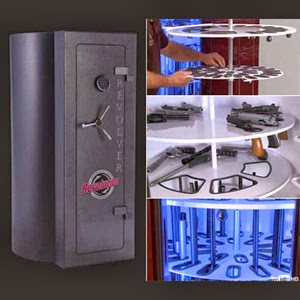
Gun Safe, Aegis Academy, Firearms TrainingIf you own a firearm, you need a gun safe. We'll get to what safe in minute, but spend a few seconds on why. Regardless of what state you live in, level of proficiency with the gun, or family situation, proper storage is your responsibility. Many states, including California, have enacted legislation, which will make you legally responsible if you do not properly store your firearms. You need to know the regulations and laws in your state, but beyond that there is a moral obligation all responsible gun owners have to protect their firearms from begin stolen by criminals. A gun safe is the best way to do that. Now back to what gun safe to buy!

Deciding on what gun safe to buy can be a daunting task. Looking past manufacturer claims and other gun owners' opinions are four real factors to consider in your purchase. Fit, Function, Finances, and F'ing Rating systems. If you just want some ideas and considerations, skip to the do's & don'ts section toward the end – if you want to get into the details a bit more – here we go!

Fit: What size gun safe will fit in the space you want to put it, and how much does the size and weight affect that decision.

Function: How many firearms, and what type, do you want to store. Do you want to conceal the safe? Do you need quick access? What kind of lock works best for you, and is it fire safe?

Finance: How much is in your budget? Can you afford to spend more for better protection, desired features, or perks?

F'ing rating systems: They have a word for people who truly understand this stuff – they call them lock smiths. I'll try and keep it simple!

Fit and Function = Size and Weight

If you have a large collection you need a large gun safe. If you plan on adding optics to your guns, you need space between the firearms so they do not get scratched or banged up as you take them in and out. Plan to add a shelf on the top for magazines and extra gear. A safe of about 56 to 58 inches should hold most long guns. Interior space will depend on how many guns you want to store.

Common sizes range from a small hand sized pistol safe to 60 inch gun safes that will hold dozens of rifles, and still have space left over for handguns and shelves. When it comes to weight, a 500-pound safe is not that heavy. A 2000-pound safe on the other hand is probably static – but that will require professional installation – and you may not like the cost of moving it if you buy a new home! If its not permanent, consider two smaller ones if you need that much space. Around 750 pounds is a good compromise. Heavy, but you can move it with a dolly when needed.

What if you want a concealable or quick access safe? Obviously weight is an issue, but you are trading both capacity and durability for compact size or the ability to mount it in a wall or drawer. These safes are designed for that purpose and are generally not designed for large collections. A good example of a quick access handgun safe is GunVault or Stack on. You will lose thickness and durability as a trade for accessibility, but most of these brands still provide fire safety ratings on par with larger safes.

Companies like Bed Bunker or Ledgelokr offer a line of closet, wall, and furniture concealed safes as well as options for your vehicle. The price of a concealable safe is high, with rifle and shotgun versions ranging from $1000 to $2500. Hand safes for handguns can be found easily for between $75 and $200. GunVault 2000 can be found at Cabela's for $165 and comes with both key locks and code versions. Smaller safes like this are great to give you access at night should you need it, but their portability make them unsuitable for long term storage.

Fit and Finances = Construction and Thickness

The quality of the safe is important, and you should go with a known, trusted manufacturer. When choosing your safe, continuous welding is better than stitch welding. Cheap safes use plastic bonding instead of welding, which is much weaker and not fire resistant. A fire axe can penetrate a 12-gauge panel of steel, while 10-gauge will take a concrete saw to cut into. The thickness of the steel will make cutting or drilling harder, but they will also be much heavier. Eight to 10 gauge steel provides the best balance between the two, 8 Gauge steel being 3/16 inch thick.

Function and Finances = Locking Mechanisms, Bolts, and Hinges

There are traditional biometric locks and rotary and digital combination locks. Of course key locked gun safes are available, but as they are the easiest to defeat, I do not recommend them. For tall free-standing safes, or gun safes where ease of access is not a requirement, I would recommend a rotary or digital lock. There is a reason rotary locks are still around and in use – they work. They are more durable and trouble free than electronic ones. Tough they can be considered less convenient and they do take more time to open than a digital version.

A quality safe will have at least two bolts on each side of the door (meaning all four sides, right, left, top, and bottom). In this case more is better, and many high-end safes have several bolt locks. Multiple bolts prevent prying attempts on the door, and make drilling time consuming and difficult. The bolt linkage is a more likely the target of attack, by drilling a hole to insert tools to move one bolt inward, causing all of them to move and disengage.

Hinges come down to internal vs external, and in actuality have little to do with the locking ability of the gun safe. External hinges allow the door to be opened 180 degrees, and can often be removed for transport. Cutting or attacking the hinges does nothing to defeat the locking bolts on a safe. Internal hinges give a smoother outside finish, a thinner profile and are useful in concealed and/or handgun safes.

F'ing Rating systems…

This stuff is confusing. Here in the U.S. – Underwriters Laboratory (UL) ratings are the standard, and here is the short version:

Group I locks are resistant to skilled attacks. What that really means is they are expensive, and designed for banks and larger businesses.

Group II locks are resistant to semi skilled attacks. There are available, affordable, and adequate to keep thieves away from your guns.

When looking for a good lock, look for a UL Group II certification, which means they are resistant to semi-skilled lock picking attempts. A good example of a rotary combination lock is the Sargent & Greenleaf model 6730. I have seen this lock listed on several forums as both a great value and reliable. Just make sure you spin the lock when you close the door!

Digital locks are quicker, and, unlike rotary locks, lock themselves when the door is shut. They do require batteries, which should be replaced every year, and with any electronic device they have a failure rate. You want to buy a good commercial grade lock that will not wear out from regular use. The combinations on digital locks are easier to change, and of course easier to forget if you change it regularly. Buying a Group II digital lock typically comes with a feature that locks the bolt should the keypad be punched or forcibly removed. Again Sargent & Greenleaf products seem to get great reviews. Find more information on the subtypes of electronic locks here.

UL Residential Security Container (RSC) is the minimum standard you should have for your gun safe. Essentially to obtain an RSC rating, the safe goes through a battery of tests including heating it to different temperatures, drop tests, indirect explosions, and lock tampering. Ratings like TL-15 correspond to the amount of time common tools will take to defeat the safe. TL-15 is 15 minutes; TL-30 is 30 minutes, and so forth. Note these are attacks against the gun safe door, and the sides are more vulnerable. There are other testing systems such as: B.T.U/V.D.M.A. certifications (Germany), J.I.S. (Japan), and CSTB (France). For detailed information on Underwriters Laboratory and descriptions of all the ratings and terms go to www.ul.com or www.gunsafes.com.

Underwriters Laboratory completes the fire safety ratings that are approved by OSHA as well. Another standard is Intertek ETL, used by companies like Cannon and Sentry Safe, and their standards meet or exceed UL's according to their websites. One concern is that there is no oversight for manufactures claims, so watch out for terms like "UL listed fire liner", "fire board", or "ceramic fire layer". These are the components used – not the standard to which they are tested. Fire ratings are typically denoted in time increments. 15, 30, and 60 minutes are fairly common, and longer is generally better – and more expensive.

The average house fire can exceed 1200 degrees F within 10 minutes, and while many safes are rated for higher temperatures, the testing conditions are done at a slower pace to inflate the protection time claim. The best commercial grade safes are "B" rated construction, typically used by businesses like jewelers and banks. Quality materials you should look for are sheet-rock with fiberglass embedded and ceramic wool. For more on fire ratings check here.

Finally know what kind of door seals your safe comes with. Low-end safes come un-sealed, which increases the possibility of moist air seeping in, creating rust on your valuable firearms. A good seal will protect against rust, prevent flooding, and seal the safe in a fire, as well as provide protection against water damage from fire hose spray.

This 13 minute video covers a lot of the topics covered in this article and will show some examples of attacks on safes and may be worth watching if you want even more information.

A few Do's and Dont's for Gun Safes…


Research the gun safe's specifications

Bigger isn't always better, heavy gauge steel is better than light gauge and harder to drill or cut through. Many large gun safes are thin walled and can be penetrated by an axe or pick. Like the gauge on a shotgun, the lower the number the thicker the walls. Eight to 10 gauge steel is a good compromise between strong vs light, as most personal gun safes are not broken into ala' the Italian Job, but snatched and broken into later. Also look at the way the steel is welded. You want a safe that is continuously welded, vice stitch welded for better strength and durability. Look for a safe with UL RSC.

Research the gun safe's tampering safeguards

A quality safe will feature devices to defeat drilling. Battery-powered hand tools can easily defeat a cheap safe. What you are looking for are re-lockers to help ensure the safe remains locked in the case of a burglary. These are hardened pins that are triggered during an attack, and cannot be retracted. The number of re-lockers depends on the safe's size and burglary grade.

Buy a fire resistant gun safe

Spend the extra money, but make sure you read the specifications; many fireproof safes are in fact, not. Look for the UL RSC rating, which specifies the time temperature the safe can tolerate. Safes lined with sheet rock are low end, ceramic wool is better, and high-end safes have concrete and vermiculite. According to the U.S. Fire Administration there were 364,500 house fires totaling more than six billion in damages. So spend the extra money.

Don't store powder or primers inside your gun safe

Do not create a bomb by placing explosive compounds in a seal container. Store them in a separate cabinet of light material like wood, and if possible limit the amount to what is required to prevent larger damage.

Don't make it easy to steal your safe

Take into consideration where you place it. You should never place a gun safe in an area where it can be easily seen. Do not rely on the weight of the gun safe to stop a thief; a pallet jack can easily lift a large heavy safe. If possible attach the safe to a hardened point like a wall stud or the floor. An easy to steal safe is just a mobile container, once in the truck, I can take it anywhere and go to work on it!

Final considerations:

Once you have figured out what kind of safe you need, you can look into other aspects of your safe, the interior layout for large safes, lighting, anchoring, and securing the safe, flood protection, and of course maintenance of the gun safe and its contents. Just like any other meaningful purchase, shop around and look at the specifications before you buy. Read reviews on the products you're considering and go to a reputable store or dealer. You should also be aware of the laws and regulations regarding storage of firearms and what standards on gun safes your state has. Its up to you to make the right choice, protect your investment, and protect your family. Buy a quality gun safe.

First Published at Aegis Academy

Posted by Aegis Academy Staff.