Showing posts with label Personal Security. Show all posts

Wednesday, September 30, 2015

Violence in America

Violent Crime - Violence in America
Scholars, pundits, and activists have been more and more frequently mentioning the decreasing homicide rate in our society while the media paints a very different picture. We are at the low point of a near twenty-year decline in violent crime in America. Despite this quantifiable decrease, American perception stubbornly holds on to the idea that America has become a more violent and dangerous place. While in some major cities we can see evidence that trend is potentially reversing, the bottom line is America in much safer then it was twenty years ago.

Much of that perception is based on the frequency of reporting of violent crime by our media. The statistics are well documented and present a grossly inflated view of crime as a percentage of other events. As we look at media over time, we can see a steadily increasing diet of violence, crime and social unrest fed to the American public via movies, TV shows, gaming and the news. Unfortunately, the reporting percentages have no correlation with the incident rates and are purely providing programming based on what American viewers choose to watch.

The American Psychological Association has published study after study finding that violence viewed on TV and in person, is associated with increased aggressive behavior. The classic example of these types of experiments is the Bobo doll experiments conducted by Albert Bandura in the early sixty’s. In two subsequent experimental iterations, Bandura deliberately exposed children, ranging from two and a half to six years old, to adult acts of aggression directed against a Bobo doll. The first exposure was in person and the second iteration was exposure on television, but the results were the same. Exposure to violence results in increased violent actions.

Age of Offenders
From the results of these studies and many more like it, many Americans make the claim that we are raising an ever more violent generation of young American. This reasoning fits with our predisposed notion that society is becoming more violent despite evidence to the contrary. Unfortunately, our perception often has little to do with reality. The average age of violent offenders has actually increased, and not decreased over the past thirty years. Sixteen to twenty-four year-olds have always accounted for the lion’s share of violent crime. As the boomer generation ages, we are at the end of a historically rare reduction in the youth bulge in America. Despite that fact, the demographic shift alone is insufficient to account for the decrease in the violent crime rate.

Two factors are easy to quantify and simple to explain. First is the massive expansion of our judicial system. We have increased spending by nearly 171% over the past 30 years. That spending has increased the number of police on the streets, the number of judges and the number of jails. As a proportion of GDP, which has remained pretty flat over same period, we have massively increased the percentage of resources dedicated to security services. Continue Reading...

Author : Patrick Henry

Wednesday, September 9, 2015

Resilience – Why it Matters!

Resilience
Resilience ~

: the capability of a strained body to recover its size and shape after deformation caused especially by compressive stress

: an ability to recover from or adjust easily to misfortune or change

When we look at business, psychology, or sociology the concept of ‘recoverability’ is a key component in measuring the health and effectiveness of an organization, an individual, or a society. In dealing with unpredictable or unexpected events, the most successful organizations, people, and societies are those able to adapt and create novel solutions to novel circumstances. Elements of the successful actors are creativity, commitment, confidence, experience, and talent but in the case of shocking events the most common term for this collection is resilience.

When we look at business, psychology, or sociology the concept of ‘recoverability’ is a key component in measuring the health and effectiveness of an organization, an individual, or a society. In dealing with unpredictable or unexpected events, the most successful organizations, people, and societies are those able to adapt and create novel solutions to novel circumstances. Elements of the successful actors are creativity, commitment, confidence, experience, and talent but in the case of shocking events the most common term for this collection is resilience.

The black swan is the typical example of a completely novel event. European explorers had never seen a black swan as that genetic mutation did not exist in Europe. In 1697, when Dutch explorer Willem de Vlamingh discovered black swans in Australia, it was something
never before considered. This term has come to be used to describe unpredicted events ranging from natural disasters to terrorist attacks and is used extensively in the risk management field. Detection and deterrence in personal security, and prediction and risk mitigation to businesses are very different from the ability to react effectively to novel inputs.

Resilience - Japan Earthquake
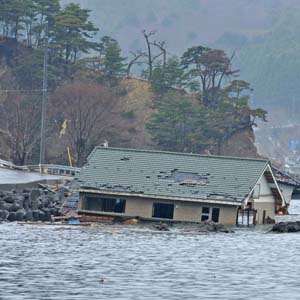
This phenomena of extraordinary shocks to business systems is studied extensively in risk management with supply chains being the primary target, and easiest to quantify metric, of redundancy and alternate capabilities. When an 8.9 magnitude earthquake struck off the coast of Japan in March of 2011, Honda, Toyota and Nissan were all forced to shut plants in the affected region. While Honda and Toyota were massively impacted well into the fall, Nissan had recovered its production capability largely by April, and completely by July. They had invested in redundant production capability and created a globally dispersed, redundant product sourcing and assembly capacity. Ultimately, Nissan gained a long-term increase in total market share. It is largely considered the model for effective supply chain resilience.

At an individual level, it is usually studied by psychologists looking at the impact of traumatic events after the fact; most frequently in the study of Post Traumatic Stress Disorder. More recently, organizational psychologists are starting to attempt to develop quantifiable programs to develop resilience in a variety of aspects including management and leadership. Military training has been attempting to build resilience into tactical leaders since the dawn of armies. From a general security perspective, we are not at great risk from what we can predict, we are at great risk from what we cannot predict. The only mechanism we have to defeat black swan events is resilience. From an individual security perspective, what we should be concerned with is how we can create resilience in individuals.

As we look at the ability to forecast or predict events from an individual perspective, the concept of detection and deterrence can become even more challenging. Organizations have the ability to hire professionals to evaluate supply chains, identify critical risks and develop plans and take action to mitigate those risks in an academic setting. Most private citizens do not have a full time security detail conducting the equivalent of those skills for them, and further, the consequences are personal. It makes us even less likely to account for the potential black swans in our personal lives then in our professional.

Worse, we tend to overestimate our abilities in the personal security arena where we are rarely measured. While the risk of being fired is substantially stressful, it is not the same as the risk of being injured or killed. That fear often translates in to denial. Despite the fact that most citizens have little to no experience or training that enables them to be more effective then “average” in avoiding or deterring threats, when polled, most consider themselves “above average”. We see this common belief in a variety of skills and most drastically in that 85 - 90 % of Americans believe they are an “above average” drivers… Worse, our misconceptions are reinforced that we are superior in our ability to avoid violence due to the relatively infrequent occurrence of violent attacks (or car accidents) that would provide us evidence contrary. 2/3’rds of our society will never have their assumption challenged, but more then 32% will…

If we consider the skills required to deal with expected scenarios, they are quite different then when dealing with novel scenarios. It is the difference between being taught what to think as opposed to being taught how to think. Expected scenarios are studied, quantified, and measured. The inputs and outputs can then be evaluated and placed on a scale of positive vs. negative consequences and those inputs prioritized accordingly to maximize positive outcomes and minimize negative outcomes. We can then teach people what to do when they see relevant inputs; in other words, what to think and do.

In dealing with completely novel scenarios, by definition, we will not recognize the inputs, and will have no idea what the most likely outcomes to our actions will be. Time and time again, in studying responses to novel events, we find that people, organizations, or societies that have a broader scale or wider range of abilities and skills to call on, perform better. The simplest example is the supply chain as discussed with Nissan. They had more diversity in production, and were able to leverage that to recover quicker, ultimately achieving a long term advantage over their competitors.

On the individual level, psychologists have proposed that developing strengths are a more useful endeavor in determining the long-term success of individuals. The thought is that individuals will gravitate towards fields in which they are competent, and be judged as successful based largely on their ability to apply that core competency. In dealing with predictable environments like employment, developing strengths is a more productive allocation of time than attempting to improve on irrelevant shortcomings. The problem arises when confronted by novelty. Those with a broader range of experiences have proven to be clearly superior in finding solutions to novel challenges then those with more specific skill sets.

personal security
As we look at threats to organizations or individuals, we see a list of potential inputs, appropriate responses all with the goal of mitigating the risks we know about. Those are not the risks that tend to cause truly negative outcomes. It’s the ones we didn’t see coming that consistently take the largest toll. Developing resilience requires a commitment to the development of individuals in skills and experiences that may not directly impact their day-to-day activities. For an organization to justify that type of investment is rare, and individuals are equally unlikely to decide to improve skills they have yet to need and see no short-term benefit to developing.

The reality is that as we look across existential threats to organizations or individuals, resilience is the key determinant of survival when these novel events occur. Next month, we’ll take a look at exactly how critical resilience is to personal security. Further, why it so difficult for us to predict negative outcomes in our personal lives; and we’ll take a look at how we can build resilience into individuals, leadership teams, and organizations as whole. Resilience is a key component to the safer communities we all desire to live in!


Author - Patrick Henry


Wednesday, July 29, 2015

An Alarming Trend – Women Are Shooting

Women Shooting Alarming Trend
A couple of years ago, a news reporter at a Detroit television station announced that people using guns to defend themselves from marauders may be the beginning of “an alarming trend.” Brace yourself, as the state of the Union may have further deteriorated since. In a related conversation, one of my training industry colleagues asked me if I had also noticed a similar trend – an increase of women in participation of more-than-cursory firearms training.

The answer is a resounding “yes!” The professional firearms instruction community is indeed witnessing more and more women of all demographics arming themselves in America. As a personal security educator, whose job it is to transform his clients into hard targets, this brings a tear of joy and inspired me to dig deeper. Inquiring of other professional educators plus a little snooping around the net for more detail, this turned out to be quite the hot topic. Although many reasons were suggested, the three most common out there seem to be: the need to independently defend oneself (self-reliance), current events, and the fact that it has never been easier to get involved.

Edged Weapons Defense at Aegis Academy by Steve Tarani
But why now? It makes sense that more women seek to be individually armed as they become increasingly independent, but the number of female shooters has skyrocketed in just the past decade. The “Changing Gender of Permit Holders Data” for seven states shows a general upwards trend in the percentage of permit holders who are women. Florida: the percentage of permit holders who are women rose from 18% in May 2012 to 23.1% in June 2015. Indiana: from 18.0% in June 2012 to 22.7% in March 2015. Louisiana: from 18.3% in 2009 to 24.8% in 2014. North Dakota: from 11.2% in 2010 to 24.9% in 2014. Tennessee: from 23.3% in 2008 to 29.3% in 2014. Texas: from 17.26 in 2004 to 26.7% in 2014. Washington State: between 2005 and 2014 with the growth rate for women getting new permits is twice as fast as that of men. Assuming that these changes in the shares of permits held by men and women for these seven states is similar, the number of permits since 2007 has increased by 270% for women and by 156% for men. (Source: Crime Prevention Resource Center http://papers.ssrn.com/sol3/papers.cfm?abstract_id=2629704 )

Most of us are familiar with the 19th century quote “God made men, but Sam Colt made [them] equal.” Firearms are the great equalizer. The average woman is not as physically strong as the average man. In a violent hand-to-hand physical struggle against one or more male attackers, even if she goes to the gym five days a week, pumps iron and runs marathons, the woman is probably going to lose – unless she has a gun – and knows how to use it. According to Jason Hanson, a former CIA Officer and the author of “The Covert Guide to Concealed Carry,” the bottom line is, “a gun is without a doubt the best way for a woman to defend herself in a worst-case scenario.”

Women Shooting
Armed and well-trained women are a predator’s worst nightmare. As such, it may be no coincidence that between 2007 and 2014, murder rates have fallen from 5.6 to 4.2 (preliminary estimates) per 100,000. This represents a 25% drop in the murder rate at the same time that the percentage of the adult population with permits soared by 156%. Overall violent crime also fell by 25 percent over that period of time. (Source: Crime Prevention Resource Center http://papers.ssrn.com/sol3/papers.cfm?abstract_id=2629704 )

It’s important to approach this topic from the bottom line: in a life-or-death defensive situation, a firearm operated by a qualified user is the most effective hand-held protection tool available to immediately stop a physical attack – bar none. This same premise explains why the majority of my clients – male and female military, law enforcement, and armed federal agents, are required to carry firearms and why they are also required to qualify with them regularly.

Shotgun Course Firearm Training
Even for those who don’t carry a weapon for a living, owning a gun satisfies only one aspect of personal protection with a firearm. Quoting another of my colleagues (USMC Colonel and competitive shooter) “The belief that owning a gun makes you safe is as absurd as believing that purchasing a scalpel makes you a qualified surgeon.” In both cases, the blind act of owning these tools alone without professional firearms and defensive mindset training, and preparation for their use, actually makes you less safe. The two other critical requirements for personal protection with a firearm include professional training and weapons maintenance as you are responsible for safe handling, accurate round placement and appropriate storage.

It seems that this “alarming trend,” as gleaned from interviews with female graduates of defensive firearms training from all over the country, provides a means of leveling the playing field, ensuring personal safety, and a sense of being in control. That sense of control is empowering, and is something firearms-trained women often seek in other aspects of their life. The personal confidence and self-assurance that is a by-product of firearms training, lends itself to a more positive self-image. An image that when observed by a predator hunting for his next victim, may cause him to realize that he may be the one in harm’s way.

About Author- Steve Tarani


Firearms Instructor, Unarmed Defense Program Manager
Serving the federal training community for more than 25 years, Steve is a respected Protective Programs subject matter expert (SME) and service provider to numerous high/ low-profile US federal agencies and the private sector. Specializing in operational readiness, he is actively contracted by the US Department of Defense, National Security Agency, Federal Bureau of Investigation, Department of Homeland Security, Drug Enforcement Administration, and many others. Steve is himself a former US Defense Intelligence employee (CIA), Protective Programs Educator and formerly on staff at the US DOE National Security Institute (Security Force Training Dept.) at Kirkland Air Force Base (NM). At the time of this writing, he is a published author of seven books and remains an advisor to the US Department of Justice (USDOJ) and the International Association of Chiefs of Police (IACP). He is additionally a knife designer and the architect of IACP Model Policy on the carry and usage of knives by federal, state and municipal peace officers.

Wednesday, July 22, 2015

What Cyber Attacks Say About Our Values


New York Stock Exchange
Two weeks ago we saw United Airlines grind to a halt for well over an hour due to technical challenges with the booking system, so severe that at one point they were forced to issue tickets by hand.
This ultimately led to many being people having travels delayed, missing flights, and having to be rescheduled. Later that same day, trading was halted on the NYSE due to a "technical glitch". The nations pundits started screaming "We’re under Cyber Attack!"

Last week it was the Office of Personnel Management. They are a government agency that investigates people’s backgrounds for eligibility for security clearances. My personal data and literally everyone who has ever held a clearance since 2000 was compromised – most likely by China. This week it seems to be that Ashley Madison (the online dating site for people looking to cheat on their spouse) is the latest victim of an attack.  An anonymous hacker conducted this one as he has an axe to grind about the company making false claims about the security of the data its customers enter.

From national entities, to private companies, and professional services to interpersonal relationships, we have become seemingly dependent on IT infrastructure. I can’t remember the last time I actually walked into a bank, and I’m fairly certain Ashley Madison has streamlined the process considerably for those too busy to search the physical world for a fellow adulterer. Hand written airline tickets? My guess is they are still trying to figure out who was really on what plane. The impacts of disabling the NYSE for even a few hours are severe. Yet, we managed to build all of these systems without that technology in place.

A "cyber attack" is a disruption to the convenience-based technology on which we have become dependent. In most cases, it is that and nothing more. Hacker We used to dispatch everything from police to ICBM’s without computer systems. Certainly it was not as efficient as it is today, but we managed to get things done. Slower and less efficient, but still functional. I am confident that the Nuclear Command Structure has the ability to work around "Cyber Attacks" and cell phone outages, as do most police and emergency services. I am equally confident that most Americans would be incapable of functioning without those conveniences for an extended period of time. (Culture of Dependence?)

Regardless of how inconvenient it becomes, the shutdown of the entire electronic system on which we survive causes zero casualties. It is the civil unrest, looting, and rioting that is generally associated with prolonged power and convenience outages that get people hurt or killed. Over longer periods, it is the inability to get food and clean water. Rest assured that FEMA and state agencies have a plan to deal with this potential as well… We need only look to Katrina to see how effective we can expect that plan to be.

I am not trying to minimize the real impact of a long-term network shut down. We would expect that there would be many casualties from the ensuing civil unrest. Corporations spend billions on cyber security. Their profit margins (the reason they exist and can provide jobs) depend on it. When we compare that to the expenditures to prevent workplace violence, physical security threats, and threats to the people they employ, those expenditures are minimal.

Consulting Services

Strangely, in the pre-computer based economy, people were the source of mission critical functions and transactions, and pencils, paper, and smoke signals were simply commodities used to pass that information. In the automated world of today, the system operator and maintainer is the commodity, it is the ability to transfer relevant information that has become the mission critical link.

Cyber Security is the mission critical function and what we as a society place value on because of the impacts on our economic engine. When it comes to your personal safety and security, you are now and really always have been on your own. At least I haven’t seen the app that will take care of that for you. Yet…

Author – Howard Hall

Patrick received his operational training and experience from the U. S. Government, 22 years of which were spent in the Marine Corps where he served in the Reconnaissance, Infantry, and Intelligence fields. Patrick has worked as a contractor and as the Director of Operations at a private paramilitary firm specializing in training military special operations forces and providing protective services to select private clients. His education consists of an MBA from the University of Southern California (USC), and a BS from San Diego State University in Biochemistry, Cell and Molecular Biology and a minor in Psychology.

He holds an extensive list of security and training related certifications. He is an active member of Infraguard and the American Society of Industrial Security (ASIS). He has been a guest speaker at ASIS, the San Diego Industrial Security Awareness Council, The Counter Terrorism Symposium hosted by New York’s Mobile Trauma Unit, and other private organizations on physical security, travel security, and competitive intelligence collection counter-measures.

Thursday, June 18, 2015

Shotshells in Revolvers

Shotshells in Revolvers
In this article, I’ll answer a reader’s question regarding shooting Shotshells in Revolvers for personal defense. Specifically, I’ll discuss the difference between revolver shotshells meant for pest control and shotshells designed for personal defense.

“I’ve been reading the Ballistics Series and your articles on personal defense with great interest. Good stuff! Where I live, there are many other people living in my home and there are other homes very close to mine. So, I’m very concerned about using ammo that would either over-penetrate an attacker’s body or go through walls if I miss. I’ve got a Smith and Wesson 686 4″ revolver in .38/.357. I practice a lot with the lighter .38 special rounds, but keep the gun on my nightstand loaded with .357 magnum hollow-points. I’m worried that using that much power may endanger my neighbors. Many personal defense articles highlight the benefits of using a shotgun for personal defense. I don’t have a shotgun, but I’ve come across a shotshell designed for revolvers. I think that I can get the best of both worlds by loading my .357 magnum with these shotshells that will do the job without worrying about shooting through walls. I’d appreciate your thoughts on this.” – Anthony

Anthony, thank you for the question. You bring up a lot of good points worth highlighting here and I’m glad you’re going the extra mile by reading-up on personal defense and asking questions. In the following paragraphs, I’ll address the different aspects of this issue one topic at a time.

Personal Defense Solutions


First, you’ve highlighted an important issue… firearm/ammunition selection. There are many different opinions on this topic available through blog articles, books, and classes. However, there is no single “ideal” solution that will fit every individual and every situation. Every person has a different level of body strength, visual acuity, and training. Every person also has a different home layout, both inside and outside. And everyone lives in a different area with varying levels of criminal activity and concern.

Firearm Safety Training


In the most general terms, rifles are terrific stand-off weapons that can deliver powerful projectiles with a high degree of accuracy at a number of distances. This high power may be counterproductive in an enclosed environment. Handguns, on the other hand, are easy to operate and to conceal (throughout the house or on your person), but the shorter barrels produce less velocity and accuracy. Shotguns with a regular stock or pistol grip are a bit more unwieldy in an enclosed environment, but they offer significant power, a wider variety of projectiles or shot choices, and are easier to aim and achieve the accuracy required for the situation.

Ryan Finn – The Truth About Guns
Ryan Finn – The Truth About Guns.
http://www.thetruthaboutguns.com
In the photo to the right, you can see the results of a number of different results from ammunition that was fired through four layers of sheet rock. If you click the photo for a larger view, you can also see that only the #4 birdshot did not fully penetrate the 4 layers. Although the test does not describe how much energy each projectile maintained as it passed-through the fourth layer, it is clear that there was the potential for some degree of injury to an innocent bystander struck by a projectile that continued to travel through the walls. To read Mr. Finn’s article click here.

The bottom line is that there is an ideal firearm/ammunition solution available to meet the requirements of each individual to address threats in their environment. Since you own a .357 Magnum revolver, but are worried about over-penetration, you are making the right considerations for your individual situation.

Shotshells for the .357 Magnum


In this instance, you are both right and wrong. You are right in the fact that there are .357 Magnum cartridges that contain birdshot instead of a solid projectile. CCI/Blazer produces such a cartridge. It is the Blazer Shotshell #3738, which contains a total of 100 grains (about 150 pellets) of #9 birdshot in a small plastic capsule. CCI lists the muzzle velocity at 1,000 feet per second.

At first glance, it seems like shooting an assailant with this cartridge would create a nasty wound. Hell, 100 grains of shot traveling at 1,000 feet per second also sounds like it would produce the result desired. Quick math tells us that this produces 222 ft/lbs of energy… if it was a solid projectile! However, it is not a solid projectile, but a group of small projectiles that weigh about 0.67 grains each and would only produce any degree of damage if they remained clustered close together. Continue Reading »

About Author Howard Hall

Howard has served for more than 20 years in the Marine Corps. He has served as a Platoon Commander, Company Commander, Battalion Executive Officer, Regimental Operations Officer, and Battalion Commander. He has multiple combat tours to include serving as a military transition team member in Fallujah. He is an NRA Certified handgun instructor and holds numerous Marine Corps training credentials. An active competitor in action pistol (United States Practical Shooting Association), long range rifle (NRA F-Class), and shotgun (Amateur Trapshooting Association, National Skeet Shooting Association), howard has earned numerous accolades and medaled during DoD competitions with the 1911 platform in bulls-eye shooting.

Monday, May 18, 2015

A Semester Abroad: Arrogance, Apathy, and Ignorance, Part 3

The arrogance that accompanied by 21st year of life led me to ignore most safety considerations for the entire six months of my study abroad program in Moscow, Russia. In fact, despite enduring and surviving a rather scary piano-bar attack, towards the end of my stay in Moscow I was more confident than ever in my “guaranteed” security; and more prone to apathetically going about my final days in the city I had grown so fond of.

A Semester Abroad: Arrogance, Apathy, and Ignorance
In my previous article of the series, “Arrogance, Apathy, and Ignorance: What a Student Traveling Abroad Ought to Know“, I told the detailed story of the attack I encountered at a piano-bar on one of my first nights out on the town in Moscow. After having time to process the occurrence, and truly evaluate the role I played in increasing the potential for security threats to become a reality, I determined that an arrogant attitude coupled with ignorance of cultural cues led to an empty wallet and a night that most students cannot imagine happening on their study abroad adventure. I would like to say that after the night at the piano bar I “wised up” and began to take responsibility for my own safety; but, this could not be further from the truth. In this article, A Semester Abroad: Arrogance, Apathy, and Ignorance, Part 3, I will describe how apathy began to seep into my daily lifestyle as a student studying abroad. Ultimately, with just one month left in my stay, I was once again the victim of a criminal attack — only this time much worse.

Getting Too Comfortable


Many study abroad programs last for well over a month; in my case, six months. In the course of a six month stay, it is only natural to begin to feel at ‘home’, more familiar with the environment, and more comfortable with your surroundings. A student may begin to learn the unique social ques of the culture, the euphemisms behind much of the language used on the street, or perhaps the style of dress begins to become more attractive. By my third month in Moscow I had secured a part-time job as an English teacher, learned how to navigate the Moscow metro, and even made several local friends. I would certainly describe myself as being comfortable in my new-found environment, so much so that I began to dismiss (even more so than before) the common safety concerns that many international students spoke of in the dormitory. For example, the crowd of “hooligans” (as they were called by local Russians) that congregated around the corner market and the metro stop nearest my dormitory became common place; I seemed to never notice them, and was indifferent to their calls, choosing to tune them out.

It is quite normal to grow accustomed to one’s environment and if we as humans did not adapt appropriately we would have bigger issues. Never-the-less, too much comfort in a rather unfamiliar environment (three to six months can still constitute unfamiliarity!) can result in apathy; I simply did not care about these so-called ‘threats’ because as far as I was concerned I had for the most part disproved them with my comfortable stay in Moscow.

The problem with choosing not to care is you are choosing to not be aware. Situation awareness is defined as “the ability to identify, process, and comprehend the critical elements of information about what is happening to the team with regards to the mission.” More simply, it’s knowing what is going on around you; and no, it does not only apply to law enforcement officers or armed services members. Any student studying abroad must learn to exercise situational awareness habits on a regular basis. Growing too comfortable, too apathetic to the ebbs and flows of hooliganism, for example, can be dangerous. Sure, tuning out some guys that make incessant cat-calls your way is one thing; but, tuning out the whole picture all together is a risky mistake. Now, let me briefly introduce how my apathy, comfort, and lack of respect for situational awareness divulged into another security threat.

When You Least Expect It


Many of the international students that lived in the dormitory with myself and other Americans were scheduled to leave Moscow soon, and we all decided to gather at one of our favorite ex-pat restaurants for dinner and drinks. I had been to this place, “Papa’s” as we called it, countless times during my stay. At times I had even traveled by metro or taxi to and from the restaurant with absolutely no issues. “Papa’s” had become a safe haven for international students studying in Moscow, and the last place I expected to be scoped out for a dangerous kidnapping scheme.

Tourist taxi study abroadI enjoyed my night with friend, reminiscing about all the adventures we had while studying in Russia. As the night went out I grew tired and decided I should head home. I asked if anyone wanted to accompany me, but did not think twice to wait when no one wanted to go home quite yet. I payed my bill and walked out front where the familiar sight of a row of un-marked taxis waited to take the restaurant patrons home. I negotiated my fare with an average looking fellow, hopped in the front seat (something I had done countless times, yet turned out to be a costly mistake) and told the taxi driver where I would like to be dropped off. Shortly after, I knew something was not right.

As we drove farther and farther away from the center of the city, where my dorm was located, I grew more and more anxious — demanding to know where he was taking me. I began to frantically think of a plan, and curse my own stupidity…my own apathetic, too-comfortable attitude the dangerous realities of the big city. Unfortunately, ‘thinking of a plan’ when you are already in the middle of a dangerous scheme is quite literally too little too late. In the next few moments I suddenly realized that I had skipped over all opportunities for prediction and prevention when it comes to avoiding potential security threats; I now in the middle of my very own nightmare, and the only choice I had was to respond to the threat unfolding in front of my eyes.

Aegis Academy - Travel Security - Duty of Care

I demanded one last time to know where we were going, speaking Russian with some powerful colloquialisms mixed in a futile attempt at talking tough hoping that it would intimidate this man! As soon as I the words were out of my mouth, the real dangerous part of the attack began. While driving down the road, he leaned over and began to hit me while trying to remove my phone and purse from my person. Too little, too late…I was living out the worst possible study abroad adventure I could have ever imagined.

Closing


A recent report released by the U.S. State Department in 2015 revealed that choosing to travel or study abroad in Russia requires extra precautions to ensure one’s own safety and security. Criminal activity such as petty crime, physical attacks, and corrupt law enforcement is on the rise in the Russian Federation: “The social and political unrest in Ukraine has led to increasing political tensions between the Russian Federation and the U.S. and other Western nations. As a result, anti-American and anti-Western sentiment appears to be increasing, especially in certain media outlets.” Studying abroad now, even more so than when I studied in Moscow in 2013, carries new security threats. Do not let this deter you to the point of staying home (remember: You will face potential security threats in every country you travel to), rather choose to be prepared, well-equipped, and alert.

The facts are clear, and the warnings are there to benefit travelers…if we choose to listen to them.

In the next article, the last of the series, I will provide a detailed account of the ending to my taxi-cab ordeal. Though the violence escalated, I was able to escape (hence me living to tell about it!). Stay tuned for the end of the story and some final thoughts on how you can be in control of your own safety while studying abroad!

Stay Safe!

Author - Anna Johnson

First Posted on Aegis Academy

Monday, April 20, 2015

A Semester Abroad: Arrogance, Apathy, and Ignorance, Part 2

Traveling abroad is an opportunity for endless enrichment experiences. Traveling to unfamiliar territory also inevitably invites the opportunity for security threats. In the last article of this series, “Arrogance, Apathy, and Ignorance: What a Student Traveling Abroad Ought to Know“, I provided an introduction to my own travel experiences in Moscow, Russia as a student in a direct exchange program. I briefly shared about how my arrogant attitude towards my own status as an American citizen not only revealed my naivety about foreign cultures, but may have also resulted in the piano bar attack I described.

Travel Experiences in Moscow, Russia as a Student title=
In “A Semester Abroad: Arrogance, Apathy, and Ignorance, Part 2″ I would like to elaborate on the piano bar attack using a lens more analytical than theoretical. In doing so I will outline some of the mistakes that I made — be they false assumptions, improper preparation, or just plain old stupidity — which ultimately resulted in potential threats becoming a scary reality. With recent reports showing that each year near 300,000 American students study abroad, roughly 65% of these students are females, more discussion needs to be had on issues of travel security; because ultimately if you find yourself facing an attack situation then you have already made mistakes that led you to this point. Knowing how to prevent safety and security issues when traveling abroad is the best self-defense mechanism you could ever teach yourself.

Lesson One: ‘Prepare for the Worst’ is Not for the Weak!


Traveling to Moscow, Russia I would have never predicted that I would be the victim of a violent attack, let alone the victim of two violent attacks. Growing up in America where statistically two-thirds of Americans will never be the victim of a violent attack, I had grown comfortable with the assumption that my safety was practically guaranteed. My first presumptuous mistake was made long before my plane ever touched down in Moscow — I decided to dismiss the warnings of my friends and family as propaganda-motivated paranoia. I was not even remotely invested in any form of risk analysis — a process which considers any catastrophic events that could occur — but, I should have been. For students who are planning to travel or study abroad for any amount of time, particularly in an Eastern European nation, there are certain warnings which deserve your attention. You should give your attention to these warnings not only to alert your awareness to the possibility of such events, but in order to break down any false or arrogant assumptions you may have about the potential for such security issues. Here is a brief list of the warnings given to me by parents, friends, university officials, and experienced travelers of Russia which I, for the most part, dismissed:

  • Do not be out on the streets of Moscow after dark.
  • Do not go anywhere alone — day or night.
  • Avoid hailing taxis from the street. Instead, call a registered taxi company.
  • Do not drink (for too long) with a Russian. They can tolerate more alcohol than you. (Not a stereotype…a reality.)
  • Pick-pockets are slick. Take extra precautions to avoid being the victim of theft.
  • Do not carry too much cash on you. And never pull out your I-Phone (or smart phone) in an unfamiliar environment.

‘Prepare for the Worst’ is Not for the Weak
I failed to acknowledge, at one point or another throughout my stay in Moscow, nearly all of the above listed warnings. The series of events that led up to me being the victim of an attack at the piano bar, however, were the direct result of me assuming I need not pay attention to four of the above warnings. Talk about arrogant! Being prepared, cautious, and alert is not a sign of weakness. To the contrary, it demonstrates wisdom and a respect for the realities of the world that we live in.


Lesson Two: ‘Playing it By Ear’ Does Not Result in a Good Night Out


I could say that the best way to avoid being the victim of any sort of piano bar attack would be to avoid leaving your Moscow dorm room, unless traveling to class, the grocery store, or your nearest Visa office. The reality is, however, that most twenty-somethings traveling to Moscow, or any country for that matter, will choose to experience the culture in one way or another in daytime and at night. Entirely avoiding a threat may be improbable, but threat avoidance to some degree is certainly still possible with proper planning and situational awareness.

I certainly did not plan ahead to any degree on the night of the piano bar attack. A fellow American student knocked on my door and asked if I wanted to join him as we “went exploring”. Without a second thought, I grabbed my purse, all of my cash, and set out for a busier part of the city. Mistake: not giving it a ‘thought’ is typically not a good idea when traveling in unfamiliar, unforgiving environments.

We popped into a restaurant and ordered some traditional Russian dishes. After a while, we overheard two men sitting next to us speaking with British accents. We decided to be friendly and assumed these men were friendly Westerners. Before long we were sharing stories over drinks and eating up every word that these ‘friendly Westerners’ were telling us. Not once did we think to ‘red flag’ these men, despite the discrepancies in their conversation: misplaced accents with un-matching stories of origin, unusual advice which was contrary to all the warnings we had received elsewhere, and vague information about their own professional endeavors in Moscow. We simply went along with the coincidence of the night — we had found two friendly tour guides and it was time to play the rest of the night by ear. Mistake: assuming friendly strangers, no matter how much you may have in common with them, genuinely want to show you a good time.

Lesson Three: If It Seems Dangerous, it Probably Is


Threat avoidance
Threat avoidance is a period within the progression of any given attack cycle that only lasts so long. Eventually, a threat shifts from being potential to imminent. At such a point, there is no more avoiding a threat, only mitigating such threats.

As the first restaurant closed, we hopped in a street taxi (See above warnings) with our new British comrades and headed for Chinatown — a notoriously criminal part of Moscow. It would have behooved my friend and I if we had chosen to call it a night before heading to Chinatown, but again we assumed there was no need to worry. We arrived on a busy street and one of our British friends led us to his “favorite little pub” – a piano bar located undergrounds. The night carried on; I was consumed in conversation with our British friends, while my American friend struck up conversations with Russian patrons who, quite frankly, had had way too much to drink. All five of us (two Americans, two British, and a Russian) moved, on the request of the Brits to a small table secluded in the back corner of the restaurant — on the side without the piano. (Just a note: my hope is that at this point in the story you, my reader, are picking up on the numerous naïve, dangerous, and careless decisions that we made that night.) An older Russian gentleman had been pestering me all night, but my new-found British friend assured me that he was a regular here, and to pay him no mind.

Then, all of a sudden, one of the British men proclaimed he had received a text stating his mother had had a heart attack and that they must leave immediately. We offered our shocked condolences and encouraged him to be on his way. We, being filled with joviality at the nights festivities, decided to stay to talk to more Russians. Mistake: do not stay late, in a dark corner of an underground bar, with no one but locals around. Two are easily outnumbered.

We had stayed maybe twenty minutes after our British friends left when my friend excused himself to the bathroom. I told him we ought to leave when he returned. I was all alone in the corner when the older Russian man that had been a slight annoyance all night suddenly turned aggressive. And thus, the potential threats that had been there since the before we had ever left our dormitory were realized in actuality. I had not avoided them, I had not mitigated them, and now I was left to defend myself against these actual threats.

Physical ViolenceThe man pushed me into the corner of the table, while I yelled for help to anyone in the bar, while another Russian (the one that we had befriended throughout the night) stole my money and phone. Not a single bar patron looked our way — they were locals and knew better. My friend came out of the restroom only to be greeted by another Russian man in cohorts with this criminal scheme wielding a knife. He warned my friend not to interfere and that we would be able to leave soon. Sure enough, just as I thought that the physical violence was going to escalate to a point of serious injury, the older man stepped off of me and they fled the piano bar.

I tell this story not to dramatize the stupidity of the decisions I made that night, nor to fulfill any stereotypes about criminal activity on the streets of Moscow. I am telling this to encourage readers, especially those who may find themselves studying or traveling abroad in the near future, to take the time to think about your daily or nightly excursions. Listen to the warnings of those that care about you. Have a plan and stick to it. And most of all, do not walk into a trap — if it seems dangerous (underground bar in a criminal part of town) it most likely is.
Stay tuned for the next part in this article series, “ Arrogance, Apathy, and Ignorance: What a Student Traveling Abroad Ought to Know“, where I will introduce a different attack experience I encountered towards the end of my stay in Moscow. Along with this introduction, I will conceptualize apathy in terms of personal safety and security.

Stay Safe!

Author - Anna Johnson

Originally posted at Aegis Academy

Tuesday, April 7, 2015

Personal Security – Prediction, Prevention and Response


Personal Security Prediction

Prediction, prevention, and response are the general terms for the three options each of has when dealing with potential risks. We can predict that if we drive a vehicle at high speeds with a flat tire, we are more likely to be involved in a accident. That typically leads us to avoid the risk by taking some sort of action. We can prevent it from occurring by checking tire pressure periodically, or visually inspecting the vehicle prior to operation. We could respond by decreasing vehicle speeds when the car starts to become unstable. Clearly, response is the inferior option here. When it comes to safety these concepts are easy to grasp, but when it comes to personal security, they are largely ignored.

The term ‘personal security’ brings up a variety of thoughts, ideas, and definitions that vary widely from person to person. Some view it as a locked door, a security camera, a policeman or security guard, or an alarm. Having participated in, managed, and taught security practices for most of my adult life, I am continually confronted by two common misconceptions about security. These misconceptions hold true for military personnel, law enforcement and private citizens alike, and they likely stem from our tendency to generally define security in the terms previously mentioned.

The most common approach to personal safety and security is to simply ignore the potential that violence will impact you. We see this attitude in the bulk of people with whom we interact and it spans the spectrum of experience and backgrounds. This slice of society chooses to ignore the fact that criminals and miscreants might choose to target them. While they will readily acknowledge the existence of crime, they simply cannot conceive that it will impact them.

There are a number of factors in our society that reinforce this belief. The first is that, statistically, two-thirds of our society will not be the victim of a violent crime in their lifetime. If each day I look back on my lifetime and I have never been the victim of violence, then I have quite likely conditioned myself to believe that I will not be a victim today, or on any day in the future. This self-reinforcing delusion, is a powerful motivator to ignore potential risks and focus on “more pressing issues”.

The second is that the education system in America is convinced that if you insulate children from failure, risk, or negativity, we will produce happier, healthier citizens. We see this in the ‘no grades, everyone gets a trophy, everyone is special’ mentality. Worse, we see it in zero tolerance policies towards altercations or the suspension of students for pointing “Finger guns” or “pop tart guns” at fellow students. These police and actions remove the learning experience surrounding violence or simulated violence. Certainly, if I was the victim of a finger gun day after day, I could ignore it, enlist classmates or teachers to assist me, or change my behavior so that my finger gun pointer would choose to point it at someone else… Unless of course, I had no option save dependence on the system to protect me. It places the responsibility on the education system to protect them, leaving the child helpless in the equation.

Pistol Training at Aegis AcademyWhile I understand the theory, unfortunately what these attitudes and policies actually produce is a society of victims. From an economic perspective, that upward pressure on the supply curve (supply of victims) places downward pressure on the price of crime, creating more incentive for criminals activity. The more victims in a given population, the more criminals that will be produced to accommodate them. Creating a system of dependence is exactly how third world politics is played, and it is sad to see the American political system following suit.

Another counter-productive societal norm is that there is a persistent belief that someone else is responsible for an individual’s personal security. The reality is that no one can effectively take responsibility for someone else’s security. People who live in an environment where they are told they are helpless, or that it is unnecessary to take a personal interest in their own security, are unlikely to do so on their own. This leads to the next most common misconception; that personal security is the responsibility of someone else.

Be it police, military, or firemen, any safety or protective services professional will tell you that it is impossible for another person or group of people to guarantee the safety and security of any single person.Read more >>

Author - Patrick Henry (President at Aegis Academy)

Patrick Henry received his operational training and experience from the U. S. Government, 22 years of which were spent in the Marine Corps where he served in the Reconnaissance, Infantry and Intelligence fields. During his active service, he spent more then five years deployed overseas in combat, operational and training assignments. After the military, Pat worked as a contractor and as the Director of Operations at a private paramilitary firm specializing in training military special operations forces and providing protective services to select private clients. His education consists of an MBA from the University of Southern California (USC), and a BS from San Diego State University with an emphasis in Biochemistry, Cell and Molecular Biology and a minor in Psychology. He holds an extensive list of security and training related certifications from a variety of government and nationally recognized entities. He currently sits on the advisory committee at USC’s Master of Veterans Business Program, and is an active member of Infraguard and the American Society of Industrial Security (ASIS). He has been a guest speaker at ASIS, the San Diego Industrial Security Awareness Council and other private organizations on physical security, travel security, and competitive intelligence collection counter-measures.

Tuesday, March 31, 2015

ISIS – Can they target American Military Personnel on U. S. Soil ?

ISIS recently issued a global 'order' to target American military members, publishing a list of 100 names along with a variety of personal details. Undoubtedly by now, the U.S. Defense Department has provided security assistance for those named in the publication. Additionally, they have issued a list of instructions to all military families to effectively do what they should have been doing all along which boils down to: keep private and personal information off of social media. There is no simple long term solution to this potential problem.

News Report
Additionally, this is not the first time this has happened. The self-proclaimed Islamic State made this request about a year ago on Jihadi social media sites asking Muslims to attack military personnel, and determined that their families were acceptable targets as well. This attempt to extol the followers of Islam to do violence against military members and their families has resulted is ZERO attacks. I am not saying there is no risk, nor that all American military families should not start to be more careful with the amount of personal information they display on Facebook. What I am saying is that the threat from ISIS here in the United States is rather remote.

When ISIS calls for Muslims to commit acts of violence globally on their behalf, we have a precedent for who responds. Men like Aaron Alton and Zale Thompson, Man Haron Monis, and Martin Roulea respond. These are individuals with extensive criminal backgrounds (all but one violent), who had been recently "radicalized" (converted to Islam), and decided to act out. Is it terrorism when a criminal acts out in the name of Islam, or is just an extension of there penchant for violent behavior? That is the question analysts will study and likely never be able to answer fully; but from a practical perspective, it doesn’t really play into solving the problem.

Social Media
What ISIS specifically provides violent criminals is an excuse to act out. The emotional appeal of supporting the establishment of a global caliphate probably has less appeal then the sensational media reports that are likely to ensue. Acting under the banner of Islam provides a higher purpose, then just attacking as a local cop. How much that justification plays into the actions of long-term criminals on the outskirts of society remains to be seen.

What we do know is these Islamic converts are, in these four examples, is ostracized from social opportunity by virtue of their criminal past. They have poor social skills, and were all grossly uneducated. These are the types of people who are attracted to a random call for violence in support of a far off cause. They are quite different from the Boston Bombers, the Charlie Hebdo attackers and other comparatively educated Islamic Extremists. These individuals had received training and support from Muslim Terrorist organizations. These people developed a specific plan and executed it reasonably well.

It is the latter type of Muslim terrorist that has the ability to mount a successful attack against a specific target, not the former.
Terrorist
When you look at the impact of a successful attack against military members, it would be significant. While most people are intelligent enough to differentiate between the two types of attacks, the ignorant criminal type of Islamic terrorist is probably not. Meanwhile ISIS takes credit for every criminal follower of Islam who does violence against the West.

What we can expect to see is more of the same. Socially inept, disenfranchised, ignorant criminals committing violent acts under the banner of Islam. Those are hard to predict, difficult to identify, and nearly impossible to prevent. Conversely, those capable of planning, waiting, and executing an act of terrorism requires training, support, and intelligence. In seeking this information and skills, they often identify themselves to national and international security forces. This is where we catch and prevent attacks from occurring – and occasionally fail to prevent.

American military families probably have nothing more to fear this week then they did last week or the week before. Yes, they are targets, but the random criminal attracted to Islam is unlikely to successfully pull it off. The Muslim terrorists have yet to pull it off in the United States, and probably not due to a lack of effort. In short, the media frenzy over the threat to U. S. military personnel is not well thought out. It espouses a capability that ISIS has yet to demonstrate and who has largely touted that ability for years.

In closing, ISIS requesting more attacks has not changed the threat profile of their intended target. Hopefully it has raised the awareness of responsible social media use among potential targets (and everyone else).

Author: Patrick Henry (President)

Patrick received his operational training and experience from the U. S. Government, 22 years of which were spent in the Marine Corps where he served in the Reconnaissance, Infantry, and Intelligence fields. Patrick has worked as a contractor and as the Director of Operations at a private paramilitary firm specializing in training military special operations forces and providing protective services to select private clients. His education consists of an MBA from the University of Southern California (USC), and a BS from San Diego State University in Biochemistry, Cell and Molecular Biology and a minor in Psychology. He holds an extensive list of security and training related certifications. He is an active member of Infraguard and the American Society of Industrial Security (ASIS). He has been a guest speaker at ASIS, the San Diego Industrial Security Awareness Council, The Counter Terrorism Symposium hosted by New York’s Mobile Trauma Unit, and other private organizations on physical security, travel security, and competitive intelligence collection counter-measures.

Source: http://aegisacademy.com/community/isis-can-they-target-american-military-personnel-on-u-s-soil/

Tuesday, March 24, 2015

A Semester Abroad: Arrogance, Apathy and Ignorance Part 1

"Assumptions are dangerous things."- Agatha Christie

Student Traveling Abroad
University-aged students are more and more choosing to travel to foreign countries to participate in study abroad, direct exchange, and semester abroad programs. While these education and travel opportunities provide invaluable experience to young adults, they also come with hefty price tags and unique security concerns. If you are a student, or a parent of a student, who may be traveling abroad to study in the near future then this article series is for you. Your student's life is far more valuable than any Ivy-League education - learn how to prepare for a semester abroad by reading through my own mistakes while traveling abroad in Russia, in this article series " Arrogance, Apathy, and Ignorance: What a Student Traveling Abroad Ought to Know."

In the first article of the series covering 'arrogance', I will explore how an arrogant perspective can lead to false assumptions about one's safety while traveling abroad. A spirit of honest reflection has allowed me to identify many flaws in my attitude, the ways in which I prepared, and the habits I practiced before and during my time in Russia. Here, I will specifically focus on how danger manifested itself in my arrogance towards the Russian culture, which lead to costly assumptions about the likelihood that I would be the victim of a violent attack.

Finding myself staring into the eyes of my intoxicated Russian assailant was most certainly not the way I had envisioned my first acquaintance with the sleepless Moscow nightlife. Yet, there I was feeling utterly helpless as my pleas for help to the local bartender, just a pace or two away, were blatantly neglected. The attacker's breath reeked of a lifetime of vodka, as he asserted himself more until his nose was pressed against my cheek.

My mind was racing in disbelief. How could my seemingly innocent decision to stop at the local piano bar have divulged into a terror of this sorts? Where was my American friend—had he not only stepped off to the restroom? Why was everyone acting like this was not even happening? Could not one patron see this aggressive man as he pinned me down on the table and began his assault? I had heard of those students who traveled to a foreign country for the semester of a lifetime, and were never heard of again - but that was not me! I had taken precautions: bought the anti-theft wallet, spent years learning the language, and immersed myself into studying the nuances of the Russian persona. Suddenly, it was clear that I had made some hefty assumptions about what "safety in Russia" meant; and to assume too much in an unforgiving place such as the streets of Moscow, had turned out to be a very dangerous thing.

Arrogance comes in many forms; it can be prideful, justified, and presumptuous. My arrogance assumed a more subtle role during my travel experiences in Moscow. Armed with my two and a half years of Russian studies at the university, I felt confident that I had a rather solid grasp on how the Russian mind worked. Refusing to buy into the American propaganda machine, I had made many assumptions about the Russian population – that all Muscovites were familiar with a tourist culture, and must have friendly intrigue towards the American tourist. I flippantly dismissed the warnings of friends and family concerning the high volume of criminals masked as unsuspecting and welcoming figures, as nothing more than paranoia. (It was clear they had been watching too many movies with Cold-War undertones!)

My arrogance showed itself in the form of assumptions. While it is only natural to make a certain degree of assumptions concerning one's safety while traveling, I had gone much further than that and assumed absolute safety in a place where not even the residents make such arrogant assumptions. In my mind, I was safe as long as I did not wander off into some dark alley or give out personal information to a suspicious-looking individual; but, I need not worry about the café patron who wanted to hear about Hollywood, or ask if I had ever seen Alexander Ovechkin. Indeed, assumptions were frequently made in the first few weeks I spent in Moscow: I was a rare occurrence, I was an American, and I was untouchable. I was doomed for a violent reality-check...

Waking up the next morning I was thankfully alive and physically unharmed, but had an empty purse devoid of nearly two hundred dollars and I-Phone, and a wounded ego. I was bruised and shaken-up, yet determined to deliver a swift dose of justice to this criminal with the help of the Moscow city police department.
Russian police
Surely they would be distraught to hear of my trauma, wondering "How could this man tarnish the image of Moscow by preying on an American traveler?!" And surely the police department would spring into action: checking surveillance cameras, taking a thorough testimony, and investigating the scene of the crime. Unfortunately, my assumptions would again reveal my naivety—the police department was a bureaucratic nightmare with little regard for the plight of unknowing foreigners. I was beginning to realize that I was responsible for my own safety in Russia.

I refuse to believe that my own experiences in Russia are merely 'unfortunate circumstances' in which I was the doomed tourist, prey to the schemes of unruly criminals. Rather, I believe that I too am at fault for my assumptions and for my arrogance. Further to that point, I believe these experiences have warranted a careful reflection of the role I played in ensuring my own security. In this series, Arrogance, Apathy, and Ignorance: What A Student Studying Abroad Ought to Know I will meticulously recall the dangerous encounters I had in Russia and further, breakdown the components of each attack. Unfortunately, this incident was not the last of my experiences with criminals during the six months that I spent in Russia.

In the next article, I will provide a detailed timeline of the events leading up to the attack at the piano bar, applying notions of self-defense, preventative action, and travel security to the events that led up to my attack. My hope is that by sharing my travel experiences with you, my readers, I can help you to understand when, where, and how you can intercede in, or even prevent, the 'attack cycle' you may find yourself the victim of while you are traveling abroad.

Source: http://aegisacademy.com/community/a-semester-abroad-arrogance-apathy-and-ignorance-part-1/

Author: Anna Johnson

Tuesday, January 6, 2015

Gun Rights, Personal Security and You


Gun Rights, Personal Security and YouIn many ways, 2014 had been an exhausting year filled with events that illuminate the triumph of the human spirit as well as tragedies that shake us to our core.  It is unfortunate that the impact of the tragedies often outweigh the buoying nature of the triumphs.  Regardless, near-instantaneous global digital connectivity, the 24 hour news cycle and an unprecedented access to information send us an endless stream of facts, figures and opinions on just about every major event.  Even when supposedly objective data is presented, extreme elements of both sides obscure any kernel of truth by manipulating, exaggerating or committing hyperbole to promote their particular point of view.  This can leave the average American citizen to ask two essential questions: “What should I believe and what can I do about it?”


Gun Shooting, Gun Rights debate


In terms of triumph, tragedy and longevity, few social and legal issues can match the Gun Rights debate.  Rather than analyzing the merits of both sides of this long-standing issue, I will focus on the foundation of the Gun Rights debate, place it in the current context of personal security, and conclude with some thoughts on personal actions available to you.

The Gun Rights Debate


The Gun Rights debate traces its roots back to the ratification of the U.S. Constitution in 1788.  The original Constitution focused on establishing and delineating the powers of our three branches of government (executive, legislative and judicial), but made no specific mention of gun rights.  Over two hundred years of hindsight make the ratification process seem clean and straight-forward.  However, Federalist and Anti-Federalist factions hotly debated each and every issue within the document.  As a result, the Constitution was founded on extraordinary compromise, but many issues were left unresolved.  In order to get the Constitution ratified in 1788, the framers agreed that the document was a foundational “start” to the process, but would continue debates on contentious issues that would be amended at a later date.  In 1791, the first 10 amendments were encapsulated into the Bill of Rights.  The Second Amendment, stating: “A well-regulated Militia, being necessary to the security of a free State, the right of the people to keep and bear Arms, shall not be infringed,” was included in the Bill of Rights.

Since then, any number of events from the Civil War through the Cold War and
The Second Amendment of Gun Rights
some of our current tragedies stress our understanding of those 27 words.  In general, there are three different interpretations of the Second Amendment.  The first interpretation focuses on the initial clause and believes that it only authorizes each state the right to maintain a militia.  The second interpretation expands the viewpoint of the first by purporting that only individuals who are part of a state militia may keep and bear arms.  The third interpretation strongly focuses in the words as written, “the right of the people to keep and bear arms shall not be infringed.”

Today, these differing interpretations are adopted by the political parties that align themselves with their belief in which entity is most responsible for ensuring and providing public security.  One extreme believes in a very powerful government that provides collective security supported by citizens who willingly submit individual rights to have their security provided for them.  The other extreme believes in a limited government that provides only the level of security required to protect from external attack while ensuring the rule of law supported by those who believe in strong individual rights and the right to provide for one’s own security.

So, where do you fall within this continuum?


If there was ever a metric that was hard to define, it is “American Popular Opinion.”  From our country’s foundation through the current day, there have been extreme views and thousands of intermediate variations on “what is right or what is the collective good?”  In the last 30 years, we have seen public or popular opinion in regard to gun rights vacillate and even spike in relation to major events.  While lawful use of firearms in self-defense tends to be woefully under-reported, unlawful use of firearms tends to be grossly over-reported.  In the wake of major events, parties on both extremes entrench in their respective ideological positions while the flames are fanned by an equally ideological media.  The truth, of course, can be found obscured somewhere in-between. Read More >>

About Author – Howard Hall


Howard Hall “Range Master at Aegis Academy“ – has served for nearly 20 years in the Marine Corps. He has served as a Platoon Commander, Company Commander, Battalion Executive Officer, Regimental Operations Officer, and Battalion Commander. He has multiple combat tours to include serving as a military transition team member in Fallujah. He is an NRA Certified handgun instructor and holds numerous Marine Corps training credentials. An active competitor in action pistol (United States Practical Shooting Association), long range rifle (NRA F-Class), and shotgun (Amateur Trapshooting Association, National Skeet Shooting Association), Howard has earned numerous accolades and medaled during DoD competitions with the 1911 platform in bulls-eye shooting.


Monday, July 21, 2014

Travel Safety – Is the world getting more dangerous?

Travel Safety - Increased Risk to Travellers
In the past two decades, we have seen Islamist successfully destabilize Syria, Iraq, Afghanistan and much of Africa, as well as seen them making significant gains in support globally. We need only look to ISIS and Hamas to see the impact of Islamist control of failed states. Additionally, we are starting to see the impact of mass immigration into Europe, the most visible example of which is the public support and legal acceptance of Sharia Law in some previously exclusively western nations. The reality is that the expansion of Islamist principles places additional risks on Americans (and westerners in general) when travelling abroad.

Terrorism is not the only travel safety and security risk that has become more heightened in recent years. The problem in Crimea and the Ukraine was not an Islamist originated problem, but the result of a weak or grossly ineffective foreign policy on the part of the United States and its allies. Violence in the former soviet bloc has largely been crime related. With the unchecked expansionist goals being demonstrated by Mr. Putin, we can expect that to take on a considerably more militant nature. The downing of Malaysian Air flight 17 is an example of the lack of control that Russia has over the separatists it has chosen to train and arm. This support by Russia has put skills and weapons in the hands of people who will cooperate while their interest align, but who will eventually break off and pursue their own goals. For the most part neither entities’ interests will be aligned with American traveller safety interests in the near future.

While drug cartels have largely been the source of violence in Latin America, they have until relatively recently avoided attacks on U. S. citizens. The past ten years have increasingly shown this traditional taboo eroded. What kept the deterrent effect in place was the U.S. response to the torture and murder of Kiki Camerana (a DEA agent) in 1985. It would appear that that type of intervention is no longer a credible threat to the cartels.

Politically, even our traditional allies (like Mexico), seem to be disinclined to expedite the judicial process. We see this in the case of our repeatedly denied high-level diplomatic requests for the expeditious release of a Marine arrested on weapons charges. That would not have been the case 10 years ago. What this tells us is that even governments that have traditionally depended on American economics and support, no longer see that as enough of an incentive to do us any favors.

Globally, much of this is due to the economic reality of the United States being on the path to a point where we are no longer the dominant economic force on the planet. More significant is the fact that the entire world views America’s foreign policy as lacking a stick. We may be able to provide a few incentives, but when it comes to use of force we have been shown to be lacking. When “red lines” are drawn, the U.S. has clearly demonstrated that we actually mean those are suggestions, and that the ramifications of ignoring our suggestions is that we will claim that we did not make the suggestion in the first place. Not exactly a recipe for credible or predictable actions on the part of the United States.

Historically American military power and the willingness to use it, has placed the concept of attacking Americans in the category of unacceptable. In the past when it has occurred, foreign military and police forces reacted swiftly and typically in draconian fashion to send the message to attackers that attacking Americans on their soil would not be tolerated. That made our intervention in many cases unnecessary, but the threat of it ultimately translated to a generally safer environment for Americans travelling abroad. That exceptionalism is no longer something we can expect or should rely on.
If we, as Americans no longer enjoy the deterrent effect of a strong foreign policy, then we must seriously reconsider the risk metrics we apply when travelling overseas. The most significant impact on American travellers is not that the world is becoming more violent or more dangerous (although that is certainly the case in many countries). The increasing crime and violence globally more significantly impacts Americans because we now are more likely to receive our portion of the attacks in general.

Additionally, we have far less diplomatic influence than we used to when America carried a big stick. We need only look to Edward Snowden in Russia, Sgt. Andrew Tahmooressi in Mexico, and FBI Agent Robert Levinson in Iran to see the grossly ineffective results of our diplomatic efforts. Without the credible threat of force, there is no incentive for compliance with our interests. The decline of diplomatic influence has further degraded “American Exceptionalism” significantly.

To make it worse, we make good targets. The reality is that even poor Americans are rich by most of the developing worlds standards and without a credible deterrent in place, Americans on average are likely to yield a higher return on invested criminal effort. We are, and always have been, dependent on host nation security services to make the point that “attacking Americans will not be tolerated” to criminal and terrorist organizations in their countries. Clearly, that is not something we can rely on for the foreseeable future. We are left with the reality of an increasing risk for U. S. citizens travelling abroad. That risk is increased across the spectrum from random crime, organized criminal entities, as well as terrorism.

Our educational institutions and corporate entities that send students and employees overseas, are just now trying to determine how to effectively deal with the increasing risks. Unfortunately, those risks are already posing a significant threat. The fact is that American travellers have been sheltered by a significant deterrent effect that has allowed us to remain reasonably safe despite the complacency in our approach to travel safety and security. Fortunately, some corporations, educational institutions and private citizens are starting to do something about it.

Our travel safety and security workshops and lectures were nearly exclusively requested by the military and security based organizations that were travelling to high threat regions in the past. That has dramatically expanded into the private sector in recent years. The good news is that the early adopters are starting to learn how professionals evaluate risk, and keep themselves safe. The sad news is far too many Americans are still living in a world where American Exceptionalism protected them.

The increased risk to travellers is something that can be successfully managed and effectively mitigated. The tools and techniques we will discuss in this series are not skills that are reserved for intelligence agents or super spies. It does not take super human abilities to mitigate risk, even in high threat areas. What it does take is an honest evaluation of the risks you face, the impact of political influence on your plans, and the education and training to know how to improve your travel safety and security.

Next months article will cover evaluating international travel risk, and provide some tools and resources to use when creating your own travel risk assessment.

Travel safe and have fun!

About Author


Patrick Henry - President at Aegis Academy

Patrick Henry
Patrick Henry received his operational training and experience from the U. S. Government, 22 years of which were spent in the Marine Corps where he served in the Reconnaissance, Infantry and Intelligence fields. During his active service, he spent more then seven years deployed overseas in combat, operational and training assignments. After the military, Pat worked as a contractor and as the Director of Operations at a private paramilitary company, specializing in training special operations forces and providing protective services to select private clients. His education consists of an MBA from the University of Southern California (USC), and a BS from San Diego State University with an emphasis in Biochemistry, Cell and Molecular Biology and a minor in Psychology. He holds an extensive list of security and training related certifications from a variety of government and nationally recognized entities. He currently sits on the advisory committee at USC’s Master of Veterans Business Program, and is an active member of Infraguard and the American Society of Industrial Security (ASIS). He has been a guest speaker at ASIS, the San Diego Industrial Security Awareness Council and other private organizations on physical security, travel security, and competitive intelligence collection counter-measures.

First Published at Aegis Academy