Showing posts with label gun safety. Show all posts

Tuesday, January 6, 2015

Gun Rights, Personal Security and You


Gun Rights, Personal Security and YouIn many ways, 2014 had been an exhausting year filled with events that illuminate the triumph of the human spirit as well as tragedies that shake us to our core.  It is unfortunate that the impact of the tragedies often outweigh the buoying nature of the triumphs.  Regardless, near-instantaneous global digital connectivity, the 24 hour news cycle and an unprecedented access to information send us an endless stream of facts, figures and opinions on just about every major event.  Even when supposedly objective data is presented, extreme elements of both sides obscure any kernel of truth by manipulating, exaggerating or committing hyperbole to promote their particular point of view.  This can leave the average American citizen to ask two essential questions: “What should I believe and what can I do about it?”


Gun Shooting, Gun Rights debate


In terms of triumph, tragedy and longevity, few social and legal issues can match the Gun Rights debate.  Rather than analyzing the merits of both sides of this long-standing issue, I will focus on the foundation of the Gun Rights debate, place it in the current context of personal security, and conclude with some thoughts on personal actions available to you.

The Gun Rights Debate


The Gun Rights debate traces its roots back to the ratification of the U.S. Constitution in 1788.  The original Constitution focused on establishing and delineating the powers of our three branches of government (executive, legislative and judicial), but made no specific mention of gun rights.  Over two hundred years of hindsight make the ratification process seem clean and straight-forward.  However, Federalist and Anti-Federalist factions hotly debated each and every issue within the document.  As a result, the Constitution was founded on extraordinary compromise, but many issues were left unresolved.  In order to get the Constitution ratified in 1788, the framers agreed that the document was a foundational “start” to the process, but would continue debates on contentious issues that would be amended at a later date.  In 1791, the first 10 amendments were encapsulated into the Bill of Rights.  The Second Amendment, stating: “A well-regulated Militia, being necessary to the security of a free State, the right of the people to keep and bear Arms, shall not be infringed,” was included in the Bill of Rights.

Since then, any number of events from the Civil War through the Cold War and
The Second Amendment of Gun Rights
some of our current tragedies stress our understanding of those 27 words.  In general, there are three different interpretations of the Second Amendment.  The first interpretation focuses on the initial clause and believes that it only authorizes each state the right to maintain a militia.  The second interpretation expands the viewpoint of the first by purporting that only individuals who are part of a state militia may keep and bear arms.  The third interpretation strongly focuses in the words as written, “the right of the people to keep and bear arms shall not be infringed.”

Today, these differing interpretations are adopted by the political parties that align themselves with their belief in which entity is most responsible for ensuring and providing public security.  One extreme believes in a very powerful government that provides collective security supported by citizens who willingly submit individual rights to have their security provided for them.  The other extreme believes in a limited government that provides only the level of security required to protect from external attack while ensuring the rule of law supported by those who believe in strong individual rights and the right to provide for one’s own security.

So, where do you fall within this continuum?


If there was ever a metric that was hard to define, it is “American Popular Opinion.”  From our country’s foundation through the current day, there have been extreme views and thousands of intermediate variations on “what is right or what is the collective good?”  In the last 30 years, we have seen public or popular opinion in regard to gun rights vacillate and even spike in relation to major events.  While lawful use of firearms in self-defense tends to be woefully under-reported, unlawful use of firearms tends to be grossly over-reported.  In the wake of major events, parties on both extremes entrench in their respective ideological positions while the flames are fanned by an equally ideological media.  The truth, of course, can be found obscured somewhere in-between. Read More >>

About Author – Howard Hall


Howard Hall “Range Master at Aegis Academy“ – has served for nearly 20 years in the Marine Corps. He has served as a Platoon Commander, Company Commander, Battalion Executive Officer, Regimental Operations Officer, and Battalion Commander. He has multiple combat tours to include serving as a military transition team member in Fallujah. He is an NRA Certified handgun instructor and holds numerous Marine Corps training credentials. An active competitor in action pistol (United States Practical Shooting Association), long range rifle (NRA F-Class), and shotgun (Amateur Trapshooting Association, National Skeet Shooting Association), Howard has earned numerous accolades and medaled during DoD competitions with the 1911 platform in bulls-eye shooting.


Friday, December 19, 2014

Christmas Gift Card for any Firearms Safety Course that your loved ones will remember

Why not take a little step towards building safe and happy community for our loved ones this Christmas!

Instead of buying lose tangible gifts, get your friend or family a Christmas Gift Card to any Day one Gun Safety Course and show them how much your care and want them to be safe!

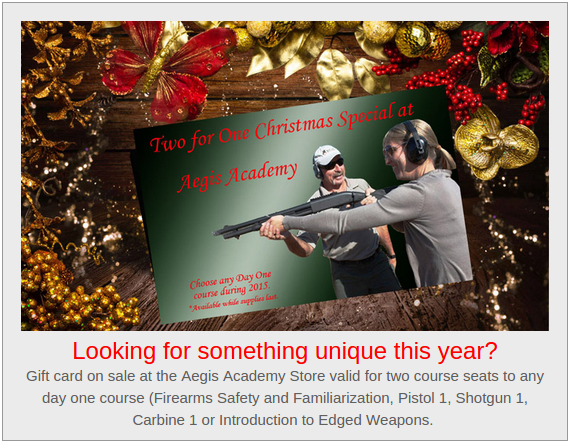
Take advantage of this two for one offer to any Day one course offered on the schedule in 2014 or 2015 at Aegis Academy facility located in San Diego. Day one Course are the Firearms Safety and Familiarization Course, the Pistol, Shotgun or Carbine One courses and the introduction to edged weapons. Confidence, experience, capability and independence are what this nation is built on.

Two for One Christmas Special at Aegis Academy - Gift card on sale for any day one course Firearms Safety and Familiarization, Pistol 1, Shotgun 1, Carbine1, or Introduction to Edged Weapons.


Voucher Expires Dec 31, 2015. Attendee's must attend the course together, and each voucher is good for two course seats.

Click here to purchase 2014 Christmas Special Gift Voucher to any Day One Course!

Tuesday, December 16, 2014

Improving your trigger control one finger at a time

Earlier this year, I added yet another part of my aging body to the list of hurts and complaints. My wrists began to feel stiff and painful, and I had to admit that Carpal Tunnel Syndrome apparently is a real thing. I am already challenged by a set of appendages that are notoriously short with rather svelte paws. I have significantly damaged both hands in my career, my left hand goes numb regularly from scar tissue and the fingers can barely turn a key. My dominant hand was broken twice and I am sure a career playing piano is not going to be in my future. You may be asking yourself why is this relevant to firearms?

Our fingers, especially their ability to smoothly pull the trigger without disturbing the sights, are hugely important in becoming accurate shooters. Unless you’re a rock climber or practicing martial arts, chances are you do not actively work out your fingers. When I complained of stiffness and pain to my yoga teacher, she gave me some great suggestions that I found improved my trigger control. A few simple exercises can help increase dexterity and isolate each of the fingers from each other. A small advantage maybe, but any advantage you get in a gunfight is one to use. I am not discussing grip itself, hand position or trigger finger placement. All of which could be articles in themselves. The goal is to isolate the trigger finger itself from the whole.

Isolating our trigger finger from the rest is difficult. Our hands are poorly designed as tools for fine motor skill, especially under stress. Those who regularly practice complicated tasks like typing (at least for me) or playing instruments already have accomplished the same idea. A few processes are involved; one is the process of Myelination, the other is the tendon sheath keeping the tendons themselves lubricated and flexible. I am not a doctor, or even a manicurist, so my explanation focuses on how the tendons affect us. To read about Myelin and how it affects motor learning, click on the link. The tendons on the back of our hands all come together at the wrist in an area called the Carpal Tunnel, and in simple terms since they are bunched together, the signals telling you to move one finger cross over to the other digits.

We like to think that our fingers are precision tools, but only in certain ways. While they work in concert with the thumb individually to hold small objects, they are somewhat less precise with each other. When we move one finger, the signals cross and the other fingers move as well. Age, injury and lack of physical exercise can compound this. Often this is caused by inflammation of the tendon sheaths surrounding each tendon. The inflammation causes lack of lubrication on the tendon and restricts flexibility. Additionally, power is generated in the forearms so if we tense there it translates to the fingers. Try this for yourself, hold your hand vertical with all the fingers extended, but slightly relaxed, Try just curling your pointer or trigger finger and see how much the other fingers move. You can also feel your forearm flex. Read More >>


Posted by Aegis Academy Staff

Wednesday, November 19, 2014

Everytown for gun safety and the Impact of Social Media

The Impact of Social Media on Social Change

Everytown for Gun Safety - Aegis Academy
Everytown for Gun Safety hired Jeremy Heimans’ company Purpose to promote its cause of restricting Americans Second Amendment rights via local legislation. The message they push is reducing gun violence. Mr. Heimans is a social media expert, and a liberal activist. He opposes war, guns, anything remotely anti-gay and actively supports the LGBT rights movements and the delivery of aid to Syrian fighters on both sides of the conflict. Jeremy’s company is doing a very effective job leveraging social media to create awareness, but I am not sure he has cracked the code on converting that to social change, yet.

I was watching him speak about “New Power” vs. what he calls “Old Power” which he presented publicly at a TED talk in Berlin last month. You can watch the presentation below. The concept of social movements has been studied in depth in a variety of educational departments; history, economics, sociology and others I am sure. Jeremy’s supposition is that there is power in large groups. Using Occupy Wall Street as one example of the power of social media, he makes a bit of a leap in extrapolating awareness to what he calls "New Power", but he readily admits that "New Power" may not be effective.

Awareness is step one

When we look at social change and the impact of successful social movements, women’s suffrage, the civil rights movement, or the Indian independence movement, they share some commonalities. They created awareness, built consensus, established specific, identifiable goals and converted on social popularity to enact governmental change. The Tea Party is a good example of a social movement that is still struggling to identify its unifying and specific objectives. Despite the lack of specific objectives, they have managed to drive some measures of change in the Republican Party.

The ability to "touch" a million or a billion people is certainly an interesting proposition. Flash mobs, occupy Wall Street, and Iranian social disturbances provide us some example of the short-term impact that social media can have. The question I was having a hard time rectifying is what did these movements accomplish? If the goal was social awareness, well then social media is clearly a win as it reduces the amount of time it takes to raise awareness. If the goal is social change, then I am having a much harder time finding effective parallels. The supposition that awareness drives change is inaccurate (and not one that he directly makes in his presentation). The real interesting point to me is how and what do we need to do to establish an effective conversion rate that equates to change?

Awareness does not equal change

Change takes work. Existing, entrenched power structures "Old Power" as Mr. Heimans likes to call it, is unlikely to simply turn over the keys to the kingdom because "New Power" yells loudly. There has to be incentive to change, specific objectives or demands, and ultimately it has to be legitimate cause. It’s not enough to be angry, you also have to be unified and specific in your demands, and ultimately right – or the movement falters and dies.

Everytown for Gun Safety - Handgun Classes - Aegis Academy

The million-man march was orchestrated by Louis Farrahkan, the African American Leadership Summit, The Nation of Islam and the NAACP. The march was largely orchestrated in response to the Republican 1994 congressional victories, which left the black minority community feeling vulnerable to exploitation. The March took place on October 16, 1995, nearly a year later. Ultimately, it pushed for “opportunity in the black community”, and nearly 20 years later, most will estimate that its loosely defined goals remain largely unattained. The black community certainly suffers a higher proportional share of social ills then other groups in society, but being right was not enough. What did “opportunity” consist of – specifically?

Conversely, the Occupy Wall Street movement resulted in millions of people globally taking part over the course of about 3 months of intense activism. The real spark was the Hacker group Anonymous promoting the cause in New York. The resultant global change was much like the million man march, beyond a short term flash point and media attention, not much… Occupy Wall Streets’ demand; End Consumerism! I suppose it is specific, but it’s simply the wrong goal. Do you really believe people can simply stop purchasing and go back to a barter system, trading in only what we need to survive? What is impressive about Occupy Wall Street was that it was organized in a few short months and sparked global actions. People did more than simply click the like button, they showed up.

Migrating Awareness to Commitment

What technology and social media enables us to do is tap into a wider range of people. People like to be angry, and stomp their feet over the social injustice. The problem, is in the past it was social injustice of the century or the decade and the time and effort to organize forced organizers to distill the ideas to a simple understandable goals that busy people could commit to. Now it’s more like the social injustice of the week, and next week, most of the crowd will have moved on. Awareness is no longer the issue, its now converting awareness to commitment that becomes the crux.

Back to Jeremy’s social campaign to drive Everytown for Gun Safety forward. Largely, like most of Mr. Bloomberg’s anti gun campaigns, this too is failing. It is not failing due to a lack of awareness. It is failing because it is simply a bad idea promoted under demonstrably false pretenses. The question we need to ask is why is society largely unaware of the facts surrounding gun ownership, yet so willing to become aware of the fabrications? The answer is Mr. Heiman’s theory of “New Power”. If the packaging of the message is marginal, you can expect a marginal response – regardless of the quality of the message. If the packaging is done right, people will pay attention to even falsehoods.

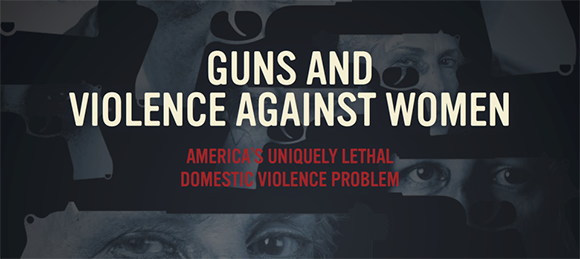
Everytown for Gun Safety - Aegis Academy - Domestic Violence

As we saw in the last election cycle, packaging and spending is insufficient to drive change. People are still capable of discerning facts from nonsense. No matter how you package bull-shit, it takes more then a slick wrapper to make a nation of free people consume it. That is what happened to Bloomberg’s Gun control candidates and propositions in 2014. The reality is social value is still defined by a relatively discerning population, and they know when they are being lied to.

While we can complain about the fact that John Lott is largely ignored, but that is largely our fault. The messaging is not reaching the people we need it reach. We have failed to define a socially supportable cause that connects with the masses. I have heard from some of my colleagues state that those people are unreachable, too ignorant to understand, or not worth our time. My response is that attitude is lazy, ineffective and exactly what keeps the perception that gun owners are cave dwellers alive. Touting the Second Amendment is simply not reaching a large enough percentage of the population. We have facts, the law and social welfare on our side. The only thing limiting the Second Amendment movement is the packaging.

NRA - Aegis Academy - Pistol Training

The NRA has made leaps and bounds in pushing quality images, content and using social media much more effectively in the past three years but we can still learn a lot from Jeremy Heimans and Purpose. Just imagine what Jeremy could accomplish if he chose to support a legitimate cause… Imagine what we can accomplish if we simply package the truth in a socially popular format!

Stay safe, and stay engaged!


About Author


Patrick Henry - President and Firearm Trainer


Patrick Henry received his operational training and experience from the U. S. Government, 22 years of which were spent in the Marine Corps where he served in the Reconnaissance, Infantry and Intelligence fields. During his active service, he spent more then seven years deployed overseas in combat, operational and training assignments. After the military, Pat worked as a contractor and as the Director of Operations at a private paramilitary company, specializing in training special operations forces and providing protective services to select private clients. His education consists of an MBA from the University of Southern California (USC), and a BS from San Diego State University with an emphasis in Biochemistry, Cell and Molecular Biology and a minor in Psychology. He holds an extensive list of security and training related certifications from a variety of government and nationally recognized entities. He currently sits on the advisory committee at USC’s Master of Veterans Business Program, and is an active member of Infraguard and the American Society of Industrial Security (ASIS). He has been a guest speaker at ASIS, the San Diego Industrial Security Awareness Council and other private organizations on physical security, travel security, and competitive intelligence collection counter-measures.

First Published at Aegis Academy

Tuesday, January 7, 2014

The New York Safe Act – Largely Upheld by the Federal Courts

New York Safe Act UpheldHere are a few thoughts on the recent New York SAFE Act decision, which was challenged, and largely upheld by the United States District Court for the Western District of New York. Of note was the courts decision to strike down the seven round limit as "arbitrary". While that has been clear to all but the authors of this bill for quite some time, the effect of this judgment (the most recent federal interpretation of the second amendment) has granted wide powers to the state of New York to impose severe restrictions on the rights of its citizens via the New York SAFE Act. Specifically, it establishes federal precedent for the the following, which are constitutional issues:
  • Registration of all privately owned weapons does not constitute infringement.
  • Capacity limitations do not constitute infringement – or at least 10 rounds is acceptable, however a 7 round restriction is considered unreasonable.
  • Limitations on arbitrary cosmetic appearance features, like pistol grips have now been found to constitute a reasonable threat to public safety due to their association with mass murders and their restriction does not constitute infringement.
  • 10/30 round magazines, which can be "easily converted", constitute a reasonable threat to public safety and their restriction does not constitute infringement.
  • Requiring all ammunition must be transferred via a face to face transaction involving state licensed ammunition dealer does not violate interstate commerce clauses.
We can debate the legal methodology and mechanisms by which the decision to uphold the New York SAFE Act was arrived at. There may even be some elements of the decision (and I believe there are), which will be overturned in the appeal. From a legal perspective, what this supports is the expansion of the mishmash of laws across the states and counties (and cities in the case of New York City and a few others). We now have precedent that sets the standard the above are prudent restrictions on the Second Amendment, and state governments have the power to make these decisions.

You can expect lobbying at the city and country level across this nation to begin in earnest by the gun control lobby. Their impact in California was only salvaged largely by the Governor Jerry Brown’s veto of a number of CA bills that would have resulted in similar, and in some cases, more restrictive laws. Now that states have a federal benchmark, you can expect this financial support from the gun control lobby to push their agenda to the lowest level possible. The financial burden of fighting these ineffective laws will be astronomical.

This is the case for federal legislation, defining the constitutional parameters of gun ownership in the country. If we do not accomplish a federal standard, we will see the restriction and erosion of gun rights across this nation, one city at a time. The complexity of the ensuing system will make it simply impractical to carry a firearm to the range in the next county or city, if this is allowed to continue unchecked.

In short the key failing here is not that the New York SAFE Act is going to be imposed on the citizens of New York largely as written (although that is certainly a failure). The key issue here is the establishment of federal precedent giving states the ability to determine what constitutes infringement on a case by case basis.

You can read the legal decision upholding the New York SAFE Act here. His references include a resurfacing of many of the provisions in United States v. Miller. Specifically seeming to indicate that past interpretations that individual ownership of firearms was not provided for in the Second Amendment are more accurate. This was found to be unconstitutional (by a narrow margin) in District of Columbia v. Heller. The more recent case law clearly establishes the right to own firearms an individual one. Chief Judge Skretny clearly does not support that interpretation, and has cherry picked a number of phrases and sentences from existing case law in finding a means to support the New York SAFE Act.

For more reading you can find the study by Chris Koper, 1994, which is continually referenced in the finding. Mr. Koper does a much better job of expressing the limitations of his findings in his writing. The courts decision largely ignore the limitations, and actually reference the top estimates of statistical validity in study. Once again, the piecemeal approaches to attacking the underpinning of the finding are important and must be pursued.

It is invalidating the approach of attacking the second amendment one city at time is what we need to pursue federal legislation to accomplish.

First Published at Aegis Academy
 

About Author

- Patrick Henry

President, Aegis Academy

Pat Henry received his operational training and experience from the U. S. Government, 22 years of which were spent in the Marine Corps where he served in the Reconnaissance, Infantry and Intelligence fields. During his active service, he spent more then seven years deployed overseas in combat, operational and training assignments. After the military, Pat worked as a contractor and as the Director of Operations at a private paramilitary firm specializing in training military special operations forces and providing protective services to select private clients. His education consists of an MBA from the University of Southern California (USC), and a BS from San Diego State University with an emphasis in Biochemistry, Cell and Molecular Biology and a minor in Psychology. He holds an extensive list of security and training related certifications from a variety of government and nationally recognized entities. He has an extensive entrepreneurial background ranging from real estate and technology, to the security training and education market. He currently sits on the advisory committee at USC’s Master of Veterans Business Program, and is an active member of Infraguard and the American Society of Industrial Security (ASIS). He has been a guest speaker at ASIS, the San Diego Industrial Security Awareness Council and other private organizations on physical security, travel security, and competitive intelligence collection counter-measures.

Monday, January 6, 2014

Gun Safes – What to know before you buy!

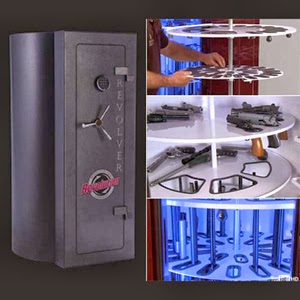
Gun Safe, Aegis Academy, Firearms TrainingIf you own a firearm, you need a gun safe. We'll get to what safe in minute, but spend a few seconds on why. Regardless of what state you live in, level of proficiency with the gun, or family situation, proper storage is your responsibility. Many states, including California, have enacted legislation, which will make you legally responsible if you do not properly store your firearms. You need to know the regulations and laws in your state, but beyond that there is a moral obligation all responsible gun owners have to protect their firearms from begin stolen by criminals. A gun safe is the best way to do that. Now back to what gun safe to buy!

Deciding on what gun safe to buy can be a daunting task. Looking past manufacturer claims and other gun owners' opinions are four real factors to consider in your purchase. Fit, Function, Finances, and F'ing Rating systems. If you just want some ideas and considerations, skip to the do's & don'ts section toward the end – if you want to get into the details a bit more – here we go!

Fit: What size gun safe will fit in the space you want to put it, and how much does the size and weight affect that decision.

Function: How many firearms, and what type, do you want to store. Do you want to conceal the safe? Do you need quick access? What kind of lock works best for you, and is it fire safe?

Finance: How much is in your budget? Can you afford to spend more for better protection, desired features, or perks?

F'ing rating systems: They have a word for people who truly understand this stuff – they call them lock smiths. I'll try and keep it simple!

Fit and Function = Size and Weight

If you have a large collection you need a large gun safe. If you plan on adding optics to your guns, you need space between the firearms so they do not get scratched or banged up as you take them in and out. Plan to add a shelf on the top for magazines and extra gear. A safe of about 56 to 58 inches should hold most long guns. Interior space will depend on how many guns you want to store.

Common sizes range from a small hand sized pistol safe to 60 inch gun safes that will hold dozens of rifles, and still have space left over for handguns and shelves. When it comes to weight, a 500-pound safe is not that heavy. A 2000-pound safe on the other hand is probably static – but that will require professional installation – and you may not like the cost of moving it if you buy a new home! If its not permanent, consider two smaller ones if you need that much space. Around 750 pounds is a good compromise. Heavy, but you can move it with a dolly when needed.

What if you want a concealable or quick access safe? Obviously weight is an issue, but you are trading both capacity and durability for compact size or the ability to mount it in a wall or drawer. These safes are designed for that purpose and are generally not designed for large collections. A good example of a quick access handgun safe is GunVault or Stack on. You will lose thickness and durability as a trade for accessibility, but most of these brands still provide fire safety ratings on par with larger safes.

Companies like Bed Bunker or Ledgelokr offer a line of closet, wall, and furniture concealed safes as well as options for your vehicle. The price of a concealable safe is high, with rifle and shotgun versions ranging from $1000 to $2500. Hand safes for handguns can be found easily for between $75 and $200. GunVault 2000 can be found at Cabela's for $165 and comes with both key locks and code versions. Smaller safes like this are great to give you access at night should you need it, but their portability make them unsuitable for long term storage.

Fit and Finances = Construction and Thickness

The quality of the safe is important, and you should go with a known, trusted manufacturer. When choosing your safe, continuous welding is better than stitch welding. Cheap safes use plastic bonding instead of welding, which is much weaker and not fire resistant. A fire axe can penetrate a 12-gauge panel of steel, while 10-gauge will take a concrete saw to cut into. The thickness of the steel will make cutting or drilling harder, but they will also be much heavier. Eight to 10 gauge steel provides the best balance between the two, 8 Gauge steel being 3/16 inch thick.

Function and Finances = Locking Mechanisms, Bolts, and Hinges

There are traditional biometric locks and rotary and digital combination locks. Of course key locked gun safes are available, but as they are the easiest to defeat, I do not recommend them. For tall free-standing safes, or gun safes where ease of access is not a requirement, I would recommend a rotary or digital lock. There is a reason rotary locks are still around and in use – they work. They are more durable and trouble free than electronic ones. Tough they can be considered less convenient and they do take more time to open than a digital version.

A quality safe will have at least two bolts on each side of the door (meaning all four sides, right, left, top, and bottom). In this case more is better, and many high-end safes have several bolt locks. Multiple bolts prevent prying attempts on the door, and make drilling time consuming and difficult. The bolt linkage is a more likely the target of attack, by drilling a hole to insert tools to move one bolt inward, causing all of them to move and disengage.

Hinges come down to internal vs external, and in actuality have little to do with the locking ability of the gun safe. External hinges allow the door to be opened 180 degrees, and can often be removed for transport. Cutting or attacking the hinges does nothing to defeat the locking bolts on a safe. Internal hinges give a smoother outside finish, a thinner profile and are useful in concealed and/or handgun safes.

F'ing Rating systems…

This stuff is confusing. Here in the U.S. – Underwriters Laboratory (UL) ratings are the standard, and here is the short version:

Group I locks are resistant to skilled attacks. What that really means is they are expensive, and designed for banks and larger businesses.

Group II locks are resistant to semi skilled attacks. There are available, affordable, and adequate to keep thieves away from your guns.

When looking for a good lock, look for a UL Group II certification, which means they are resistant to semi-skilled lock picking attempts. A good example of a rotary combination lock is the Sargent & Greenleaf model 6730. I have seen this lock listed on several forums as both a great value and reliable. Just make sure you spin the lock when you close the door!

Digital locks are quicker, and, unlike rotary locks, lock themselves when the door is shut. They do require batteries, which should be replaced every year, and with any electronic device they have a failure rate. You want to buy a good commercial grade lock that will not wear out from regular use. The combinations on digital locks are easier to change, and of course easier to forget if you change it regularly. Buying a Group II digital lock typically comes with a feature that locks the bolt should the keypad be punched or forcibly removed. Again Sargent & Greenleaf products seem to get great reviews. Find more information on the subtypes of electronic locks here.

UL Residential Security Container (RSC) is the minimum standard you should have for your gun safe. Essentially to obtain an RSC rating, the safe goes through a battery of tests including heating it to different temperatures, drop tests, indirect explosions, and lock tampering. Ratings like TL-15 correspond to the amount of time common tools will take to defeat the safe. TL-15 is 15 minutes; TL-30 is 30 minutes, and so forth. Note these are attacks against the gun safe door, and the sides are more vulnerable. There are other testing systems such as: B.T.U/V.D.M.A. certifications (Germany), J.I.S. (Japan), and CSTB (France). For detailed information on Underwriters Laboratory and descriptions of all the ratings and terms go to www.ul.com or www.gunsafes.com.

Underwriters Laboratory completes the fire safety ratings that are approved by OSHA as well. Another standard is Intertek ETL, used by companies like Cannon and Sentry Safe, and their standards meet or exceed UL's according to their websites. One concern is that there is no oversight for manufactures claims, so watch out for terms like "UL listed fire liner", "fire board", or "ceramic fire layer". These are the components used – not the standard to which they are tested. Fire ratings are typically denoted in time increments. 15, 30, and 60 minutes are fairly common, and longer is generally better – and more expensive.

The average house fire can exceed 1200 degrees F within 10 minutes, and while many safes are rated for higher temperatures, the testing conditions are done at a slower pace to inflate the protection time claim. The best commercial grade safes are "B" rated construction, typically used by businesses like jewelers and banks. Quality materials you should look for are sheet-rock with fiberglass embedded and ceramic wool. For more on fire ratings check here.

Finally know what kind of door seals your safe comes with. Low-end safes come un-sealed, which increases the possibility of moist air seeping in, creating rust on your valuable firearms. A good seal will protect against rust, prevent flooding, and seal the safe in a fire, as well as provide protection against water damage from fire hose spray.

This 13 minute video covers a lot of the topics covered in this article and will show some examples of attacks on safes and may be worth watching if you want even more information.

A few Do's and Dont's for Gun Safes…


Research the gun safe's specifications

Bigger isn't always better, heavy gauge steel is better than light gauge and harder to drill or cut through. Many large gun safes are thin walled and can be penetrated by an axe or pick. Like the gauge on a shotgun, the lower the number the thicker the walls. Eight to 10 gauge steel is a good compromise between strong vs light, as most personal gun safes are not broken into ala' the Italian Job, but snatched and broken into later. Also look at the way the steel is welded. You want a safe that is continuously welded, vice stitch welded for better strength and durability. Look for a safe with UL RSC.

Research the gun safe's tampering safeguards

A quality safe will feature devices to defeat drilling. Battery-powered hand tools can easily defeat a cheap safe. What you are looking for are re-lockers to help ensure the safe remains locked in the case of a burglary. These are hardened pins that are triggered during an attack, and cannot be retracted. The number of re-lockers depends on the safe's size and burglary grade.

Buy a fire resistant gun safe

Spend the extra money, but make sure you read the specifications; many fireproof safes are in fact, not. Look for the UL RSC rating, which specifies the time temperature the safe can tolerate. Safes lined with sheet rock are low end, ceramic wool is better, and high-end safes have concrete and vermiculite. According to the U.S. Fire Administration there were 364,500 house fires totaling more than six billion in damages. So spend the extra money.

Don't store powder or primers inside your gun safe

Do not create a bomb by placing explosive compounds in a seal container. Store them in a separate cabinet of light material like wood, and if possible limit the amount to what is required to prevent larger damage.

Don't make it easy to steal your safe

Take into consideration where you place it. You should never place a gun safe in an area where it can be easily seen. Do not rely on the weight of the gun safe to stop a thief; a pallet jack can easily lift a large heavy safe. If possible attach the safe to a hardened point like a wall stud or the floor. An easy to steal safe is just a mobile container, once in the truck, I can take it anywhere and go to work on it!

Final considerations:

Once you have figured out what kind of safe you need, you can look into other aspects of your safe, the interior layout for large safes, lighting, anchoring, and securing the safe, flood protection, and of course maintenance of the gun safe and its contents. Just like any other meaningful purchase, shop around and look at the specifications before you buy. Read reviews on the products you're considering and go to a reputable store or dealer. You should also be aware of the laws and regulations regarding storage of firearms and what standards on gun safes your state has. Its up to you to make the right choice, protect your investment, and protect your family. Buy a quality gun safe.

First Published at Aegis Academy

Posted by Aegis Academy Staff.