Tuesday, March 25, 2014

Gun Safety Rules and a Few Tips !


Gun Safety Rules and a Few Tips

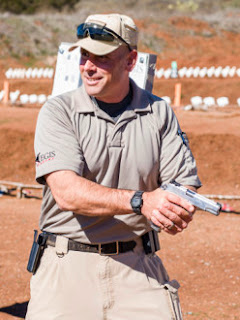
Firearms are excellent tools for both personal defense and recreation. Having a good working knowledge of gun safety rules is an part of being proficient. Unfortunately, many web sites and Internet forums default to “humorous” safety tips and rules or worse, things that are simply unsafe. Here are a few gun safety rules and tips to think about as a responsible gun owner. Before we talk about tips you need to know and understand the Four Universal Safety Rules. There are variations on the theme, but Jeff Cooper is generally credited with distilling these down to the key elements to creating a safe gun owner. These apply to any firearm.

Gun Safety Rules

  1. Treat every gun as if it was loaded.
  2. Do not ever do anything with an unloaded gun you would not do with a loaded one.
  3. Never let the muzzle cover anything you are not willing to destroy.
  4. The bullet will go in the direction the gun is pointed. If you do not have a reason to point a gun at something – Don’t
  5. Keep your finger off the trigger until your sights are on the target.
  6. Guns do not shoot themselves. If your finger is not on the trigger modern firearms will not discharge.
  7. Be sure of your target and what is beyond it.
  8. Not just beyond it, but around it as well. Bullets do not stop simply because you didn’t hit what you aimed at.

Notice, I did not mention safeties. Much of the military teaches keep your weapon on safe until you intend to fire. Many modern handguns do not have external safeties. They are all mechanical devices – and like all mechanical devices, they have a failure rate. If you adhere to the four core safety rules, you make a mechanical safety irrelevant.

When using a firearm that has mechanical safety, use it in addition to the four gun safety rules – but don’t rely on it to keep you safe.


Gun Safety Tips:


Gun Safety Tip # 1 – Keep your weapon maintained.


Proper cleaning of a weapon means it should function as designed. Read the owner’s manual and what the manufacturer recommends as far as cleaning products, schedule and procedures. Some guns need more cleaning than others and some ammunition can create more residues. Keep the gun properly lubricated as well. Malfunctions due to improper maintenance, bad ammo or worn parts can contribute to safety problems with a gun.

Gun Safety Tip # 2 – Use the proper ammunition.


Most factory-produced ammunition is adequate for your training purposes. Reloaded ammunition is also an option, but consider the source and reputation of the product. Unlike factory ammo, there are no standard testing or safety criteria for home re-loads. Improper powder loads, bad crimping, and unchecked measurements can lead to poor round performance, squibs and worse.

If you are looking at cost savings as a factor, remanufactured ammunition from a reputable dealer is a safe bet. I recommend making and using your own reloads over a strangers. Again read your owners manual, some manufactures do not recommend +p ammunition and warn that it will increase wear. This may be an important consideration in gun selection and training, especially when considering a defensive carry gun. We don’t recommend your personal ++P home brew for defensive carry as it is a liability nightmare to shoot someone with your own hopped up ammo. From a safety perspective, a catastrophic malfunction from bad ammunition can cause serious injury to both the shooter and others.

Gun Safety Tip #3 – Train properly, develop safe habits


Building proper habits and proficiency is the hallmark of a responsible shooter and gun owner. You must create an environment where gun safety is a habit, not an after thought or decision. Placing your finger on the trigger is a decision. Maintaining muzzle awareness, trigger discipline and situational awareness consistently can only be done with proper practice and realistic training goals. Practice does not make perfect, it makes permanent.

If you build improper habits, you will do improper procedures. It stops being fun when a preventable accident occurs. You are the one responsible for gun safety. Familiarity can breed contempt, and I have seen more than a few professionals, military and other wise, do stupid things with guns. Why? Because they take it for granted. Teach your friends and family the good habits you have learned and only train at ranges that promote gun safety.
Load and unload your gun the same way, in the same sequence every time. Do it the point where you can’t get it wrong and build the habit of a thorough inspection of the chamber and magazines well in to the process. That one habit alone would prevent a number of negligent discharges from occurring.

Gun Safety Tip #4 – Store your gun properly


Once you own a gun, you are responsible for gun safety. Period. A gun will not fire by itself, but an improperly stored gun is unacceptable. In some states it is a crime, but it is a moral responsibility of every gun owner to protect their gun from thieves and keep it out of the hands of children. In 2010, according to the Center for Disease Control, there were 62 unintentional gun deaths for children under the age of 14, and 667 nonfatal injuries. Twenty-eight states have laws requiring safe storage, but the implications of a child or criminal obtaining your firearm due to negligence is the owner’s fault.

Understand and be in compliance with the law in your state, but if your state has no guidelines, here are few thoughts. A gun should be under your control or stored properly at all times. Teach your family the rules of gun safety. Children are curious and will find ways to get where they are not supposed. Take away the curiosity, then teach them to respect it – and make sure your guns are secure. Look into programs like the Eddie Eagle program from the NRA for young children and read Teaching Kids to Shoot for more information.

Gun Safety Tip #5 – Wear proper protective equipment


Proper eye and ear protection will save you a lot of pain and suffering later. Ranges should require them to be worn and often provide protection for you. Gunshots can range from 140 to 180 decibels, and levels at which damage to your hearing can occur. Eye protection will prevent brass, particles or lubrication from damaging your eyes. It is particularly important when you are shooting at steel targets where fragmentation of the copper jacket of the bullet can bounce back. Rarely does this break skin, but your eyes are a different story.

Hats with a brim are helpful for both sun protection and the stray piece of hot brass. I do not recommend wearing sandals on the range. Hot brass tends to find the space between your toes as a nice place to land. Long sleeve shirts and pants are a good choice. Gloves can be worn when you’re shooting, especially if you expect to be wearing them when you have to use your firearm – like in the winter. Practice for the conditions you expect to experience.
Practicing gun safety is the responsibility of anyone handling or owning a firearm. Gun Safety should be thought of and practiced continuously. You can never be too familiar or proficient at it. Using tips like these can help you and your family be responsible gun owners.

First published on Aegis academy


Posted by Aegis Academy Staff

Tuesday, March 18, 2014

Home Defense – What you can do

Basic guide to home defense


Home defense
At the end of a long day at school or work, or after a lengthy trip away, which one of us doesn’t look forward to coming home? It’s the one place where your surroundings are the most familiar. It’s the place where you spend the majority of your hours off, wake up in the morning after a restful sleep and immerse yourself in the things that mean the most to you. Home is where you spend quality time with your family and ultimately it’s where you kick your feet up at the end of a long day.

Home is your castle, your sanctuary, your favorite place to be; it’s where you and your family are the safest and feel the most secure. It’s also a primary target of the predator.

Looking at it from the viewpoint of a predator, your home is a one-stop-shop of exploitable opportunity. To the drug addict, repeat offender and criminal opportunist your home is a treasure trove of cash, expensive jewelry, high-end electronics, weapons, tools and precious metals. To the sexual predator, your home is a prime hunting ground where potential victims can be predictably observed and targeted, knowing when they are asleep or otherwise occupied they are vulnerable to attack.

Knowing that law enforcement will most likely respond, most people think; “Well, if something bad happens here at home I’ll just dial 911.” Instead of relying 100% on a reactive response, others choose the option of being better prepared to manage a home invasion by being armed with the full gamut of proactive, active and reactive measures.

What proactive measures can you take in home defense? There is a traditional protective concept called concentric rings of protection using multiple “rings”. Circles or layers of security used to create that 360-degree envelope of protection around your home and all residents.

The concentric rings – multiple circles or layers – are like an onion of security wrapped around your home. The first layer would be located at the outer boundary, with additional layers as you move inward through your home toward things you value most. Rather than placing full reliance on a single layer or ring of protection, the application of multiple layers requires an intruder to penetrate a series of protective layers to reach his goal. The more protective layers or rings that exist between the outside world and the things contained inside, the better your protection.

The outermost ring – the perimeter defensive layer – might include a continuous fence, locking gates, exterior motion-sensor alarms or lighting and a dog.

The second ring in – the exterior defensive layer, at any area of entry to the building – might include solid hardwood or metal exterior doors, an alarm, surveillance cameras and sturdy bolt locks.

The third ring in – the interior defensive layer – might include internal locking doors, additional lighting, indoor motion detectors and so on.

The fourth ring in – the core interior defensive layer – could include locking cabinets, a rugged safe, a safe room and the like.

The primary tool used to actively defending your home is simply using your situational awareness. Take about three seconds to scan your immediate environment upon arrival and departure from your home looking for anything that doesn’t seem right. If nothing is out of the ordinary, then no action is required. Additionally use your verbal skills, do not shout over the fence to your neighbor “Hey I’m going on vacation and nobody will be here for the next two weeks!” Refrain from sharing additional information such as discussing your storage of valuables or weapons.

If intruders force you into a defensive position in your own home and you own a firearm, have access to it (and ammunition). If you are qualified and willing to utilize it to defend your home and family, after you have retreated to your safest position, then it is recommended you dial 911. Put the phone on speaker and provide one warning to the intruder(s). Using your verbal skills shout “get out of my house – I am in fear for my life and I have a gun – get out.” Say it only once—phone calls to 911 are in most cases recorded and this advises both incoming first responders and your assailant that you are in fact armed and prepared to utilize deadly force.

Remember, long before it ever comes down to taking reactive measures, you have a plethora of proactive and active measures at your disposal. However, there is a balance between level of protection and convenience which must be struck. The last thing you want to do when coming home at the end of your long day is to cross a moat, unlock three heavy steel gates, pass the four Dobermans, fumble with another set of keys to unlock five more deadbolts, successfully pass a retinal scan and take another ten minutes to disarm your home defenses – all with both arms full of groceries. The same would apply to all members of your household.

On the other end of the spectrum, you don’t want to leave all your doors and windows wide open 24/7 even when you’re not home. The answer falls somewhere in between. You don’t ever want to sacrifice convenience for security and vice versa. Utilizing a wide range of proactive and active protective measures can significantly lower your threat profile and ensure an effective yet comfortable level of home defense.

First Published at Aegis Academy

About Author


- Steve Tarani


Firearms Instructor, Unarmed Defense Program Manager

Steve Tarani, Aegis Academy, Edged Weapons, Kinfe Fighting, Knife Fighting Class, Firearms Training
Serving the federal training community for more than 25 years, Steve is a respected Protective Programs subject matter expert (SME) and service provider to numerous high/ low-profile US federal agencies and the private sector. Specializing in operational readiness, he is actively contracted by the US Department of Defense, National Security Agency, Federal Bureau of Investigation, Department of Homeland Security, Drug Enforcement Administration, and many others. Steve is himself a former US Defense Intelligence employee (CIA), Protective Programs Educator and formerly on staff at the US DOE National Security Institute (Security Force Training Dept.) at Kirkland Air Force Base (NM). At the time of this writing, he is a published author of seven books and remains an advisor to the US Department of Justice (USDOJ) and the International Association of Chiefs of Police (IACP). He is additionally a knife designer and the architect of IACP Model Policy on the carry and usage of knives by federal, state and municipal peace officers.

Monday, March 10, 2014

Sources of Information and Personal Security

Sources of Information
Since most of us choose not to live like a paranoid fanatic with cleared fields of fire from our front door to the keep-out signs surrounding our houses – life is about managing risks. Everything we do from the moment we are born until the day we pass involves making risk assessments and developing various means of avoiding or mitigating the risk we choose to accept. We all do it every day and in many aspects of our lives we are experts. Unfortunately, it’s in the big-ticket items where people tend to make mistakes in this arena – and that unfortunately results in a lot of unnecessary pain and suffering.

For starters – stop worrying about things that don’t happen and spend a few of those minutes preparing for the inevitable. If you simply plan for the things that are likely to happen to you – you’ll be light years ahead of the general population! In order to do that we really need to take a look at what negative events are most likely to occur and unfortunately the media, the internet and our personal experiences are generally poor indicators.


We are inundated with poor sources of information

The Internet is an incredible collection of a variety of sources of information, and some of which is even true! Anyone with an opinion can write an article on any subject they choose and post it for the world to view. The days of having some expertise, journalistic integrity, editorial oversight and even fact checking are for the most part over. Lets look at that last sentence. Sounds accurate, connects with most readers on a base level – but the fact is, I just made it up. It is a single source opinion (mine) expressed as a fact, and I am confident someone will have quoted it by the end of the week… Perhaps it’s even true, but other than the absolute falsehoods I see reported, I have no factual basis for my opinion.

When we see movies, we are typically getting an adrenaline filled journey through the combined lens of a fiction writer, a Hollywood director and ultimately the producer who is writing the check. While accuracy is important to many of them, producing a movie people will pay to watch is what they get paid to do. People naturally want to connect with great stories – and mundane activities generally doesn’t make a great story. We exaggerate key components, rely on nearly superhuman capabilities and and construe a completely improbably series of extraordinary event and in that we find our hero’s. Unfortunately, preparing to meet our movie hero’s challenges does not prepare us to deal with the real risks in our own lives.

The bottom rung of the information food chain these days is the media. MSNBC, FOX and CNN are simply pandering to a political base to expand viewership and increase advertising revenue. In recent years, their penchant for un-researched opinion is with out equal. Take the same event, same facts and the same statistics and get three completely divergent OPINONS on what it means. All of which are expressed as known facts. It makes for great entertainment, but their “reporting” has no basis in fact aside from the general agreement that a spin worthy story has occurred. The line between opinion and fact has become so gray many of us have forgotten the difference between the two.

Quantity of information

When we spend time sourcing information on which to base risk decisions, the source of information is in many cases more important than the information itself. We hear the drum beat about human trafficking, kidnapping and sexual slavery. These stories flood the Internet, make engaging movies and provide fodder for the pundits like Nancy Grace to blather on about. In the security industry we call it the “Missing White Girl Syndrome”. Statistically it is irrelevant, but if a western white girl is missing, somehow that makes international headlines. We don’t talk about the 1.2 million teenagers inducted globally into sexual slavery.

If you believe what Hollywood and the media provide you, you will spend valuable time educating your child to avoid strangers to reduce their chance of being kidnapped. The fact is less than 100 of 800,000 U. S. children reported missing fall into the category of a “stranger abduction”. While you are worrying about the 100 abductions, 2,800 children will be killed in car accidents in the same year. The quality of information is far more relevant than the volume.

Unfortunately, like most things of value in life, quality information requires time and effort. Conducting sound risk assessments is the basis of establishing sound personal security plans. The reason the source of information is so critical is because it will ultimately define the quality of your assessment. If you make an assessment based on bad sources of information, you are very likely to come to a highly inaccurate conclusion.


Where to find good sources of information

The Center for Disease Control has produced an injury and fatality reporting tool that is incredibly user friendly (WISQARS). The World Health Organization is the global equivalent. Boiling this down to be user fin in a local risk can be difficult. I have found crimereport.com and healthmap.org are the simplest and easiest tools to use real time reporting for outbreaks and crime and their data is collected from quality sources of information. From here, I can make solid determinations on the real risks my family faces from injury, crime and diseases in matter of minutes.

If you are traveling, spend 15 minutes reading the CIA world fact book on that country before you go. This is a free online publication that contains a quick overview of every country on the planet. The writers study these countries in detail for a living, and do an annual update. They cover languages, customs, politics, economics and a brief overview on crime. The next step is the country studies published by the Library of Congress, which can be accessed from the state departments website. Country studies are detailed information on anything you want to dig into, but they are long and detailed so go there with specific questions and use them to answer them. Lastly the state department will have up to the minute travel advisories and warnings posted for every county on the planet.

More than likely that is beyond adequate for most people. However, if you want more data you can look at the economic intelligence unit. The economic intelligence unit collects from a wide variety of sources and produces a number of local assessments. While some of it is free, most of it requires a subscription. United Nations on Drugs and Crime and the International Center for Prison Studies can also be enlightening if you want more data on specific regions.

Using Sources of Information

Having great sources of information is worthless if you don’t use them, and collecting random snippets of quality information is equally futile. The purpose is to keep you and your family safe. Here are statistically the risks you need to be concerned with when looking at personal security:
  • Illness prevention
  • Access to medical care
  • Crime rate and threats
  • Food & water quality
  • Local security forces
If you have even gross familiarity with the above in the area you live or are traveling to, you are already ahead of the locals. The goal of collecting this information is to mitigate the risk, to which you are choosing to expose yourself. After you deal with the big five, then you can worry about what to do in the event your mitigation plans have failed. Remember, you don’t have be the fastest person in the group if you are chased by a bear, you just can’t be the slowest.

Start getting informed in your local area and check back next month for the next article in our personal security series – Developing a practical risk mitigation strategy. You can see more our existing personal security curriculum here! For additional articles check out Personal Safety step one – Threat Avoidance and Social Media and the Attack Cycle!

First Published at Aegis Academy

About Author

- Patrick Henry

President
 
Patrick Henry, Firearms Training
Patrick Henry received his operational training and experience from the U. S. Government, 22 years of which were spent in the Marine Corps where he served in the Reconnaissance, Infantry and Intelligence fields. During his active service, he spent more then seven years deployed overseas in combat, operational and training assignments. After the military, Pat worked as a contractor and as the Director of Operations at a private paramilitary company, specializing in training special operations forces and providing protective services to select private clients. His education consists of an MBA from the University of Southern California (USC), and a BS from San Diego State University with an emphasis in Biochemistry, Cell and Molecular Biology and a minor in Psychology. He holds an extensive list of security and training related certifications from a variety of government and nationally recognized entities. He has an extensive entrepreneurial background ranging from real estate and technology, to the security training and education market. He currently sits on the advisory committee at USC’s Master of Veterans Business Program, and is an active member of Infraguard and the American Society of Industrial Security (ASIS). He has been a guest speaker at ASIS, the San Diego Industrial Security Awareness Council and other private organizations on physical security, travel security, and competitive intelligence collection counter-measures.

Tuesday, March 4, 2014

Benelli Super-90 Shotgun Review

Benelli Super-90 Shotgun Review Aegis Academy members and readers, I did a review of the Remington 870 12 gauge tactical shotgun, but the question always comes up, what about the semi-auto shotguns? We have now done the same for the Benelli Super-90 semi-auto 12 gauge. For starters, it’s very hard to make a true side-by-side comparison of the 870 pump gun and Super-90 semi-auto. Simply because the Benelli can be more than three times the cost of the Remington, depending on which model you chose. The retail price is just one part of the review. Let’s look at some of the advantages and disadvantages of one of the best high-end auto loaders.

As the name implies, the Benelli Super-90 is a semi-auto shotgun and has a lot of particular features that set it apart from many other semi-autos. First and foremost, the Benelli Super-90 comes in numerous different models. Each of which has some very distinguishing differences. The M-1 is the basic model with an 18.5 inch barrel, standard butt-stock and castle-type pistol sights. The M-2 has the same barrel length with a pistol grip butt-stock, ghost-ring sights plus the receiver is drilled and tapped for a picatinny rail. The M-3 has an 18.5 inch barrel, pistol grip butt-stock, ghost-ring sights and the rail system is factory installed. The M-3 can also function as a semi-auto and/or a pump gun with a twist of the control collar located at the front of the fore-grip. The M-4 is the high end model with a pistol grip, collapsible butt-stock, 18.5 inch barrel, ghost-ring sights and rail system. This is the model that the USMC and other military units have purchased to replace various other 12 gauge shotguns. Depending on where you live and which model you want, retail cost can be anywhere from $1200 to $1800, quite a lot of money for any shotgun.

All of the Benelli Super-90 models come with the patented Benelli “inertia recoil system”. This system uses the majority of the gas pressure to cycle the weapon so the shooter feels less actual recoil compared with a 12 gauge pump gun. All the Benelli Super-90 models come with an aluminum alloy receiver and synthetic butt-stock and fore-grip which make them very light weight and easy to manipulate. The light weight coupled with the recoil system makes the Benelli Super-90 the preferred shotgun for 3-gun matches that are very popular with sport shooters across the country. Go to any 3-gun competition in your local area and more than 75% of the shotguns being used are some variant of a Benelli Super-90. You will also see a variety of the latest electronic red-dot systems and illuminated high-visibility front posts as well as numerous other high-end modifications. These include, extended bolt handles and bolt releases, oversize safeties, high capacity magazine tubes and beveled loading ports. None of the above modifications, other than the high capacity magazine tube, would I call a tactical necessity.

The Length of Pull can be measured and changed to suit almost any size shooter just by changing the thickness of the recoil pad on the butt-stock. You can also order your Benelli Super-90 with any of the normal length smooth-bore or rifled slug barrels. Another popular tactical accessory is a light system, which replaces the standard fore-grip with an integral light mount fore-grip and pressure pad switch. However, any standard or aftermarket accessory that fits on the Benelli Super-90 will be relatively expensive.

When it comes to actual shooting and manipulating of the weapon there some real tactical disadvantages to any semi auto shotgun, Benelli Super-90 included. The type of ammunition and maintenance of the weapon drive the reliability of all semi-auto shotguns. Benelli Super-90s thrive on high quality ammo such as 2-3/4”/3” buckshot and slugs plus proper care and cleaning. Without both, they can be become very manipulation/training intensive during a malfunction. Depending on the malfunction, an average shooter can clear a pump gun faster and with less drama than a semi-auto. A pump gun will also be easier to change ammunition on the fly (slug select) and run better on lower quality ammunition with less maintenance due to the manual pump action.

With all that being stated, a high capacity magazine tube and light system are all you need to make your Benelli a great multipurpose home defense weapon. With the accessory light system and magazine tube extension, you could have more than $2000 invested in one weapon. For less money, you could purchase the Remington 870 12 gauge Tactical with a light system and a Sig-Sauer pistol and have cash left over for training and home defense ammunition. If you’re not going to be a 3-gun competitor anytime soon the decision seems very easy to make.

You can find more gun reviews from the Aegis Academy staff here.

Article first published on Aegis Academy

About Author


- Chris White


Range Master


Chris White, Firearms Training
Chris White is 20-year veteran of the United States Navy (SEAL Teams) where he retired as a Chief (SO7). He has multiple combat tours and was assigned to three different SEAL teams as well as Naval Special Warfare Development Group during his active duty service. His key billets include: Assault Team leader, Platoon Chief and Platoon LPO at Development Group. He spent 6 years in instructor and training assignments during his career. Since his retirement, he has worked as an instructor and contracted operator at numerous high threat security providers in the Middle East and Africa. He continues to deploy in support of contingency operations and high threat protective details spending approximately 120 days a year overseas. He holds an extensive list of Department of Defense and Special Operations Command certifications and qualifications.

Thursday, February 27, 2014

Smart Gun Technologies


Smart Gun Technologies
As technology continues to advance, we have seen it impact the shooting community. From better quality optics, to improved material solutions and better manufacturing processes, guns have become more accurate, more reliable and generally cheaper than they were even ten years ago. If you take a look at the Tracking Point riflescope, you will see accuracy rates that are simply impossible to achieve with out using the technology – if you can afford one… Every one is talking about the advent of Smart or owner authorized guns. The question is what can a personalized gun or smart gun technology do for us?

There are number of projects under development to achieve the goal or making a reliable owner authorized gun. This is not the first time we have pursued this. The simplest design was a key lock, which was developed for some rifles in the 1950’s that made them inoperable without the key inserted into the stock. Since the 50’s, we have come a long way, and what is generally envisioned by current advocates of smart gun technology is a finger or palm print identification panel on the grips of firearms that would recognize the owner.


Smart gun technologies potential impact on crime and violence


Proponents of smart gun technology claim it will massively reduce crime and accidents. Opponents claim that it is unreliable, will not stop crime and consider it the anti-gun advocates marketing panacea for eliminating law-abiding citizens right to defend themselves. As usual, both sides of the argument have developed a set of statics and arguments to support their claims – and neither one is really falsifying numbers and yet they manage to come to completely opposite conclusions. Lets start with a quick review of the realistic numbers that smart gun technology may influence.

According to the Center for Disease Control, approximately 500 youths commit suicide with a firearm each year. Roughly another 275 are killed in accidents involving firearms. These are the poster children for the anti-gun lobby and are used to promulgate the emotion-based argument that “guns are killing our kids.” Smart gun technology could prevent a number of these deaths from occurring (or would remove the firearm from the suicide equation) if the technology was adopted in large scale. Were this to occur it would remove a key rallying point from the anti gun lobby’s argument and is worth exploration of the possibility from that standpoint alone. The unfortunate reality is that these few occurrences do not make a remotely significant impact on the total problem.

There are about 105,000 firearms related injuries and deaths each year in the United States. The ATF estimates about 85% of the guns used in crimes are stolen or illegally transferred. The population of injuries and deaths we are attempting to prevent by stopping criminals from being able to use guns through smart gun technology is about 90,000.

The number of guns that are “stolen” in the traditional sense make up approximately 12.5% of the guns used in crime according to the ATF. Typically it is illegal transfers that make up the rest. The guns are legally purchased, and then illegally transferred or simply sold by Federal Firearms Dealers to criminals the dealers know to be ineligible. According to the ATF, 85% of “illegal” guns on the street can be sourced to 8% of the firearms dealers in the country. Smart gun technology will do nothing to stop the 8%, and unless we are to create a centralized registry and firearms authorized user control center – they will have the ability to “authorize” guns. That leaves us with about 11,000 injuries and homicides that may be prevented if we could develop the technology to a functional level or about 10% of the problem.

From a morbidity perspective, another argument is that many gun owners are likely to have their firearms used against them in a crime. The developers of smart gun technology claim it could eliminate this risk as well. The reality of that portion of the statistics is that most (more than 90%) of the guns used on their owners are cases of domestic violence. In many cases, family members would choose to authorize both adult inhabitants of the house to use the firearm, negating any real reduction. Regardless, it could eliminate the very a small percentage of cases in which a criminal takes a gun from a law-abiding citizen and uses it against them.

Based on the above cocktail napkin calculations, smart gun technology will at best impact less than 10% of the total problem, and only if we could somehow remove all the “dumb” guns from the equation. That seems a highly unlikely scenario.

Smart Gun Technology and Reliability


If you are a responsible gun owner, you lock your guns up when they are not under your physical control. Regardless of how you secure your firearms, there is an impact on accessibility that smart gun technology could provide. It would eliminate the need for safes. If smart gun technology becomes as reliable as the manufactures want to claim that it will be, you’ll be able to safely lend your loaded firearm to your 5 year old to play Cowboys and Indians in the backyard. Leave it laying anywhere you want around the house, and most importantly it will eliminate the trade off between accessibility security.
California Senate Bill 293, scheduled for committee later this year, would require all firearms in the state to have an “Owner Authorized” technology within two years after the 2nd firearm that met the criteria was added to the “not unsafe” firearms list. The Armatix iP1 supposedly meets the standard, has been added to the list and is for sale in California at only $1,399. In order to activate it, you will need the $399 accompanying wrist watch with the RFID code to activate the gun.

The wrist-watch RFID link concept has been around since the 90’s. This particular model was developed in Germany. There are number of options on similar concepts from rings to necklaces. There are a number of problems with the concept. First, I am now relying on two electronic devices to work perfectly when I need them to, in addition to the firearm itself. There is not way these additional links will enhance reliability. Second, if I’m in a violent encounter and my watch is broken, my gun is useless when I need it most. Of course, loss or theft of the RFID device is another potential problem that makes the firearm useless. Lastly, if the are stolen together, we have negated any potential impact on crime that the technology is supposed to stop. I would put the concept of watch activated, or any other external RFID device, squarely in the bad idea category.


The future….


The finger/palm print recognition smart gun technology is what really shows promise – at least in concept. We have yet to see one that is reliable enough in a grip-mounted form, and light enough to be functional. There are some prototypes being developed that may soon function. We would eliminate the trade off between security of our firearms and accessibility. Unfortunately, smart gun technology has not produced that firearm – yet. Until they do, I have to keep my guns in my safe or on my person – like every other responsible gun owner out there.

When Smart Gun Technology has reached an acceptable level of reliability and functionality, you will know. Gun owners will not have to be mandated to purchase them, they will line up in droves to purchase them. The concept is great and if we can get it to work, I sincerely doubt that existing “dumb” guns will retain any real market value beyond historical pieces. We are nowhere near that point yet and the anti-gun lobby is attempting to legislate new restrictions under the guise of a positive impact on public safety. Unfortunately, that positive impact simply does not exist.

Have fun & Stay Safe this week!

First Published at Aegis Academy


About Author


- Patrick Henry


President

 
Patrick Henry, Firearms Training
Patrick Henry received his operational training and experience from the U. S. Government, 22 years of which were spent in the Marine Corps where he served in the Reconnaissance, Infantry and Intelligence fields. During his active service, he spent more then seven years deployed overseas in combat, operational and training assignments. After the military, Pat worked as a contractor and as the Director of Operations at a private paramilitary company, specializing in training special operations forces and providing protective services to select private clients. His education consists of an MBA from the University of Southern California (USC), and a BS from San Diego State University with an emphasis in Biochemistry, Cell and Molecular Biology and a minor in Psychology. He holds an extensive list of security and training related certifications from a variety of government and nationally recognized entities. He has an extensive entrepreneurial background ranging from real estate and technology, to the security training and education market. He currently sits on the advisory committee at USC’s Master of Veterans Business Program, and is an active member of Infraguard and the American Society of Industrial Security (ASIS). He has been a guest speaker at ASIS, the San Diego Industrial Security Awareness Council and other private organizations on physical security, travel security, and competitive intelligence collection counter-measures.

Monday, February 24, 2014

History of the Shotgun from its Beginning to Present Day Uses

History of the shotgun
The history of the shotgun is a trip through time. The shotgun has been called many different names and has had a variety of uses, both in military and civilian hands. Arguably, it is the most versatile weapon invented in the modern age of warfare. The weapon has had many names over the last few centuries, such as Blunderbuss, Fowling Piece, Scattergun, Trench-gun and in modern time, the Shotgun. Let’s take a look at the history of the shotgun, how it progressed from the 1600’s to today and how it became the weapon/tool we see utilized around the world.

Similar to many things that shoot hot lead, the Germans were the first culture to use a ‘shotgun.’ In the 1600s they designed a weapon called a ‘blunderbuss’ a short musket loaded from the muzzle and fired from the shoulder. This same type of weapon became a ‘fowling piece’ in the 1700s used by the British to hunt large birds with what we now call ‘birdshot.’ In 1776 the term shotgun was first used in Kentucky to differentiate between a ‘smoothbore shotgun’ and a rifled ‘musket’.

During the Civil War, cavalry units favored the shotgun for moving targets and close range work. Right after the Civil War and during the Indian Wars, Americans began the movement west to settle the vast open terrain that is now referred to as the infamous ‘Wild West.’ This was a time and place where nearly everyone had a shotgun due to the versatility and effectiveness of this weapon!

One significant technological advancement in the history of the shotgun occurred with the invention of the double-barrel shotgun in 1875. It was now a breach loaded, side-by-side or over under weapon used with a purpose built shell or cartridge with shot or pellets. This portion of American history is where the term ‘riding shotgun’ and ‘coach gun’ were first used. The term was used for the coach riders who provided security for the strongboxes transported by stagecoaches and trains. Coach riders and lawmen both favored the double-barrel shotgun. It was short and easy to use with devastating results at close range. On a side note, Doc Holiday used a side-by-side double barrel ‘scattergun’ in his only accredited confirmed kill.
From 1887 to 1900 the history of the shotgun progressed as John Moses Browning designed the first lever action, pump action and auto loading shotguns. As with many of the weapons Browning designed, the shotguns of today are still the same basic design he invented more than 100 years ago. Sights and optics have moved forward, but the simple design of the pump action is used by all manufacturers and very little has been changed!

During World War I, the trench-gun was used for close quarter fighting in the enemy trench lines. Short in length, fitted with a heat shield and bayonet, it was extremely effective and reliable in the trenches when compared to the bolt-action rifles of that timeframe. In World War II, the Marines used pump-action shotguns to great effect in the caves and tunnel complexes in the Pacific Theatre. Again, the M-1 Garand was 43.5” long and weighed 11.6 pounds loaded. A shorter barrel length with buckshot proved to be more effective in the typically extreme close quarter engagements of the day.

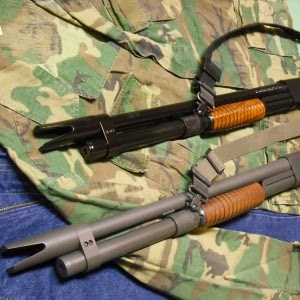
During the Korean War the shotgun became the guard weapon of choice because of its great effectiveness at close range. The US Navy SEAL Teams used a modified ‘duck-bill’ shotgun for walking as a lookout in the thick jungles of Vietnam. The muzzle of the barrel had a side-cut type of choke system that would produce a horizontal pattern with devastating effects. The weapon of choice was a pump-action Ithaca 10 gauge with 00 buckshot, while the Remington 870 12 gauge was used with great effectiveness as well.

The history of the shotgun continued into urban terrains in the 1980s and beyond, and it became more than just a weapon. As a ballistic breaching tool it gave soldiers a quick, lightweight and effective way of opening doors, gates and anything else that obstructed the assault style of warfare that has become common in the last two decades. The military has now adopted the Benelli M-4 auto loader as the new shotgun of choice for combat units. Many other manufactures are experimenting with fully automatic shotguns with box magazines that hold up to 10 rounds.

The history of the shotgun will continue to add new chapters as new developments are made. Shotgun ammunition has also progressed along with the weapon, but that is a discussion for another time. While the shotgun may adapt, the utility of the weapon still makes it my favorite choice, and if for some strange reason I ever find myself with only one gun, I sincerely hope it is a shotgun!

Drive fast & take chances!

First Published at Aegis Academy


About Author


- Chris White


Range Master


Chris White, Aegis Academy, Firearms Instructor
Chris White is 20-year veteran of the United States Navy (SEAL Teams) where he retired as a Chief (SO7). He has multiple combat tours and was assigned to three different SEAL teams as well as Naval Special Warfare Development Group during his active duty service. His key billets include: Assault Team leader, Platoon Chief and Platoon LPO at Development Group. He spent 6 years in instructor and training assignments during his career. Since his retirement, he has worked as an instructor and contracted operator at numerous high threat security providers in the Middle East and Africa. He continues to deploy in support of contingency operations and high threat protective details spending approximately 120 days a year overseas. He holds an extensive list of Department of Defense and Special Operations Command certifications and qualifications.

Tuesday, February 18, 2014

Internal Ballistics Part II – Mechanical Precision

internal ballistics, Howard Hall, Aegis Academy, Gun Training, Firearms Training
Welcome back! Thank you for your interest in ballistics. So far, we’ve covered a broad overview of the different types of ballistics, weapon function, and the cycle of operations. (Ballistics – Making Every Shot Count; Internal Ballistics Part I – Cycle of Operation and Firearm Function) This month, I will continue to cover internal ballistics. Defined as the combination of actions and reactions within a firearm as they affect a projectile’s movement to the end of the barrel and ultimately affect a bullet’s flight to target. With volumes of information available, I’ve chosen to focus this month’s column only on the mechanical aspects of the firearm and will cover ammunition details next month.

When I first started shooting bulls-eye competitions, I was next to a shooter using a 1911 with a six-inch barrel. In my naiveté, I asked him what was the benefit of his 6” 1911 compared to my standard 5” 1911? He humorously replied… “I’m an inch closer to the target than you are!” There is a lot more to accuracy and precision than barrel length alone.

Precision vs. Accuracy


accuracy precision, internal ballistics, Howard Hall, Aegis Academy, Gun Training, Firearms Training
Anyone who has shot a wide variety of firearms has probably noticed some just seem “more accurate” than others. While the concept is sound, the nomenclature is a bit misleading. To be clear, it requires both accuracy and precision to consistently place shots within the desired area of a target. The term “precision” refers to the mechanical qualities of a firearm that combine to consistently place projectiles in a small group on target. “Accuracy,” on the other hand, refers to the shooter’s ability to harness the firearm’s intrinsic precision and place a tight group of shots in the desired portion of the target. The shooter alone controls accuracy through refined technique, stance, gun fit, grip, sight alignment, sight picture and follow-through. This article will focus on mechanical precision.

Firearm precision is simply a matter of mechanical repeatability. By this, I mean the mechanical components of the firearm must interact in a controlled and consistent manner to launch the projectile exactly the same way. If these mechanical components do not interact in a consistent manner, the net result may negate all other factors, thus sending projectiles outside of the desired area within the target. For example, a shooter may have selected the correct ammunition matched to the weapon and exercised a highly refined shooting technique, only to find the point of impact on target is inconsistent. No combination of applied shooting principles can overcome a lack of mechanical precision.

Firearm Construction


Tolerance is a key contributor to firearm precision. It is defined as the dimensional relationship between moving mechanical parts, or how well the different firearm components fit together. While it is obvious the moving parts within a firearm require enough clearance to perform their functions, excessive gaps can cause inconsistent alignment and reduce precision. Mass produced firearms tend to cost less due to the manufacturer’s ability to fabricate thousands of interchangeable parts in a single run to construct their firearms. In general, these firearms tend to be inherently “more” functional but “less” precise due to the lower tolerance engineered into each component. Note that the terms “more” and “less” are generalizations and vary among manufacturers. Conversely, firearms built with high tolerances and hand-fit components seem “tighter” and result in a lower manufacturing volume, higher cost and greater maintenance requirements to ensure reliable function.

Anyone who has had the opportunity to shoot an old 1911 may have noticed they “rattle” when you shake them… yet they are still VERY accurate. The rattling sound is typically the physical contact between the slide and the frame where there is a low tolerance due to high volume production and the need for consistent function. However, this unique pistol remains accurate due to a higher tolerance where it is most needed. The area where the rear of the barrel locks into the slide and the front of the barrel is secured by the barrel bushing.

Each shooter must decide their own threshold of precision, cost, and reliable function in their firearm selection. Below, I will describe a few other key characteristics of firearm construction as they relate to both precision and function.

Headspace: As the cartridge is stripped from the magazine or manually inserted and the firearm chambers and locks, headspace is defined as any measurable gap between the cartridge base and the bolt face, breech or receiver. Excessive headspace allows the cartridge to “move” in relation to the bolt, breech face or receiver and produce inconsistent ignition or allow expanding gasses to escape. This influences the travel of the projectile into the bore. Extractor quality, shape, construction, and tension play a key role in reducing headspace. Heavily used guns can also experience erosion on the face of the bolt, breech or receiver. In any case, improper headspace degrades both precision and function.


accuracy precision, internal ballistics, Howard Hall, Aegis Academy, Gun Training, Firearms Training
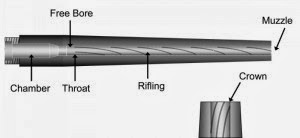
Freebore: This is the distance between the foremost portion of the exterior diameter of the projectile and the beginning of the rifling. Upon initial gas expansion, this is the distance a projectile must travel before engaging the rifling. Testing has shown that precision is increased when a chambered and locked cartridge presses the projectile against the rifling. However, this is not feasible for most semi-automatic weapons due to the maximum cartridge length afforded by the internal dimension of magazine. Precision rifle shooters who load their own ammunition for maximum precision tend to gauge the freebore and maximize the overall length of the cartridge to set the projectile against the rifling. For this discussion, we need to realize that “shorter” cartridges with excessive freebore can shear portions of a bullet jacket as it slams into the rifling, which will significantly affect its external ballistics.

Barrel length: Each shooter must select a firearm with a barrel length that suits their individual needs. Shorter barrels benefit those who desire lighter and more concealable firearms. Longer barrels tend to benefit shooters who don’t mind the added weight and are interested in greater precision and accuracy. Longer barrels inherently present a longer sight radius, which improves accuracy. Concurrently, increased precision is also produced by the greater duration from which the barrel influences the travel of the projectile before it is released into the atmosphere. Longer barrels also provide a greater initial velocity due to the duration of the powder burn, gas expansion, and pressure build-up.

internal ballistics, Howard Hall, Aegis Academy, Gun Training, Firearms Training
Barrel Twist: Rifling in a firearm barrel is a series of helical grooves that rotate a projectile along its longitudinal axis as it travels along the barrel. This produces the gyroscopic stability required for the projectile to consistently travel to the target. Twist can be measured by pulling a cleaning rod with a cloth patch through the barrel from the chamber to the crown. Allowing the cleaning rod to spin freely, the number of complete rotations it makes in one inch is the ratio of twist. If the cleaning rod makes one complete turn in 7 inches, it is considered a 1:7 twist. Please see Chris White’s excellent article on matching ammunition to barrels for more explanation: Barrel Twist and Bullet Weight

Barrel Effects: While shooting a firearm, the most noticeable effects are impulse (the bang) and the subsequent recoil in conjunction with the movement of the slide or bolt. However, few shooters realize there is a tremendous amount of activity within the barrel itself. The rapid gas expansion that creates pressure to propel a projectile down the bore causes the barrel to expand. Concurrently, the rifling that forces the projectile to spin as it proceeds down the bore also creates a torque in the opposite direction, causing the barrel to “twist” in the opposite direction of the rifling.

Meanwhile, the impulse and rapid gas expansion that sends the projectile forward also causes the barrel to vibrate and literally whip. Picture yourself holding the end of a taught rope, quickly moving the end in your hand, and watching the wave move down the rope. With all these forces acting on the barrel as the projectile moves forward, mechanical precision can only be attained if the projectile exits the moving barrel at the exact same time in its movement. The amount of barrel movement is affected by the quality of the barrel construction material, barrel thickness and the points of contact with the barrel (in rifles, this is considered bedding or free floating to ensure there is limited contact with the stock). In general, lighter and thinner barrels are more affected by expansion, twist, vibration and whip. Conversely, heavier and thicker barrels are less affected and enhance precision.

barrelcrowns, internal ballistics, Howard Hall, Aegis Academy, Gun Training, Firearms Training
Barrel Crown: While there are many forces exerted on the projectile as it travels down the barrel, the very last influence occurs as the projectile makes its very last contact with the barrel. The shape of the barrel crown will determine this last influence as the projectile enters the atmosphere and residual gas expansion makes its last push against the base of the projectile. If the crown is machined in an uneven manner or if there is some damage to the crown, the last “gas push” will be unevenly distributed on the projectile causing unwanted yaw that will send it away from the intended area of the target. Often, the barrel crown is recessed with ample material on the outer part of the barrel protecting the inner bore where the crown resides. Even if the barrel crown is not damaged by misuse or impact, heavy use combined with a lack of cleaning can erode the surface of the crown and cause an uneven gas expansion that leads to a lack of precision.

internal ballistics, Howard Hall, Aegis Academy, Gun Training, Firearms Training
We’ve only scratched the surface on this topic. I’ve only selected some topics I believe to be the most compelling and interesting to our shooters. If you are interested in gaining a deeper understanding of internal ballistics, I very highly recommend Robert A. Rinker’s book “Understanding Firearm Ballistics.” He provides a straight-forward no-nonsense approach that appeals to shooters looking for easy to understand concepts as well as advanced mathematics and physics principles. Find more information on Rinker’s book here.

Stay safe and shoot straight!

First Published at Aegis Academy

About Author


- Howard Hall


Range Master
 

Howard Hall
Howard has served for nearly 20 years in the Marine Corps. He has served as a Platoon Commander, Company Commander, Battalion Executive Officer, Regimental Operations Officer, and Battalion Commander. He has multiple combat tours to include serving as a military transition team member in Fallujah. He is an NRA Certified handgun instructor and holds numerous Marine Corps training credentials. An active competitor in action pistol (United States Practical Shooting Association), long range rifle (NRA F-Class), and shotgun (Amateur Trapshooting Association, National Skeet Shooting Association), howard has earned numerous accolades and medaled during DoD competitions with the 1911 platform in bulls-eye shooting.